
Summary
Editor's rating
Value: decent if cheap, weak if priced like a full‑fat multi‑cooker
Chunky, simple, and a bit old‑school
Ceramic pot sounds good, but in practice it’s a bit annoying
Too early to say long‑term, but the pot is my main concern
Performance: fast enough, but limited and missing some handy modes
What you actually get in the box
It cooks, but you have to babysit it more than you’d expect
Pros
- Covers the main everyday functions: pressure, slow cook, rice, steam, sauté, yoghurt
- 6L capacity is good for families or batch cooking
- Dishwasher‑safe ceramic pot and simple push‑button interface
Cons
- Ceramic pot tends to burn and stick more easily than stainless steel inner pots
- Missing several handy cooking programs compared to similar‑priced competitors
- Few accessories in the box and overall feels limited for the usual retail price

Specifications
View full product page →| Brand | Ninja |
A Ninja that feels a bit too basic
I’ve been using multi‑cookers for a while – Instant Pot, an older Crock‑Pot, that kind of thing – so I was curious about this Ninja HyperHeat 9‑in‑1. On paper it sounds solid: pressure cooker, slow cooker, rice, yoghurt, 6L capacity, dishwasher‑safe pot. Basically the usual all‑in‑one promise where you throw everything in one pot and hope dinner sort of cooks itself. I used it for everyday stuff: rice a few times a week, a couple of stews, pasta, some steaming, and one attempt at yoghurt.
Right away, it didn’t feel like a big upgrade over what I already had. If anything, it felt like a slightly stripped‑down version of other brands. The 9 functions cover the basics, but if you’re used to more specific programs (beans, chili, porridge, air fry, bake, etc.), you notice the missing bits quickly. It’s not unusable, far from it, but it’s less flexible than the marketing makes it sound.
The other thing that jumped out fast was the pot itself. It’s a PFAS‑free ceramic coating, which sounds nice on the box, but in practice I had more sticking and “burn” style issues than with stainless steel inner pots from Instant Pot or other brands. You can work around it with more liquid and stirring, but that kind of defeats the “set and forget” idea. One Amazon review even mentioned returning it because of burn issues, and I can see why.
So overall, my first impression after a couple of weeks was: it cooks, it’s not terrible, but it feels a bit bare‑bones for a Ninja product. If you’ve never owned a multi‑cooker, you might be happy enough. If you’re replacing a more feature‑packed model, this one might feel like a step sideways or even backwards.
Value: decent if cheap, weak if priced like a full‑fat multi‑cooker
Value is where this Ninja HyperHeat PC201UK has a bit of an identity problem. If you find it heavily discounted, it can be a decent buy: it cooks, it’s easy enough to use, and it covers the main functions most people actually use (pressure, slow cook, rice, steam). But if it’s priced close to Instant Pot Duo/Pro models or to Ninja’s own more advanced multi‑cookers with air fry and crisping lids, it’s hard to justify choosing this one.
You have to look at what you’re not getting: no air fry or crisping lid, no baking/roasting programs, no advanced presets like beans/porridge/chili, no stainless steel pot, no spare sealing ring, and very few accessories. For a basic multi‑cooker that still needs a bit of babysitting to avoid burning, that’s a lot of missing stuff. The Amazon rating of 2/5 (from the limited reviews available) doesn’t surprise me. It’s not that the product is unusable; it’s that for similar money, you can get something more versatile and forgiving.
If your main goals are: cook rice, make the odd stew faster, and occasionally steam or slow cook, and you grab this during a sale, then the value is acceptable. The 6L capacity and dishwasher‑safe pot are genuinely useful. But if you’re a heavier user or someone who wants one device to replace several appliances, you’ll probably feel limited after a few weeks and wish you’d gone for an Instant Pot Duo, Duo Crisp, or one of Ninja’s Foodi models with more functions.
So from a value perspective, I’d say: it’s fine if you catch it cheap and know exactly what you’re buying (a basic 9‑mode cooker). At full price, there are better options. I understand why one reviewer just sent it back and grabbed another Instant Pot instead. That’s probably what I’d do too if I had to choose again.
Chunky, simple, and a bit old‑school
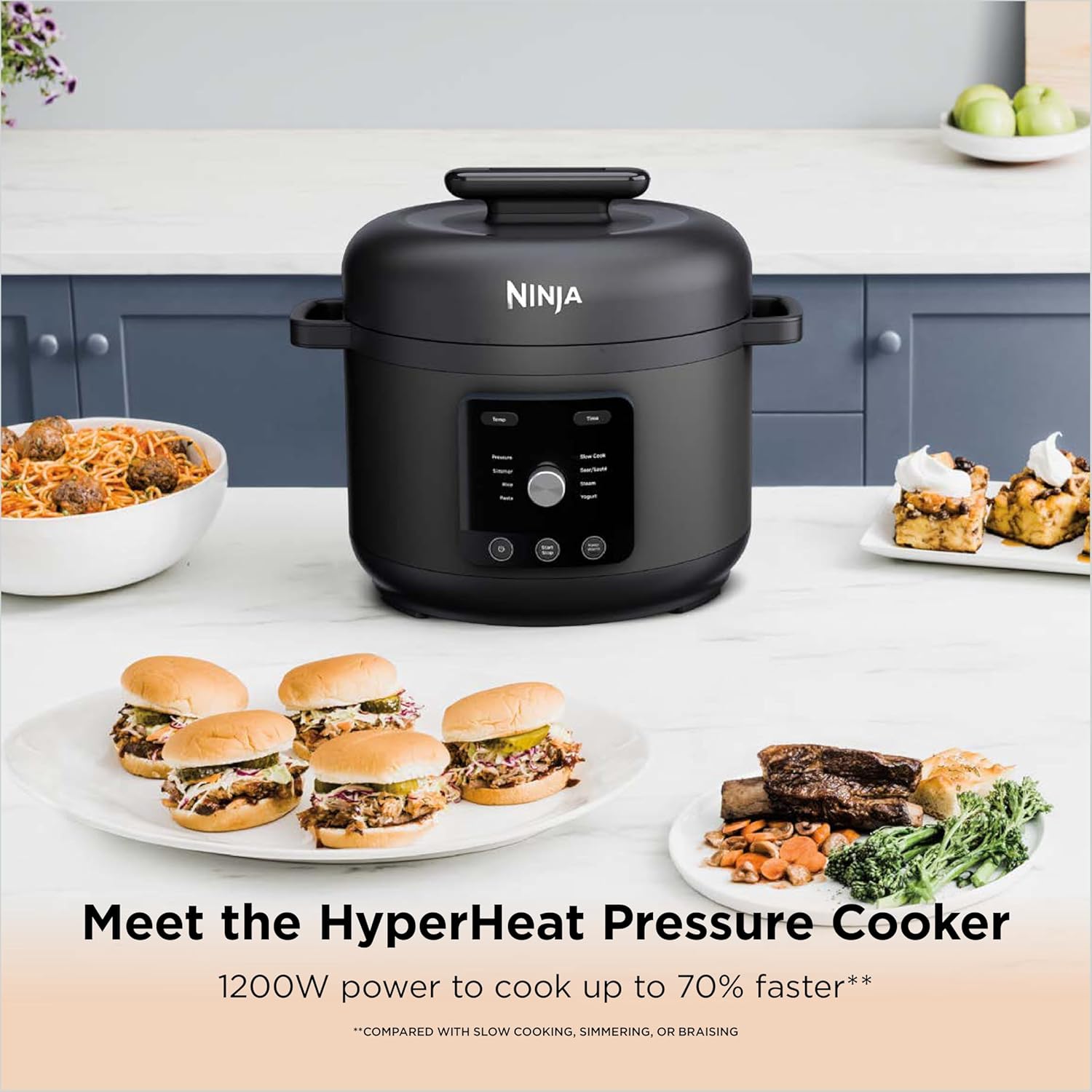
Design‑wise, this Ninja looks fine but nothing special. It’s a black matte finish, fairly standard multi‑cooker look – a big cylinder with a lid and a control panel on the front. It doesn’t scream “premium” but it doesn’t look cheap either. If you’ve seen any other Ninja kitchen gear, it fits right in: dark, slightly bulky, and built more for function than style. On the counter it takes a decent chunk of space but not more than other 6L cookers I’ve used.
The control panel is all push buttons with a small display. You choose the function (Pressure, Rice, etc.), then you adjust time and sometimes pressure level. It’s pretty easy to figure out after one or two uses. There’s no fancy touchscreen or app control, which personally I don’t miss, but some people might. It’s definitely not a “smart home” gadget – you plug it in, press buttons, that’s it. The upside is that there’s less to break or glitch; the downside is it feels a bit dated compared to newer connected stuff.
The lid is an outer pressure lid attached to the base. It swivels open and closed and locks into position. The steam release valve is manual, so you have to turn it to vent when you want to depressurize. It’s not hard, but if you’re coming from some of the newer Instant Pot models with auto steam release, this feels a bit behind. Cleaning around the lid and the silicone ring is standard multi‑cooker work: not hard, but you do need to pop the ring out and rinse it now and then, and wipe the metal parts where condensation collects.
One thing I noticed is that the interface doesn’t give a lot of feedback. You don’t get super clear messages about preheating, pressure building, or exactly what stage you’re in. It’s mostly a timer and a few icons. It’s fine once you’re used to it, but for a first‑time user it’s not as friendly as it could be. Overall, the design is functional and gets the job done, but don’t expect any clever design touches that make you think, “oh, that’s really well thought out.” It’s more like: it works, it’s okay, move on.
Ceramic pot sounds good, but in practice it’s a bit annoying
The main talking point with the materials is the cooking pot. It’s aluminium with a ceramic non‑stick coating that’s advertised as PFAS‑free. That sounds reassuring from a health and marketing point of view, but I’m going to be honest: in day‑to‑day use I had more sticking and burnt spots with this pot than with the stainless steel inner pots from Instant Pot or my older multi‑cooker. Especially with things like tomato‑based sauces, thick stews, and rice if I didn’t add enough water.
For example, I did a simple bolognese‑style pasta in one go: sauté onions and mince, add pasta, tomato sauce, some water, pressure cook. Same method I’ve done dozens of times in a stainless steel pot. With the Ninja pot, I had a layer of stuck sauce and pasta at the bottom that needed soaking and a bit of scrubbing. Not horrible, but definitely more annoying than I’m used to. Another time with a thicker curry, I got a “hot” style warning and clear signs of the bottom scorching a bit. The Amazon review mentioning it “burns so easily” matches what I saw.
The good point is that the pot is genuinely easy to clean once you soak it. It is dishwasher‑safe, and after a run through the dishwasher it came out clean without the coating looking damaged. Hand‑washing is fine too as long as you avoid anything too abrasive. So far, after a couple of weeks of use, I didn’t see any peeling or obvious wear. But I was careful with wooden or silicone utensils and avoided metal spoons.
The steam rack is stainless steel and feels sturdy. No bending or weird flex even with a full tray of potatoes or veg. The outside of the cooker is plastic with a matte finish, which wipes clean easily, though it does pick up smudges. Overall, materials are okay but not impressive. The ceramic coating is the weak point for me: it’s nice in theory, but if it burns more easily than stainless steel, it kind of defeats the whole “easy cooking” promise. I’d honestly prefer a simple stainless inner pot and deal with a bit more scrubbing instead of babying the coating.
Too early to say long‑term, but the pot is my main concern
After a couple of weeks of regular use – several pressure cooks, some slow cooks, sautéing, and dishwashing the pot – the unit itself still feels solid. The body hasn’t warped, the lid mechanism still locks and unlocks smoothly, and the buttons respond fine. Ninja usually does okay on build quality, and this feels consistent with that. The 2‑year guarantee on registration is also reassuring, at least on paper, if something big fails like the heating element or electronics.
My main worry for durability is that ceramic‑coated pot. Even with careful use (no metal utensils, no harsh scrubbing), ceramic coatings usually don’t last as long as plain stainless steel. Add to that the fact it burns more easily, and you’re more likely to be scrubbing stuck food off the bottom. Over time, that’s what tends to wear coatings down. After a few dishwasher cycles and some soaking, mine still looks okay, but I wouldn’t bet on it looking fresh after a couple of years of heavy use.
The silicone sealing ring in the lid is standard. It will probably pick up smells over time like all multi‑cookers. Unlike some competitors that include a spare ring in the box, Ninja doesn’t here, so you’ll need to buy one separately if it gets too smelly or loose. The stainless steel rack feels like it will last forever unless you physically bend it.
In short, the base unit feels sturdy enough, but the long‑term weak spot is almost certainly the ceramic inner pot. If you cook daily and often do thick, sticky recipes, I’d keep an eye on it. This is one of those products where it might be fine for a casual user a few times a week, but for heavy use, I’d prefer a model with a stainless steel inner pot that can take more abuse without you worrying about babying the coating all the time.
Performance: fast enough, but limited and missing some handy modes
Performance‑wise, the Ninja HyperHeat has enough power at 1200W for a 6L cooker. It heats up fairly quickly on Sear/Sauté, and it doesn’t feel underpowered. Browning meat before pressure cooking is fine; you can actually get some decent colour, which isn’t always the case with weaker multi‑cookers. The preheat time before pressure cooking is in the normal range – not lightning fast, not painfully slow. For a full 6L pot, you still need to give it a bit of time to come up to pressure.
The real limit is not raw power but the lack of extra programs and fine‑tuning. You basically get a handful of modes and you have to adapt everything yourself. For someone experienced, that’s okay. For someone new, it’s easy to mess up liquids or timings. Compared to, say, an Instant Pot Duo or Pro with lots of presets (beans, soup, porridge, etc.), the Ninja feels stripped down. The Amazon review complaining about missing functions compared to another brand is spot on. If you’re used to pressing a specific “Beans/Chili” button and walking away, you won’t find that here.
Steam mode works well for vegetables and dumplings. I did broccoli, potatoes, and some frozen dumplings on the rack. Everything came out fine once I got the timing right. But again, you need to experiment a bit because the cooker doesn’t give super clear guidance. Pasta mode is handy for one‑pot pasta meals: it brings things to a boil and then simmers, but you still need to stir or you risk sticking, especially with that ceramic pot.
Noise and steam release are pretty standard for a pressure cooker – not super quiet, but not something you hear from the other end of the house. Quick release of pressure is manual and throws a good blast of steam, so you still need to be careful where you place it (not directly under cupboards if you can avoid it). Overall performance is decent, but for the price and the Ninja brand, I expected a bit more flexibility and smarter programming. It does the job, but it doesn’t stand out.
What you actually get in the box
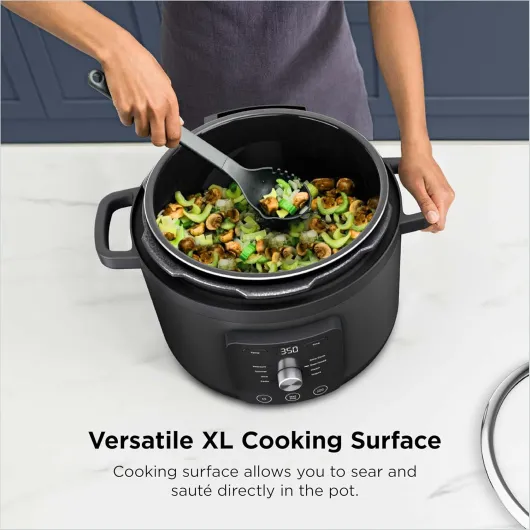
Out of the box, the Ninja HyperHeat PC201UK is pretty straightforward. You get the main base with the attached pressure lid, the 6L removable cooking pot, a stainless steel steam rack, and a slim recipe guide. That’s it. No extra sealing ring, no rice paddle, no measuring cup, no ladle – just the bare essentials. It’s not a huge deal, but compared to Instant Pot bundles that usually throw in a couple of cheap but useful accessories, this feels a bit minimal.
The recipe guide is short and basic. It’s fine if you’re new to pressure cooking and just want a few starting points, but don’t expect a full cookbook. Most of the time I ended up Googling recipes and just using the generic programs (Pressure, Slow Cook, Rice, etc.). The guide does at least give you a sense of timings and rough liquid amounts, which helps avoid total disasters at the beginning.
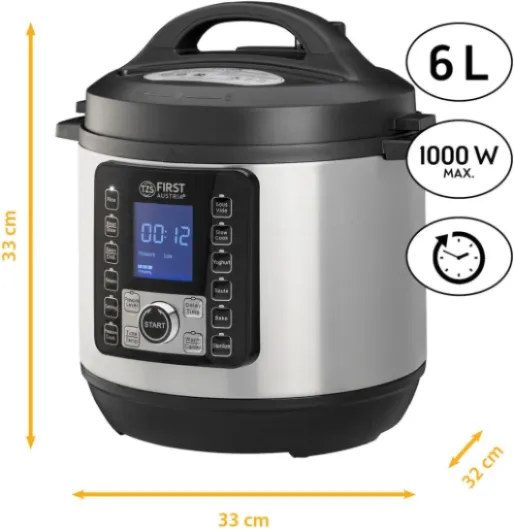
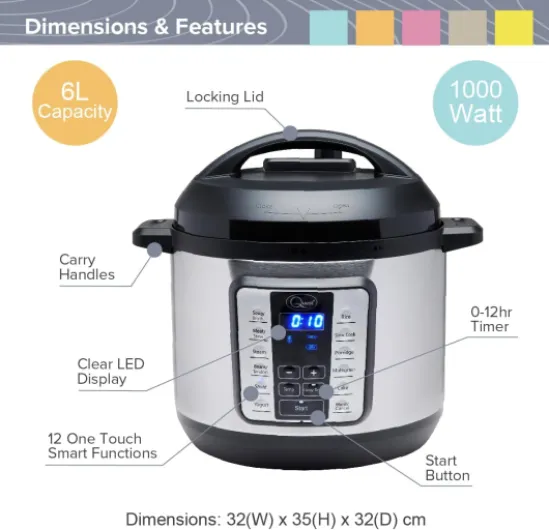
The unit itself is fairly compact for a 6L cooker. Dimensions are roughly 32.2D x 31.6W x 37.1H cm, and it weighs about 7.1kg. It’s not light, but that’s normal for this type of appliance. It’s easy enough to slide in and out of a cupboard if you don’t want to leave it on the counter all the time. The 6L capacity is enough for a family – I did a big batch of chili for four adults and had leftovers without any problem.
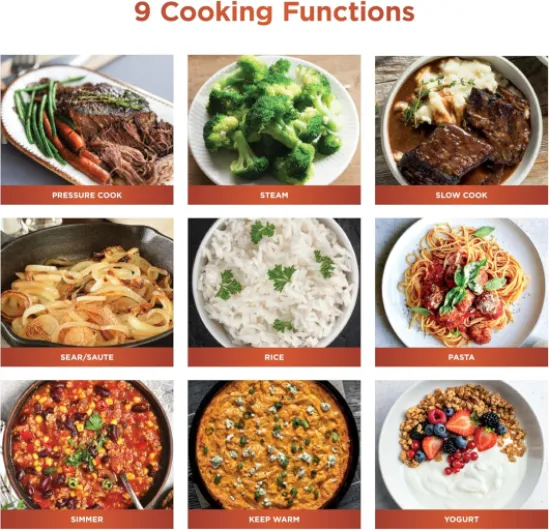
In terms of functions, you get 9 modes: Pressure Cook, Slow Cook, Sear/Sauté, Rice, Steam, Pasta, Simmer, Yoghurt, plus an auto Keep Warm. So you can cover: stews, basic rice, one‑pot pasta, steaming veggies, and some simple yoghurts. It’s enough for everyday cooking, but if you’re used to more specific presets like “Beans/Chili”, “Porridge”, “Multigrain”, or any kind of baking or air frying, they’re simply not there. That’s really the main thing about the presentation: it’s sold as 9‑in‑1, but in real life it’s more like a solid but basic multi‑cooker that doesn’t go beyond the essentials.
It cooks, but you have to babysit it more than you’d expect
In terms of pure cooking, the Ninja HyperHeat does the basics. Pressure cooking is definitely faster than slow cooking or simmering on the hob. Stews that would usually take a couple of hours were done in around 40–50 minutes including pressure build‑up. Rice cooks in about the usual time for a multi‑cooker, and pasta one‑pot meals are doable. So yes, it can handle everyday dinners without too much drama. The problem is, compared to other multi‑cookers I’ve used, I had to pay more attention to liquid levels and stirring to avoid burning.
Pressure cooking: it gets up to pressure, cooks evenly enough, and releases pressure without issues. But because the pot seems to burn easily, I found myself adding extra liquid “just in case”, which sometimes gave slightly watery sauces. Things like risotto and thick chili, which are usually the strong point of pressure cookers, were more hit‑and‑miss here. If I followed a standard Instant Pot recipe without tweaking, I risked a scorched bottom. Once I adapted with more liquid and a quick stir before sealing the lid, it behaved better, but it’s not as forgiving as I’d like.
Slow cook mode is okay but nothing special. It’s there if you want to dump everything in the morning and come back in the evening. I tried a pulled pork and a basic beef stew. Both came out tender, but honestly they would have been the same in a cheap slow cooker. The big plus is the auto Keep Warm, which kicks in after cooking so your food doesn’t go cold if you’re late to the table. That feature worked well and didn’t overcook things too much, though rice can dry out if left there for ages.
Yoghurt and rice are where the dedicated programs help. Rice came out decent with the Rice program once I found the right water ratio (slightly more water than I’d use in a rice cooker, to reduce sticking). Yoghurt worked, but it’s a bit fiddly and the interface doesn’t really guide you; you need to know the steps already. Overall, the effectiveness is “it works, but be careful”. If you’re expecting a forgiving, throw‑anything‑in cooker, this one is more picky than it should be.
Pros
- Covers the main everyday functions: pressure, slow cook, rice, steam, sauté, yoghurt
- 6L capacity is good for families or batch cooking
- Dishwasher‑safe ceramic pot and simple push‑button interface
Cons
- Ceramic pot tends to burn and stick more easily than stainless steel inner pots
- Missing several handy cooking programs compared to similar‑priced competitors
- Few accessories in the box and overall feels limited for the usual retail price
Conclusion
Editor's rating
The Ninja HyperHeat 9‑in‑1 PC201UK is a straightforward multi‑cooker that does the basics but doesn’t really stand out. It pressure cooks, slow cooks, makes rice and yoghurt, and the 6L capacity is handy for families. The controls are simple, the pot goes in the dishwasher, and the build feels solid enough. If you’ve never owned a multi‑cooker before and you mostly want to speed up stews and handle rice in one pot, it will get the job done.
But once you compare it to what else is on the market, the limits show quickly. The ceramic pot tends to burn more easily than stainless steel ones, so you have to watch your liquid levels and stir more often. The function list is short for a “9‑in‑1”, with several useful presets missing that you’d find on an Instant Pot Duo or similar. No crisping lid, no smart features, very few accessories, and no stainless pot option. For the price this usually sells at, that’s a bit disappointing, and the low Amazon rating matches my experience.
I’d say this cooker suits someone who finds it at a good discount, wants a simple, offline appliance, and doesn’t mind tweaking recipes to avoid sticking. If you’re replacing an older multi‑cooker or you want maximum versatility, I’d skip this and look at an Instant Pot Duo/Pro or a Ninja Foodi with more functions and a more forgiving inner pot.