
Summary
Editor's rating
Value for money: where it shines and where it cuts corners
Design: big, matte black and pretty straightforward
Materials and build: feels solid, with one small doubt
Durability and maintenance after several weeks
Performance: speed, pressure and day-to-day use
What you actually get and how it fits into a normal kitchen
Effectiveness in the kitchen: does it actually cook well?
Pros
- Cooks stews, rice, beans and soups quickly and consistently with 80 kPa pressure and 1200W power
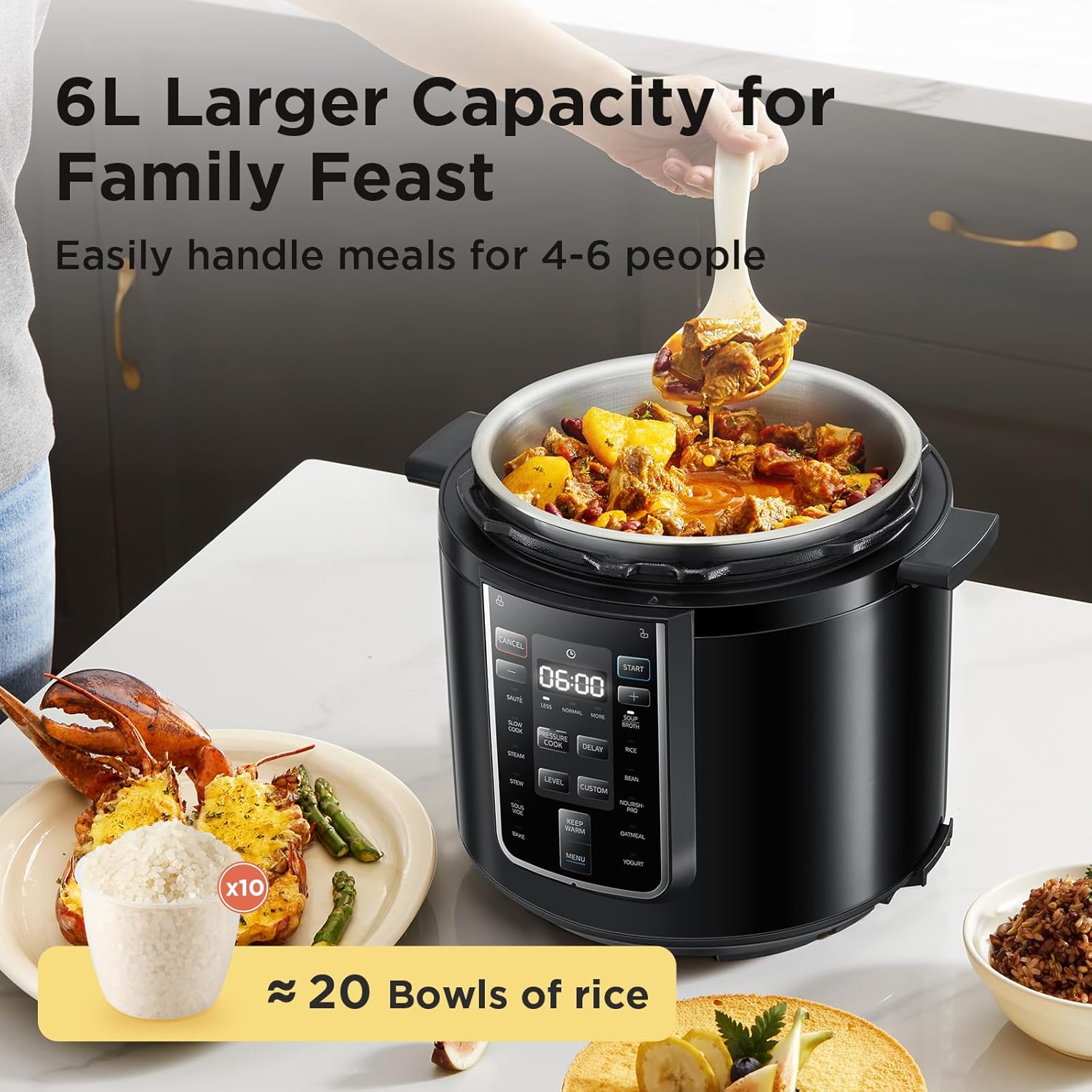
- 6L capacity is practical for families and batch cooking without being huge
- Non-stick stainless inner pot and dishwasher-safe parts make cleanup easy
Cons
- User manual is poorly written and doesn’t clearly explain the presets or modes
- Non-stick coating on inner pot will likely need careful handling for long-term durability

Specifications
View full product page →| Brand | Midea |
A multi-cooker for people who just want dinner on the table
I’ve been using this Midea 6L pressure cooker for a few weeks now, basically as my main tool for weeknight dinners. I bought it because I was tired of juggling pots and pans for rice, stew, and veggies, and I wanted something that could do most of the work without me babysitting it. I’m not a chef and I don’t enjoy overthinking recipes, so I was looking for something simple that cooks fast and cleans up easily.
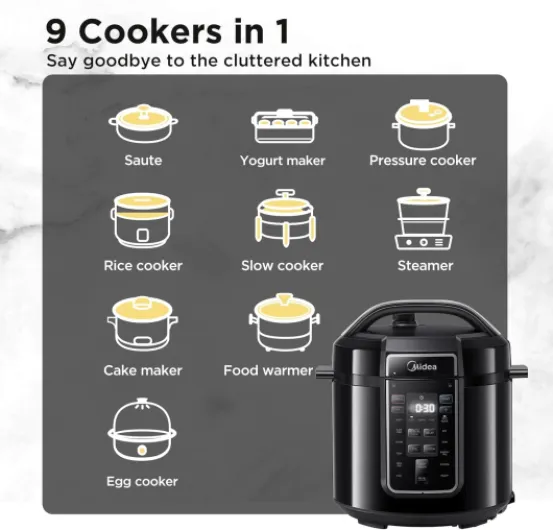
In practice, this cooker fits that brief pretty well. It’s a 6‑litre electric pressure cooker with 9‑in‑1 functions and 14 presets: rice, stew, meat, soup, beans, porridge, yogurt, etc. I mainly used it for rice, stews, soups, and a couple of slow-cooked dishes on weekends. Most of the time I just throw stuff in, pick a program, tweak the time a bit and let it run. Compared to cooking the same meals on the hob, it’s noticeably faster and I don’t have to stand there stirring.
Not everything is perfect though. The hardware feels solid, but the user manual is honestly weak. It explains the basics, but when it comes to the differences between modes, or how Nourish Pro actually behaves, it’s vague or just wrong. You can tell parts of it were copy-pasted from another model. I had to figure out a few things by pressing buttons and seeing what happens, which is a bit annoying for a product that’s supposed to simplify cooking.
Overall, my first impression is this: the machine itself is pretty solid and does the job, the presets are handy once you get the hang of them, and the 6L capacity is good for a small family or batch cooking. But be ready to ignore half of the manual and rely on trial and error or online recipes. If you’re okay with that, it’s a good everyday workhorse. If you want hand-holding and super clear instructions, you might get frustrated at the beginning.
Value for money: where it shines and where it cuts corners
In terms of value, I’d say this cooker sits in a comfortable “good deal” zone. It’s not the cheapest multi-cooker on the market, but it’s also clearly cheaper than some of the big-name competitors with similar functions. For the price, you’re getting a 6L cooker with 9‑in‑1 functions, 14 presets, a stainless steel non-stick pot, 10-layer safety system, and decent build quality. If you compare what it replaces – a separate rice cooker, slow cooker, maybe a yogurt maker – it’s decent bang for your buck.
The strong points for value are: size, versatility and everyday practicality. The 6L capacity is enough for a family or for batch cooking without having to step up to a huge, bulky unit. The presets cover most common cooking types, and once you’ve figured out your favourite settings, you can run a lot of different meals from the same machine. The time and energy savings also matter: I noticed my hob is on a lot less during the week, and this thing does the heavy lifting without me watching it.
Where they clearly saved money is the documentation. The manual is poor, sometimes inaccurate, and doesn’t explain the logic behind the modes. That doesn’t break the product, but it does mean you have to be willing to experiment or look online for guidance. If they had invested a bit more in decent instructions, the overall experience would feel more polished. Also, the accessories are functional but basic – nothing premium here, just standard plastic tools.
So is it worth it? If you want a reliable multi-cooker that cooks fast, handles the usual rice/stew/soup/beans/yogurt jobs, and you don’t care about fancy screens or perfect manuals, then yes, it’s good value for money. If you’re the type who wants super detailed documentation and a very guided experience, you might prefer a slightly more expensive brand that focuses more on that side. For a normal household that just wants dinner to be easier and quicker, this Midea is a pretty solid deal overall.
Design: big, matte black and pretty straightforward
Design-wise, it’s a fairly standard modern multi-cooker: a chunky matte black cylinder with brushed stainless steel around the body. It’s not tiny, so if you live in a small flat or have limited counter space, be aware this will take up a chunk of room. The footprint is roughly 31 x 33 cm and it’s about 34 cm tall. On my counter it sits under the wall cabinets but I still need to pull it forward a bit when I want to open the lid fully or release steam, just to avoid the cabinets getting steamed.
The control panel is simple: clear icons, white text on a dark background, and a basic digital display that shows time and modes. No fancy screen, but it’s readable and the buttons respond well. The pressure lid twists on and off fairly smoothly. Compared to my old stovetop pressure cooker, it’s easier to line up and lock. There’s a clear marking on the lid and the body, so you just match them and turn. The handle feels sturdy and I don’t feel like it’s going to snap off when I open it after cooking something heavy.
The steam release valve is a small lever you turn to vent or seal. It’s not the quietest thing when it releases steam, but that’s normal for pressure cookers. The float valve that shows when it’s pressurised is easy to see. Safety-wise, it won’t let you open the lid while it’s still under pressure, which is reassuring. There’s also a condensation cup at the back that collects water; you just pull it off and empty it. Not exciting, but it avoids random drips on the counter.
In terms of looks, it’s not pretty or ugly, it’s just a big black appliance. It blends in fine with stainless steel and black appliances. The matte finish is good because fingerprints don’t show much. If you care a lot about aesthetics, this isn’t some design object, but it also doesn’t scream “cheap plastic”. For me, it’s neutral enough that I don’t mind it being out all the time. Functionally, the layout makes sense: handle on top, controls on the front, removable pot inside. Nothing fancy, but nothing stupid either.
Materials and build: feels solid, with one small doubt
The main body is brushed stainless steel with plastic top and bottom, which is pretty standard in this category. The inner pot is stainless steel with a non-stick coating. After several weeks of almost daily use, the pot still looks good: no obvious scratches or peeling, and food doesn’t stick much as long as I use a bit of oil when sautéing. I only use the supplied plastic ladle and a silicone spatula to avoid damaging the coating, which I’d recommend if you want it to last.
The lid is mostly plastic on the outside with metal on the inside where it touches steam and food. The sealing ring is silicone and removable, so you can take it off to clean properly. I did that after cooking a strong curry and it definitely held some smell, but with a soak in warm soapy water it was fine. The locking mechanism feels sturdy; there’s no wobble or feeling like it’s going to misalign. The steam rack is a basic metal trivet, nothing fancy but functional for steaming vegetables or holding a bowl inside.
Build quality overall feels decent for the price. The cooker doesn’t feel flimsy when you move it around, and the lid still closes as smoothly as on day one. The buttons don’t feel mushy and the display hasn’t dimmed or anything weird. The power cable is detachable, which I appreciate because it’s easier to store the cooker without a cable flapping around. I’ve also run the pot through the dishwasher a few times and it survived fine, though I personally prefer to hand wash it quickly to be gentle with the coating.
If I have one small concern, it’s the long-term durability of the non-stick layer on the inner pot. That’s not specific to this brand; it’s the same for most coated pots. If you’re rough with metal utensils or stack other pots inside it, I can see it wearing down over time. But so far, no issues. If they sold a spare inner pot separately, I’d probably buy one just to have a backup. Aside from that, materials and build feel pretty solid and in line with the price point.
Durability and maintenance after several weeks
After several weeks of pretty regular use (about 4–5 times a week), the cooker still looks and behaves like new. No weird noises, no error codes, the lid still seals properly, and the pressure builds up just as fast as on day one. The silicone sealing ring hasn’t warped or loosened, and the stainless steel exterior hasn’t picked up any dents or major scratches. I wipe it down with a damp cloth after cooking and that’s usually enough.
The inner pot is the main part I keep an eye on. So far the non-stick coating is holding up: no peeling, no discolouration, and food residue comes off easily with a sponge and a bit of washing-up liquid. I have put it in the dishwasher a few times to test the manufacturer’s claim, and it came out fine, but long term I’d probably stick to hand washing to be safe. The plastic accessories (ladle, spoon, measuring cup) also still look fine, though they feel pretty basic. If they break one day, I won’t cry – they’re not premium, just functional.
One thing I do notice is that the silicone ring can keep smells from strong dishes like curry or garlic-heavy stews. That’s normal for these cookers, not a specific flaw of this model. I just soak the ring in warm soapy water or a bit of vinegar water, and it’s okay. If you’re picky about smells, you might eventually want a second sealing ring for sweet dishes like yogurt or cake, but that’s more of a usage tip than a durability issue.
Obviously I can’t comment on multi-year durability yet, but judging by the build and how it’s handled frequent use so far, I’m not worried. The hinge, locking mechanism and buttons don’t feel like they’re about to give up. The only long-term question mark is the non-stick coating on the inner pot, but that’s the same with any non-stick cookware. Treat it gently and it should last a decent amount of time. Overall, for the price, the durability seems pretty solid after the first weeks of heavy use.
Performance: speed, pressure and day-to-day use
Performance-wise, this thing is clearly faster than traditional cooking for anything that benefits from pressure. The 1200W power and 80 kPa high pressure mean it gets up to pressure fairly quickly. For a half-full pot of stew or soup, I usually see it reach pressure in around 10–15 minutes, depending on how much liquid and how hot the ingredients were when I started. Then it runs the set cooking time, and you can choose between quick release or natural release, depending on the dish.
In terms of the advertised “70% faster”, that’s roughly true compared to slow simmering on the hob. A dish that used to take two hours can be done in under an hour including heat-up and release. It’s not instant, but it definitely shortens cooking sessions. The automatic keep-warm mode kicks in after the program ends and holds the food warm without overcooking it too much. I’ve left dishes in there on warm for up to 2 hours; they were still fine, maybe a bit thicker because of evaporation, but not ruined.
The 14 presets cover most common needs: rice, meat/stew, soup, beans, porridge, cake, yogurt, slow cook, sauté, steam, etc. Some of them feel a bit redundant, because the only difference is default time and maybe a slightly different pressure profile. The manual doesn’t explain this at all, which is the biggest downside in terms of performance learning curve. I ended up treating most presets as just “starting points” and used +/− to adjust based on what I wanted. Once I saved a few timings, the cooker remembered them, which is handy.
No issues with overheating or safety so far. It has an auto pressure release, lid lock and overheat protection; I haven’t triggered any error codes. The only slightly annoying thing is the noise when you do a quick pressure release – it’s a loud jet of steam, so if you’re in a small kitchen it’s a bit intense, but that’s normal for pressure cookers. Overall, in daily use, the performance is solid: it heats up quickly, cooks evenly and handles the advertised tasks without drama, as long as you don’t expect magic from every preset out of the box.
What you actually get and how it fits into a normal kitchen
Out of the box, you get the cooker base, a 6L stainless steel inner pot with a non-stick coating, the lid with the pressure valve, a steam rack, measuring cup, ladle, spoon, condensation cup and power cord. So in terms of accessories, it’s pretty complete. I didn’t have to buy anything extra to start using it, which is nice. The 6L size is a good middle ground: I can fit a whole chicken or make 5–6 portions of curry or soup without it overflowing. For context, I usually cook for two adults plus leftovers for lunch, and this size works well.
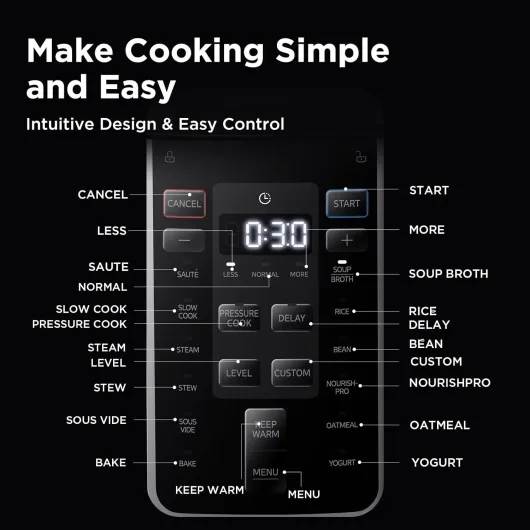
The front panel is a typical push-button / touch style with clearly labelled presets: rice, soup, meat/stew, beans, porridge, yogurt, slow cook, sauté, steam and a few more. There’s also a Level button that switches between Less, Normal and More, and +/− buttons for time. Once you understand that Level mostly just changes the default cooking time for each mode, it’s straightforward enough. But the first few days, I was poking around wondering if it changed pressure or temperature, because the manual doesn’t explain it clearly.
Day to day, I mainly use three or four programs: rice, meat/stew, soup and sauté. Rice comes out consistent, meat-based dishes get tender without me watching the pot, and sauté is handy for browning onions and meat directly in the pot before pressure cooking. The 24‑hour delay start is also there; I tried it twice for porridge and beans. It works, but you need to be sure the ingredients are safe to sit at room temperature with water for hours, which isn’t always ideal in a warm kitchen.
So in terms of what this thing is in real life: it’s a single countertop appliance that replaces my old rice cooker, my basic slow cooker and quite a few one-pot recipes I used to do in a Dutch oven. It doesn’t magically cook for you, but it absolutely cuts down active cooking time and keeps the hob free. For someone who cooks often but doesn’t want five different gadgets lying around, it’s a pretty practical setup.
Effectiveness in the kitchen: does it actually cook well?
This is where it matters: does it actually cook food properly and save time? In my experience, yes, it does the job well. I’ve done beef stew, chicken curry, lentil soup, chickpeas from dry, rice, porridge, steamed vegetables and yogurt. Across all of that, the main pattern is: once you understand pressure build-up time and the right program, you get consistent results with much less effort than on the stove.
For example, a beef stew that would usually take me 1.5–2 hours on low heat took about 35 minutes under pressure, plus maybe 10–15 minutes to come up to pressure and then release naturally for a bit. The meat came out tender, not dry, and the vegetables weren’t mush if I cut them in bigger chunks. Same for chickpeas: soaked overnight, then around 25–30 minutes on the Beans program gave me soft but not disintegrating chickpeas, ready for hummus or curry. That’s much quicker than simmering them for ages on the hob.
Rice is another one. I mostly cook white basmati and jasmine. On the Rice preset, with a 1:1 water ratio and a tiny bit of oil, the result is consistent: separate grains, not gluey. It’s not better than a dedicated rice cooker, but it’s good enough that I don’t miss my old one. Brown rice took me a couple of tries to get right, but once I adjusted the time (slightly longer than the default), it was fine. The keep-warm function is also useful; I can cook rice, leave it in there for an hour, and it doesn’t turn into a crusty mess.
Where it’s a bit more hit-and-miss is with very delicate stuff or when you rely blindly on the presets. The presets are okay, but I quickly realised I prefer to set my own times based on recipes I trust. The Nourish Pro technology is basically automatic pressure optimisation; I can’t say I tasted a 13.8% difference in umami or anything like that. The food tastes good, but I wouldn’t buy it for that marketing line alone. As a general cooking tool though, it’s effective: it cooks evenly, doesn’t burn food if you add enough liquid, and once you learn your favourite timings, it becomes pretty reliable.
Pros
- Cooks stews, rice, beans and soups quickly and consistently with 80 kPa pressure and 1200W power
- 6L capacity is practical for families and batch cooking without being huge
- Non-stick stainless inner pot and dishwasher-safe parts make cleanup easy
Cons
- User manual is poorly written and doesn’t clearly explain the presets or modes
- Non-stick coating on inner pot will likely need careful handling for long-term durability
Conclusion
Editor's rating
After using the Midea 6L pressure cooker regularly, my honest take is: it’s a solid, practical multi-cooker that does what it’s supposed to do without trying to be fancy. It cooks stews, soups, rice, beans and yogurt reliably, and it genuinely saves time compared to traditional cooking. The 6L capacity is well suited for couples or families who like to batch cook, and the build quality feels decent for the price. The inner pot is easy to clean, the keep‑warm function works, and the safety features do their job quietly in the background.
The weak spot is clearly the manual and the way the presets are explained. The modes are a bit opaque at first, and you have to accept a bit of trial and error or rely on online recipes to get the best out of it. If you expect plug‑and‑play perfection with zero thinking, you may be disappointed initially. But once you’ve figured out your usual timings for a handful of dishes, it becomes a reliable workhorse that you can trust to handle dinner while you do something else.
So, who is it for? It’s good for people who cook often, want to save time and gas/electricity, and like the idea of one appliance replacing several others. It suits busy households, students who cook big batches, or anyone who’s into one‑pot meals. Who should skip it? If you’re extremely picky about user interfaces, want ultra-detailed manuals, or prefer to tweak every tiny parameter with full explanations, you might be happier with a higher-end model from a brand that invests more in documentation. For everyone else, this Midea is a good, no-nonsense option that gets the job done.