
Summary
Editor's rating
Value for money: good deal if you actually use the capacity
Design: big footprint, sensible layout, slightly basic interface
Materials & build: solid stainless steel pot, average plastics
Durability & cleaning: feels like it will last, if you can handle the size
Performance: fast, quiet enough, and consistent once you learn it
What the Nutricook Smart Pot 2 actually offers
Effectiveness in real life: does it actually replace other appliances?
Pros
- Large 8L capacity is great for families and batch cooking
- Stainless steel inner pot (no coating) that’s dishwasher-safe and robust
- Smart lid with automatic sealing and one-touch pressure release feels safe and convenient
Cons
- Bulky and heavy; takes a lot of counter space and is awkward to move when full
- Presets need some tweaking to match personal taste (especially rice and meat tenderness)

Specifications
View full product page →| Brand | Nutricook |
A big pot for people who actually cook a lot
I’ve been using the Nutricook Smart Pot 2 (8L) for a few weeks now, basically as my main weeknight tool. Before this I was juggling a regular pressure cooker, a rice cooker and a big pot for stews. I wanted to see if this thing could realistically replace most of that, or if it would just end up as another bulky gadget living in a cupboard. Short answer: it hasn’t left my countertop since I got it, but it’s not perfect either.
The first thing to know is that this is huge. Eight litres is not a small family toy; it’s for people who cook in batches, have 4+ people at home, or like to cook once and eat three times. If you’re cooking for one or two and don’t really meal prep, this is probably overkill. But if you’re like me and you like doing a big beef stew or a curry for several meals, the capacity actually makes sense.
In daily use, I’ve tried most of the basics: pressure cooking stews, making rice, using sauté mode for browning meat, steaming veggies, and keeping food warm for a couple of hours. I didn’t bother with yogurt yet, but I did test the sous-vide function on chicken and a couple of steaks. So this isn’t a one‑day unboxing impression; it’s based on actual weekday cooking with some trial and error and a couple of small screw-ups on my part.
If you’re expecting a magic machine that cooks perfectly without you thinking, you’ll be disappointed. You still need to season your food properly and learn a bit how pressure cooking behaves. But if what you want is a solid, fairly straightforward multicooker that shortens cooking times and doesn’t feel flimsy, this one gets the job done. The rest of the review really comes down to how much space you have, how many people you cook for, and whether you’re okay with a slightly clunky interface at first.
Value for money: good deal if you actually use the capacity
In terms of value, I’d say the Nutricook Smart Pot 2 (8L) is a good buy for medium to large households or for people who batch cook a lot. You’re getting a big capacity, a stainless steel inner pot, a bunch of programs, and a 2-year warranty. The average rating around 4.5/5 with over a thousand reviews lines up with my experience: it’s not perfect, but it does what it says and doesn’t feel cheap.
Where the value really shows is if you can replace multiple appliances with it: an old pressure cooker, a basic rice cooker, maybe a slow cooker. If it lets you get rid of two or three devices and frees up some cupboard space, the price becomes easier to justify. Also, if you cook a lot of beans, stews, or curries, the time savings and energy savings compared to running the stove for hours add up over time. I’ve definitely been using my stove less since this arrived.
If you live alone or cook mostly small portions, though, the 8L version is probably too much. You’d be heating a big pot for not much food, and it will take more space than it’s worth. In that case, a smaller size (6L or less) or even a simpler pressure cooker might make more sense and save you some money. Also, if you already own a good multicooker from another brand, this is not a big enough upgrade to justify replacing it unless your old one is dying.
So overall, I’d call the value pretty solid but conditional: if you have the space, cook for several people, and actually use the different functions, it’s money well spent. If you’re a casual cook making small portions now and then, you’re paying for capacity and features you won’t really exploit.
Design: big footprint, sensible layout, slightly basic interface
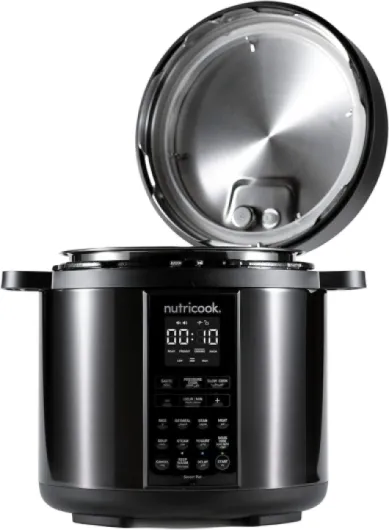
Design-wise, this is not a showpiece; it’s a big stainless steel appliance that looks like what it is: a pressure cooker with a digital panel. The dimensions (roughly 35D x 32W x 33H cm) mean it takes a serious chunk of counter space. On my smallish kitchen counter, it basically claimed a full corner. If you live in a tiny flat or have limited workspace, you’ll feel it. It’s also about 7.3 kg, so you don’t want to be moving it in and out of cupboards every day.
The control panel is a simple push-button and touch layout with preset programs clearly labelled. It’s not the sleekest or most modern display, but it’s readable, and you don’t need a manual every time once you’ve used it a few times. My only gripe is that there are quite a few buttons, and the first couple of uses, I had to double-check which ones were for time adjustments versus mode selection. After a week, it became automatic, but the first impression is a bit busy.
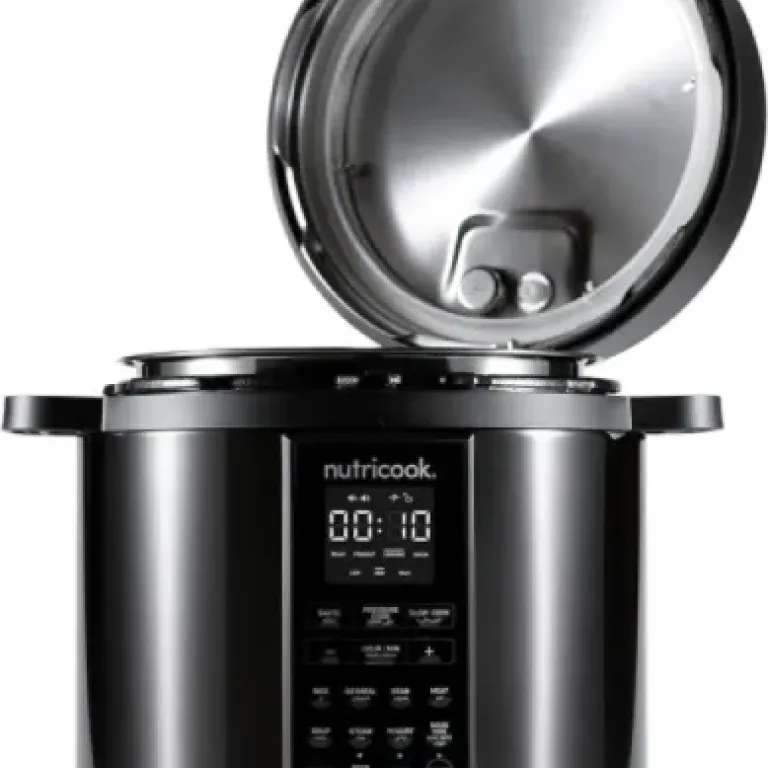
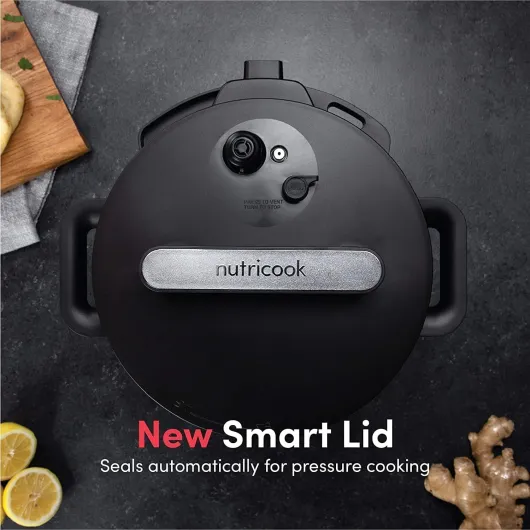
The lid design is actually one of the better parts: the smart lid seals automatically and releases pressure at the touch of a button. That feels safer and less fiddly than old-school pressure cookers where you’re guessing if the valve is properly in place. When the cooking is done, you press the button, and the steam releases in a controlled way. It’s not silent, but it’s not insanely loud either. The handle is solid, and the lid locks firmly, so you don’t feel like it’s going to blow off, which is always a concern with pressure cooking if you’ve had bad experiences before.
One practical detail I liked: the inner pot has clear measurement markings, which helps when you’re eyeballing how much water to put for rice or soups. Also, the exterior finish is glossy, which looks okay out of the box, but it does pick up fingerprints and smudges fairly easily. You’ll be wiping it down if you care about how clean it looks. In short, the design is functional, slightly bulky, and not fancy, but it’s easy enough to live with once you decide where it will permanently sit in your kitchen.
Materials & build: solid stainless steel pot, average plastics
The main selling point on the materials side is the 304 (18/8) stainless steel inner pot. No non-stick coating, no Teflon, just plain stainless steel. For me, that’s a big plus. I don’t baby my cookware, and non-stick coatings always end up scratched at some point. With this, you can use a normal spoon, scrub it properly, and throw it in the dishwasher without worrying about ruining a coating. I’ve done both hand-washing and dishwasher, and so far the pot still looks fine, no weird stains or warping.
The downside of stainless steel is that food can stick if you don’t use enough oil or if you jump straight to high heat on sauté mode. When I browned beef for a stew the first time, I got a decent amount of stuck bits at the bottom. They came off with deglazing (bit of water or stock and scraping), but you have to accept that this is not a non-stick pan. Once you adjust—preheat a bit, use enough oil, and don’t walk away—it’s manageable. For pressure cooking, sticking isn’t really a problem anyway because there’s plenty of liquid.
The outer body feels sturdy enough for the price range. It’s not premium-heavy like some very high-end cookers, but it’s not flimsy. The lid mechanism and the sealing ring seem well built. The sealing ring is the usual silicone style you find in all multicookers; it will probably absorb smells over time, especially with strong spices like curry. That’s normal. If you’re picky about that, you might end up buying a second ring for sweet dishes or yogurt, but that’s true for most brands, not just this one.
Overall, the materials are pretty solid where it counts: the inner pot and the safety mechanisms. The plastics and external finish are average—good enough, nothing fancy. For the price and the capacity, I’d say the build quality is fair. It doesn’t feel like a cheap toy, but you also clearly see it’s built to be practical, not luxurious. If you treat it reasonably well, I don’t see any obvious weak points that would fail quickly, apart from the usual wear on the silicone ring after a couple of years.

Durability & cleaning: feels like it will last, if you can handle the size
Obviously I haven’t used it for years, but based on a few weeks of regular use, the Nutricook Smart Pot 2 gives a decent impression in terms of durability. The inner stainless steel pot still looks almost new after plenty of stews, rice, and a couple of slightly stuck-on sauté sessions. No warping, no weird discoloration, and it survived both hand scrubbing and dishwashing. This is one of the reasons I prefer stainless steel over non-stick: you don’t have to baby it, and it doesn’t feel fragile.
The lid mechanism and the smart pressure release also feel solid. The button still clicks nicely, the seal is firm, and there’s no sign of steam leaking from where it shouldn’t. The silicone sealing ring is, as usual, the part that will probably age the fastest. It will absorb smells (especially from curry or garlic-heavy dishes), and over time it may stretch slightly, like on every multicooker. The good thing is that these rings are cheap and easy to replace, and it’s not unique to this brand.
Cleaning is mostly straightforward. The inner pot goes straight into the dishwasher or can be scrubbed with a regular sponge and some hot water. The lid needs a bit more attention: you have to remove the inner silicone ring from time to time and wash it separately, and wipe the underside of the lid where steam condenses. None of this is complicated, but if you’re very lazy about cleaning, you might let it build up, and that’s when smells get annoying. The exterior just needs a quick wipe to remove smudges and splashes.
The only real downside on the practicality/durability side is the weight and size. A full 8L pot of stew is heavy. Carrying it from the counter to the sink to wash it is not fun if you have back or wrist issues. If you’re in a small kitchen, you also need a dedicated spot where it can live permanently, because you won’t want to move it every time. But if you accept the bulk, it feels like a product that will keep working for years without falling apart, especially thanks to the simple stainless inner pot and the lack of fragile coatings.
Performance: fast, quiet enough, and consistent once you learn it
Performance is where this cooker makes sense. The brand claims up to 70% faster cooking, and honestly, that’s not far off for some dishes. My usual stovetop beef stew takes around 2 to 2.5 hours to get really tender. In this, I did a 25–30 minute pressure cook (plus preheat and depressurize time), and the meat was already nicely soft. Not fall-apart like a 4-hour braise, but definitely tender enough for a weekday meal. For chickpea curry from dried chickpeas (pre-soaked), I cut the time almost in half compared to my old method.
The 1200W power is decent for the 8L size. It doesn’t feel underpowered, even when the pot is quite full. Preheating to pressure obviously takes longer with more liquid and food, but that’s normal. Once it hits pressure, it maintains it steadily. I didn’t run into any random burn errors or weird shutdowns, which I’ve seen on some cheaper multicookers. The keep-warm function also works well; I left a stew on warm for about 2 hours, and it didn’t dry out or burn at the bottom.
Noise-wise, it’s pretty quiet while running. The main noise is during pressure release when you hit the button—there’s a strong jet of steam and a hiss, but nothing shocking if you’ve used a pressure cooker before. During the actual cooking, it’s much quieter than a traditional stovetop pressure cooker whistling away. I was watching TV in the next room and didn’t feel bothered by it at all.
The only thing to keep in mind is that the presets are a starting point, not gospel. For rice, I found the default setting a bit on the soft side for my taste, so I shaved a couple of minutes off. For some meats, I added an extra 5–10 minutes to make them really tender. Once you do a few runs and note what works for you, it becomes very predictable. Overall, in terms of pure performance, it’s reliable, fast, and consistent, which is what you want from something you rely on multiple times a week.
What the Nutricook Smart Pot 2 actually offers
On paper, the Nutricook Smart Pot 2 is a classic modern multicooker: 9 appliances in 1 and 12 smart programs. In reality, the ones I actually used regularly were: pressure cooker, sauté pot, rice cooker, steamer, soup/stew, keep warm, and a couple of sous-vide attempts. The rest is nice to have, but most people will live on 4–5 modes once they figure out what works for them.
The presets are labelled pretty clearly, and the idea is simple: you hit a button for rice, soup, meat, etc., and it picks a time and pressure level for you. For basic stuff, this works fine. For example, white rice with the preset came out decent on the first try. Not restaurant-level perfect, but absolutely fine for everyday meals. For stews and curries, I still tweaked the time a bit because I like the meat extra tender. The good thing is that you can override the presets easily once you get used to the buttons.
The 8L capacity is the main selling point here. I managed to cook a big beef stew with about 1.5 kg of meat plus vegetables and still had room. Same thing with a large batch of chicken curry. If you do meal prep, it’s very practical to cook once and portion into containers for the freezer. But you have to know that the pot gets heavy once it’s full, and cleaning or moving it is not as casual as a small 3–4L cooker.
Overall, in terms of features, it covers the basics you’d expect in this category: pressure cooking, slow cooking, rice, steaming, yogurt, sous-vide, sauté, and a warm function. Nothing revolutionary, but the combo is useful. Compared to something like an Instant Pot of similar size, it’s in the same ballpark: similar concept, similar features, just slightly different layout and naming of the programs. If you’ve used any other multicooker before, you’ll feel at home pretty quickly once you get past the first couple of runs.
Effectiveness in real life: does it actually replace other appliances?
In day-to-day use, the big question for me was: can this thing realistically replace my rice cooker, my old pressure cooker, and at least one big pot? After a few weeks, I’d say yes for most people, with a couple of small caveats. I haven’t touched my old pressure cooker since I got this. The automatic sealing and pressure release are simply more convenient, and I don’t have to babysit the stove. For stews, soups, beans, and curries, it’s very effective. I load it, set the time, and go do something else.
For rice, it’s good enough to ditch a basic rice cooker, but if you’re super picky about rice texture (especially for sushi or very specific types), a dedicated high-end rice cooker is still better. For normal everyday basmati or jasmine rice, it did the job. After a couple of tries tweaking water ratio and time, I was getting consistent, decent rice. Not restaurant-perfect, but honestly fine for weeknight meals. The keep-warm function also helps if dinner time is a bit flexible.
The sauté mode is handy to brown meat or onions directly in the pot before pressure cooking. It’s not as strong or responsive as a gas stove and a heavy pan, but it’s good enough to avoid washing an extra pan. You just have to give it a bit of time to heat up and not overload the bottom with too much meat at once, or you’ll just steam instead of sear. Once I adjusted to that, it simplified my cooking flow a lot: sauté → add liquid and other ingredients → pressure cook → done.
As for sous-vide and yogurt, these are more niche. I tested sous-vide chicken breasts and a couple of steaks. The results were decent, especially for chicken, which came out juicy and cooked evenly. Is it as precise as a dedicated sous-vide stick with a clear temperature display? Probably not, but for casual home use, it’s fine. Yogurt I haven’t tested personally, but the included program and the stainless pot should make it straightforward if you’re into that. Overall, in practice, it really can replace several separate appliances if you’re okay with a bit of learning at the start.
Pros
- Large 8L capacity is great for families and batch cooking
- Stainless steel inner pot (no coating) that’s dishwasher-safe and robust
- Smart lid with automatic sealing and one-touch pressure release feels safe and convenient
Cons
- Bulky and heavy; takes a lot of counter space and is awkward to move when full
- Presets need some tweaking to match personal taste (especially rice and meat tenderness)
Conclusion
Editor's rating
The Nutricook Smart Pot 2 (8L) is a straightforward, no-drama multicooker that does what most people actually need: it cooks big batches of food quickly and consistently, without you having to stand over the stove. The stainless steel inner pot is a strong point, the smart lid with one-touch pressure release feels safe and practical, and the overall performance for stews, rice, soups, beans and basic sous-vide is solid. It’s not the prettiest or most high-tech gadget, but as a kitchen workhorse, it holds up well.
It’s best suited for families, shared flats, or anyone who meal preps in bulk. If you cook for 4+ people or like to make a big pot of something for several days, the 8L capacity makes sense and offers good value. On the other hand, if you’re in a tiny kitchen, live alone, or only cook occasionally, the size and weight will probably annoy you, and a smaller model would be more logical. Also, don’t expect perfect results straight out of the box with every preset: you’ll need a few runs to fine-tune times and water ratios to your taste.
Overall, I’d rate it as a good, practical buy rather than something mind-blowing. It gets the job done, feels reasonably durable, and can genuinely replace a couple of other appliances if you commit to using it. If you have the space and the need for big portions, it’s worth considering. If not, look at a smaller or simpler option instead.