
Summary
Editor's rating
Value for money: good deal if you’ll use the size
Design: big, heavy, and mostly practical
Materials and build: solid pot, slightly cheap-feeling lid
Durability and maintenance: built to last, but not maintenance-free
Performance: cooks well, sometimes slower than you’d expect
What this Instant Pot actually does day to day
Effectiveness in real life: does it actually simplify cooking?
Pros
- Large 8-quart capacity is great for families and batch cooking
- WhisperQuiet steam release and one-touch vent are safer and less noisy than older models
- Stainless-steel inner pot with anti-spin base is sturdy and good for sautéing
Cons
- Very bulky and heavy, not ideal for small kitchens or moving in and out of cabinets
- Presets and interface have a bit of a learning curve and the start button is easy to miss
- Takes longer to come to pressure with big batches, so real-world cook times are not as fast as the marketing suggests

Specifications
View full product page →| Brand | Instant Pot |
A big quiet beast in the kitchen
I’ve been using the Instant Pot Duo Plus 8-Quart for a few weeks now, mostly for weeknight dinners and weekend batch cooking. I already knew Instant Pot from older 6-quart models, so I wasn’t starting from zero. This one is basically the “family size” version with a quieter steam release and a bunch of presets I honestly didn’t think I’d use at first. I bought it because my old 6-quart was starting to feel cramped for soups, stews, and cooking for more than 3 people.
First thing: this thing is huge. When the box arrived, I thought they’d sent me a mini washing machine. On the counter, it eats a good chunk of space, so if you have a tiny kitchen, you’ll need to be okay with leaving it out or giving up half a cabinet. On the flip side, I stopped using my big Dutch oven and a couple of other pots, because this covers a lot of jobs: pressure cooker, rice, slow cooker, steamer, even yogurt and sous vide if you’re into that.
In daily use, it does what you expect from an Instant Pot: it cooks food fast and pretty evenly, and it’s fairly foolproof once you understand the interface. I used it for chili, chickpeas from dry, pulled pork, rice, and a whole chicken. No disasters, nothing burned, and the food came out as good as what I got from my older model. The main difference I noticed is the quieter steam release and the bigger capacity, both of which actually matter in real life.
Is it perfect? No. The learning curve on the presets is a bit annoying, the size and weight are not subtle, and it’s easy to overestimate how fast things will really be when you factor in preheat and depressurizing. But if you want one machine to handle big batches and not scare your pets every time it vents, this model is pretty solid. Just don’t expect it to magically cook in 5 minutes like the marketing blurbs suggest.
Value for money: good deal if you’ll use the size
Price-wise, this sits in the mid-range for multi-cookers, and for what it offers, I’d say the value is good—with one condition: you actually need the 8-quart size. If you’re cooking for 4–8 people regularly, or you like to batch cook and freeze meals, the extra capacity is worth it. I could do big pots of soup, chili, or pulled meat that covered several meals without the pot feeling cramped or overflowing.
Compared to cheaper brands, you’re paying partly for the Instant Pot name and the ecosystem: the app with recipes, a ton of online guides, and a huge community that has already tested every possible cooking time. If you’re new to pressure cooking, that stuff helps. The cooker itself isn’t flashy, but it’s reliable and fairly flexible. The extra sealing rings and the stainless-steel rack with handles add a bit of value too, since those are accessories people often end up buying separately.
On the downside, if you live alone or mostly cook small portions, this is probably too big, and you’d be better off saving money with a smaller 6-quart model. Also, don’t buy it expecting to use all 9 functions regularly. Most people will use 3–5 functions and ignore the rest. In that sense, it’s good value if you think of it as a pressure cooker + slow cooker + rice cooker + sauté pan in one, not as some fancy 9-in-1 miracle appliance.
Overall, for the price bracket, I think it’s good value for money, especially when it’s on sale, which it often is. It’s not the cheapest option out there, but given the brand reliability, the safety features, and the size, it justifies its cost if you actually put it to work a few times a week.
Design: big, heavy, and mostly practical
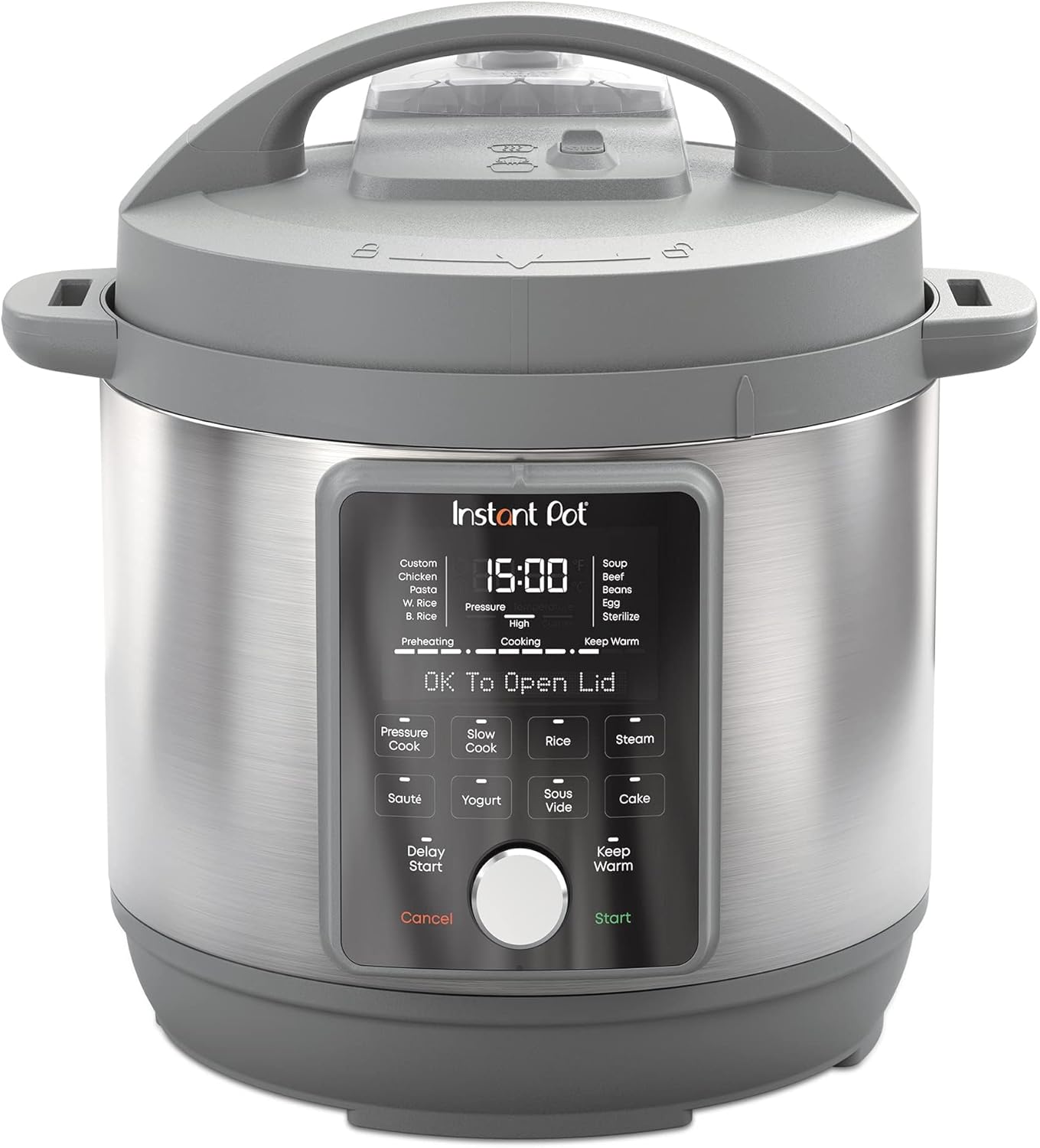
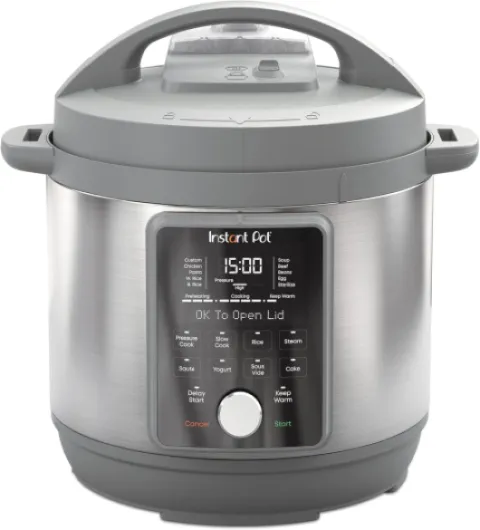
Design-wise, this is classic Instant Pot territory: a stainless steel body, chrome/gray finish, plastic lid with a handle, and a front control panel with a dial and buttons. It’s not pretty or ugly, it just looks like what it is: a big appliance. The footprint is roughly 15" x 15" and about 14" tall, and it weighs around 20 pounds. So no, you’re not casually moving this around every day unless you like lifting.
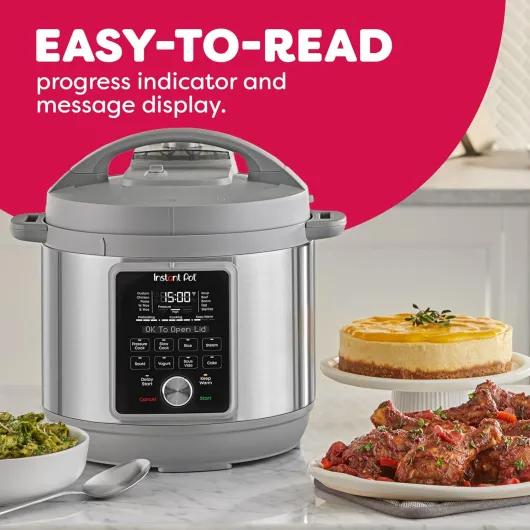
The angled control panel is a nice touch. On the older flat panels, you had to lean over the pot to see the screen properly. Here, you can read it from a normal standing position. The screen shows clear text instead of cryptic abbreviations, plus a cooking progress bar. Once you get the hang of the dial + start button combo, navigation is fairly straightforward, but the first few runs feel a bit menu-heavy.
The lid design is decent. You can dock it in the side handles so condensation drips back into the pot instead of all over your counter, which is a small but useful detail. The steam release button is placed away from the vent, so you don’t have to put your hand directly over the steam to release pressure. Compared to older knobs you had to twist, this feels safer and less stressful. The WhisperQuiet venting still makes some noise, but it’s more like a steady exhale than a loud burst.
On the downside, this size of pot absolutely dominates smaller kitchens. On my narrow counter, it blocks the cabinet door above it when the lid is open. You also need enough vertical space so steam doesn’t blast right into your upper cabinets. So in terms of design, it works, but you need to plan where this thing lives. If you’re in a studio apartment with one tiny counter, I’d think twice about the 8-quart and maybe look at a 6-quart instead.
Materials and build: solid pot, slightly cheap-feeling lid
The main cooking pot is stainless steel (18/8) with a tri-ply bottom, and that part feels solid. The anti-spin design is actually noticeable: when you’re sautéing and stirring, the inner pot doesn’t spin around like some cheaper models do. Heat distribution at the bottom seems even enough; I sautéed onions and browned meat without getting a burnt ring in the middle. It’s not at the level of a heavy cast iron, but for an electric cooker, it’s fine.
The lid is the usual Instant Pot plastic and metal combo. It doesn’t feel fragile, but it also doesn’t scream premium. You get two extra silicone sealing rings in the box, which is useful because those rings love to absorb smells (curry, garlic, etc.). I keep one ring for savory and one for more neutral stuff like rice or yogurt. The rings are easy to pop in and out, but you do need to clean around the grooves once in a while or it can get a bit grimy.
The included stainless-steel steam rack with handles is handy for lifting things out, like a whole chicken or a bowl for pot-in-pot cooking. It’s not super thick metal, but it holds up fine under normal use. After several runs in the cooker and a few dishwasher cycles, I didn’t see warping or rust spots on the pot or rack, which is what I care about long term.
Overall, the build feels sturdy where it matters (inner pot, housing, handles) and more basic on the plastic parts. It’s not fragile, but you can tell they’re hitting a price point, not trying to make a luxury object. For the price and the brand, I’d say the materials are pretty solid and in line with expectations. If you’ve used an Instant Pot before, this feels very familiar—just bigger and a bit heavier.
Durability and maintenance: built to last, but not maintenance-free
Instant Pot as a brand has a pretty decent track record. I’ve had an older model for years, and it’s still alive, just a bit worn. This Duo Plus 8-Quart feels similar in that sense: solid base, sturdy inner pot, and a lid that should hold up if you don’t abuse it. The unit is UL listed and has a bunch of safety features (overheat protection, lid lock, etc.), which is reassuring when you’re dealing with pressure and hot steam in a home kitchen.
The inner stainless-steel pot handles regular use well. I used metal utensils a couple of times by habit, and it didn’t scratch badly, though I’d still stick to wood or silicone if you want it to stay nice. The pot and steam rack went through the dishwasher without any issues. There’s a small confusion in the listing that says “Is Dishwasher Safe: No,” but in practice, the inner pot and lid pieces are dishwasher safe. I threw the pot, sealing ring, and steam rack in the dishwasher several times and had no warping or staining.
Maintenance-wise, you do need to clean the sealing ring, the lid, and the little steam parts regularly. If you cook a lot of strong-smelling dishes, the ring will hold onto odors. Having two extra rings included helps: I keep one for heavily spiced food and one for more neutral dishes. Also, every few uses, I wipe down the heating element area and the rim to clear out any food bits or condensation. It’s not hard, but you can’t just ignore it for months.
Overall, I’d rate durability as pretty solid for the price. It’s not indestructible, but nothing feels flimsy or on the verge of breaking. As long as you’re not slamming the lid around and you clean the key parts, it seems like a cooker that should last several years easily, especially given Instant Pot’s history with older models that people are still using after 5+ years.
Performance: cooks well, sometimes slower than you’d expect
Let’s talk performance, because that’s the real point. The marketing says “up to 70% faster than slow cooking,” which is technically true, but slightly misleading in daily life. The actual cook time is short, but you have to add preheating and depressurizing. For example, I did a big batch of chili: 15 minutes at high pressure, but it took around 15–20 minutes to come to pressure and another 15+ minutes for natural release. So you’re looking at roughly 45–50 minutes total, which is still faster than a slow cooker, but not “dinner in 10 minutes” territory.
On the positive side, results were consistent. Dry chickpeas cooked through nicely without turning to mush. A 6-pound whole chicken fit in the pot and came out moist, with the meat falling off the bone. Rice on the preset turned out fine—no sticking or major clumping. The sauté mode gets hot enough to brown meat decently, though you have to give it a minute or two to heat up fully.
Compared to older, noisier Instant Pots, this model does feel a bit slower with some things, especially larger volumes and dry beans, which lines up with what some reviewers mentioned. It’s not night and day, but if you’re used to a smaller 6-quart model, you might notice that the 8-quart takes longer to come to pressure just because there’s more volume and more liquid. For me, that trade-off was worth it for the extra capacity, but if you’re usually cooking for 1–2 people, it might feel overkill.
Where it shines is batch cooking and big meals. I easily did soups and stews for 6–8 portions, plus leftovers. The keep-warm function holds temperature without drying things out too much. Sous vide also worked fine for a couple of tests (pork tenderloin and tri-tip), holding a stable temperature over many hours. So performance-wise, it’s not the fastest thing on earth, but it’s consistent and flexible, which is what I care about more.
What this Instant Pot actually does day to day
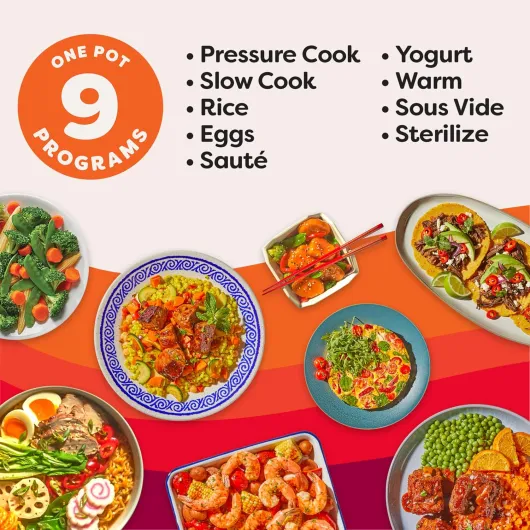
On paper, the Duo Plus 8-Quart is a 9-in-1 multi-cooker: pressure cook, slow cook, steam, sauté, sous vide, rice, yogurt, cake, and keep warm. In practice, I used maybe five of those: pressure cook, sauté, steam, rice, and keep warm. The rest are nice to have, but if you’re like most people, you’ll probably stick to the basics. The presets (beans, soup, meat, etc.) are there, but I ended up using manual/custom settings more because I like knowing exactly what time and pressure I’ve set.
The control panel is angled and easy enough to read. There’s a progress bar that shows preheating, cooking, and keep warm stages, which is actually helpful when you’re wondering “is this thing even doing anything?” The start button is a darker green that kind of blends in, and I did the classic “set everything and forget to hit start” mistake once. You can work around it, but yeah, they could have made that button more obvious.
In use, the main functions I leaned on were:
- Pressure cook: for beans, stews, chili, and whole chicken.
- Sauté: browning onions and meat directly in the pot.
- Rice: white and basmati; both came out fine.
- Steam: veggies and dumplings.
- Keep warm: for holding food for an hour or two.
The WhisperQuiet steam release is not totally silent, but it’s way less aggressive than older models I’ve used. You can stand next to it and talk at normal volume, which is a relief compared to the old “jet engine” style vents. There’s also a one-touch release button positioned away from the steam, so you’re not playing finger roulette with hot vapor.
Overall, the feature list sounds long, but in reality it’s a big pressure cooker with bonuses. If you expect to use every single mode all the time, you’re dreaming. If you just want solid pressure cooking plus a few extras, it gets the job done without too much fuss once you ignore half the fancy labels.
Effectiveness in real life: does it actually simplify cooking?
In real life, the question is: does this thing actually make cooking easier or does it become another bulky gadget gathering dust? For me, it did simplify a bunch of tasks, especially anything that usually takes a long simmer on the stove. Dried beans, tougher cuts of meat, big pots of soup—those are where it earns its spot. I can throw things in, set it, and go do something else without babysitting a pot or worrying about the stove being on for hours.
The guided interface and presets are supposed to make it foolproof. Honestly, I found them a bit confusing at first. Like one Amazon reviewer said, choosing "pressure cook" and then a preset (like "beans") didn’t behave quite how I expected the first time, and I wasted a cycle thinking it was cooking when it wasn’t. Once I switched to custom/manual settings and just set time and pressure myself, everything was straightforward. So it’s effective, but you need a small learning period or to actually read the manual (which most of us don’t).
It really shines when you combine functions: sauté onions and meat directly in the pot, deglaze with broth, then switch to pressure cook for the main cooking. Fewer dishes, less mess, and more consistent results than trying to juggle pans and pots on the stove. For meal prep, doing a big batch of shredded chicken or pulled pork is simple: dump in, season, pressure cook, shred, done. The 8-quart size gives you room to make enough for several meals.
Is it life-changing? No. You still have to prep ingredients, season well, and not rely on presets blindly. But if you treat it as a reliable workhorse for slow-type dishes and big batches, it’s very effective. For quick stir-fries or crispy stuff, it’s not the right tool, and you’ll still need a pan or an oven. So it simplifies a certain style of cooking, not everything.
Pros
- Large 8-quart capacity is great for families and batch cooking
- WhisperQuiet steam release and one-touch vent are safer and less noisy than older models
- Stainless-steel inner pot with anti-spin base is sturdy and good for sautéing
Cons
- Very bulky and heavy, not ideal for small kitchens or moving in and out of cabinets
- Presets and interface have a bit of a learning curve and the start button is easy to miss
- Takes longer to come to pressure with big batches, so real-world cook times are not as fast as the marketing suggests
Conclusion
Editor's rating
After using the Instant Pot Duo Plus 8-Quart regularly, my take is pretty straightforward: it’s a big, quiet, reliable workhorse. It cooks well, handles large batches easily, and the quieter steam release really does make the kitchen feel less like a steam engine. The stainless-steel inner pot is solid, heating is even enough, and the one-touch steam release feels safer and less stressful than older knobs. If you already like the Instant Pot style of cooking, this is basically the “family size” upgrade that makes sense.
It’s not perfect, though. The size and weight are no joke, and it will dominate a small kitchen. The presets and interface have a bit of a learning curve, and you might waste a run or two if you don’t pay attention to the start button or how the pressure settings work. It’s also not magically faster than everything else once you factor in preheating and pressure release, especially with big volumes. But once you understand its rhythm, it’s consistent and pretty easy to live with.
I’d say this model is well suited for larger families, meal-prep fans, and anyone who cooks a lot of soups, stews, beans, and tougher cuts of meat. If you’re in a small apartment, cook for one or two, or hate bulky appliances on your counter, you might want the 6-quart or skip it altogether. For me, it’s a good balance of size, performance, and price—nothing magical, but a solid tool that earns its spot if you actually use it.