
Summary
Editor's rating
Is it worth the money?
Big black unit with an industrial vibe
Mostly plastic shell, decent build where it matters
How it holds up with regular use
Cooking performance: where it actually shines
What you actually get with the OP450UK
Does it actually replace other appliances?
Pros
- Very versatile: pressure cook, air fry, roast, sauté and more in one unit
- Large 7.5L capacity suitable for families and batch cooking
- Cooks fast and evenly, especially in pressure and air fry modes
Cons
- Bulky and heavy, with an awkward hinged lid under wall cupboards
- Not cheap compared to single‑function appliances
- Slow cook mode is only average and there is a learning curve for new users

Specifications
View full product page →| Brand | Ninja |
Big, loud, and actually pretty useful
I’ve been using the Ninja Foodi MAX OP450UK for a few weeks now, pretty much every day, and I’ll be honest: I didn’t expect to use it this much. I bought it mainly for the air fryer and pressure cooker functions, thinking it might replace my old slow cooker and a cheap air fryer. In practice, it’s turned into the main way I cook during the week, and the oven has been sitting there doing not much.
The first thing to know: this thing is big and heavy. It’s not one of those gadgets you can just shove in a cupboard after use. Mine lives permanently on the worktop because at almost 10 kg and with that hinged lid, I can’t be bothered to move it around. So if you’ve got a tiny kitchen or low wall cupboards, you really need to think about where it’s going to sit before buying it.
Function-wise, it’s packed: pressure cook, air fry, slow cook, grill, steam, sear/sauté, bake/roast. On paper it sounds like marketing fluff, but in daily use I’ve actually used most of them. I’ve done whole chickens, frozen chips, stews, pasta bakes, and even reheated leftovers, and it handled all of that without drama. Some modes are more useful than others though, and a few buttons I’ve barely touched.
Overall, the first impression is: very practical but not exactly subtle. It cooks fast, saves me from turning on the big oven for small meals, and cleans up fairly easily. On the downside, it eats space, it’s not cheap, and there’s a learning curve. If you like simple, one‑button gadgets, this isn’t that. If you’re fine spending a couple of evenings figuring it out, it starts to make sense.
Is it worth the money?
Price-wise, the Foodi MAX OP450UK is not cheap, especially compared to a basic air fryer or a simple slow cooker. You’re paying for the size, the number of functions, and the Ninja badge. For someone cooking for one person in a tiny flat, it’s probably overkill. But if you’re cooking for 3–6 people regularly, or you like batch cooking, the 7.5L capacity and the flexibility start to justify the cost.
When I look at value, I compare it to buying separate appliances: a decent air fryer, a pressure cooker, and a slow cooker. Buying all three separately would take more space and, if you went for good brands, probably land you in the same price zone or more. Here, you get all of that in one footprint, plus the ability to switch modes mid‑recipe without moving food around. That convenience is hard to put a number on, but in daily use it does matter.
On the other hand, if you only care about one function, like air frying, you can get a cheaper dedicated air fryer that will do that job just as well for less money. Same for slow cooking: a £30 slow cooker will do stews just fine. The Foodi makes the most sense if you actually plan to use several of the functions regularly and you value the time savings from pressure cooking and quick roasting.
So in terms of value, I’d call it good but not mind‑blowing. It’s a sensible buy for busy families or people who cook a lot and want to cut down on oven use and clutter. If your budget is tight or your kitchen is tiny, I’d say think twice and maybe go for a smaller model or a single‑function appliance instead. But if you can afford it and will use it several times a week, the cost spreads out pretty nicely over time.
Big black unit with an industrial vibe
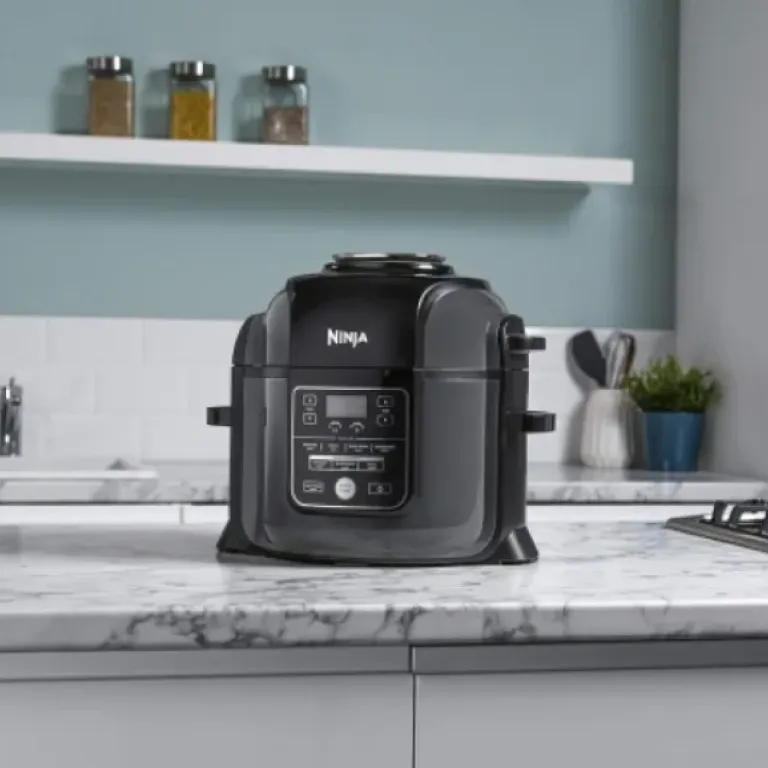
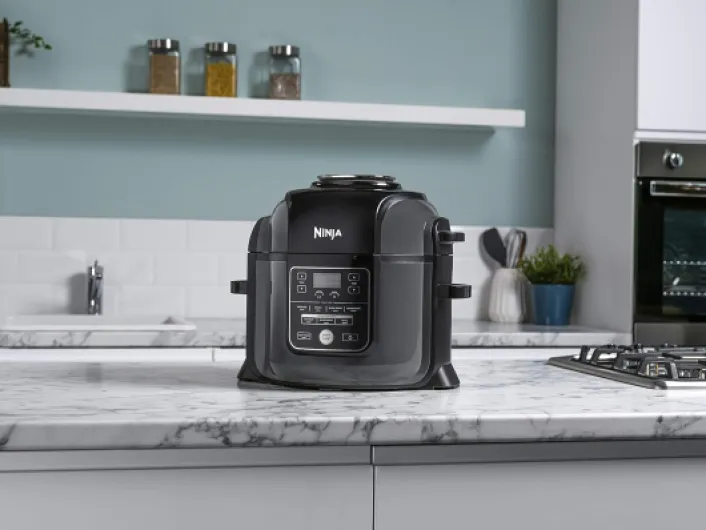
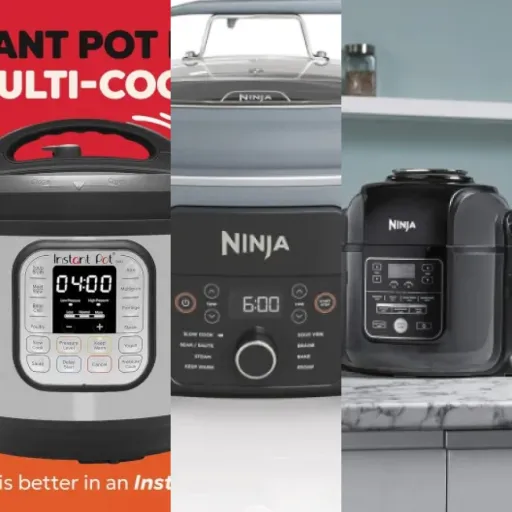
Design-wise, this is not a discreet appliance. It’s a chunky black and grey plastic box with a chrome‑effect front panel. The footprint is roughly 33 x 39 cm and it’s about 35 cm high, but the key problem is the hinged lid. It opens upwards and a bit backwards, so if you put it under wall cupboards, the lid will hit them. In my kitchen, I had to slide it forward on the counter every time I wanted to open it fully, which got old quickly. I ended up parking it on a bit of clear worktop with no cupboards above.
The industrial look some reviewers mentioned is accurate. It’s not ugly, but it’s not going to blend in with a minimal, all‑white kitchen. It looks like a serious machine, more like something from a professional kitchen than a cute gadget. Personally, I don’t care how it looks as long as it cooks well, but if you’re picky about aesthetics, just know it’s more “big black unit” than “nice design piece”.
The control panel is simple enough: clear icons, temperature and time buttons, and a central dial. The display is bright and easy to read. One thing that could be better is the visual feedback when it’s under pressure. The rotating lights are not obvious to everyone, and I’ve seen the same problem as one Amazon reviewer: someone tried to open the lid while it was building pressure because it doesn’t scream “don’t touch me” visually. There is a mechanical lock once full pressure is reached, but during the early build‑up it still feels a bit too casual.
Overall, in terms of design, it’s practical but bulky. The handle on the pressure lid is solid, the hinge feels sturdy, and the basket and rack fit well inside. But if your kitchen is already crowded, fitting this in will require some rearranging. This is not the kind of cooker you take in and out of a cupboard every time; it’s a permanent resident on the counter.
Mostly plastic shell, decent build where it matters
The outer shell is mainly plastic, which might put some people off at this price, but the parts that actually touch food are metal with a non‑stick coating. The main 7.5L pot has a non‑stick interior that so far has held up well for me. I’ve sautéed onions, browned meat, and done sticky sauces in there, and nothing has welded itself to the bottom yet. I still use a silicone or wooden spoon to avoid scratching it, because non‑stick never likes metal long‑term.
The Cook & Crisp basket is a metal mesh with a non‑stick coating. It feels solid and doesn’t flex much, even loaded with a pile of chips or chicken pieces. The 2‑tier reversible rack is stainless steel and feels sturdy enough, not flimsy. This rack is handy when you want to do, say, chicken on one level and potatoes on the other, or steam veg over something else. It’s not fancy, but it works and doesn’t bend.
The lids are where you feel the mix of materials the most. The built‑in lid has the heating element and fan, and the plastic outside can get warm but not scalding. The pressure lid has the usual seals and valves, and those feel decent quality. You do need to remove and clean the rubber seal regularly, or you’ll end up with lingering smells. It’s not hard to pop out and put back in, but it’s one more thing to remember.
Overall, the materials feel solid enough for daily use, but not premium. It’s not stainless steel on the outside, and it doesn’t have that heavy metal feel of some standalone pressure cookers. On the flip side, the plastic shell keeps the weight just about manageable and it’s easy to wipe down. As long as you treat the non‑stick parts with a bit of care and don’t go at them with metal scourers, I don’t see an obvious weak point in the build.
How it holds up with regular use
I haven’t had it for years, but with regular almost daily use for several weeks, there are some early signs about durability. The hinge on the main lid still feels tight, no wobbling or weird noises. The buttons and touch panel respond the same as day one. The non‑stick pot still looks good: no peeling or scratches so far, though I’m careful and only use soft utensils and avoid stacking metal stuff inside it.
The parts that go in the dishwasher (pot, basket, rack, some internal bits) have survived fine. I’ve mostly put them on the top rack or a gentle cycle. The coating on the basket hasn’t flaked, and the rack hasn’t warped. The silicone sealing ring on the pressure lid still fits snugly and doesn’t seem stretched. It does hold smells a bit (like any pressure cooker seal), but a good wash and airing it out helps. Long‑term, I expect to have to replace the seal at some point, which is pretty standard for this kind of cooker.
The outer plastic body is easy enough to wipe clean. It does pick up fingerprints and grease splashes, but nothing a damp cloth can’t handle. The only thing I can see potentially being annoying long‑term is dust and grease getting into the little gaps around the lid hinge and the fan area. You can reach most of it with a cloth, but it’s not spotless without a bit of effort.
Given Ninja’s general reputation and how this unit feels in the hand, I’d rate durability as pretty solid for the price bracket. It doesn’t feel flimsy, and nothing has given me that “this will snap in six months” vibe. Of course, time will tell with the electronics and the heating element, but based on the build and other user reviews, I’d expect it to handle regular family use without falling apart quickly.
Cooking performance: where it actually shines
This is where the Foodi MAX earns its place on the counter. Pressure cooking is fast and consistent. I’ve done stews, curries, and pulled pork. Stuff that would take 2–3 hours in the oven is done in 40–60 minutes including pre‑heat and pressure release. Dried beans and chickpeas come out cooked through without babysitting. Compared to my old stove‑top pressure cooker, it’s quieter and I don’t have to hover around adjusting heat. It’s also nice to be able to brown meat directly in the pot using the sauté function and then switch straight to pressure mode.
The air fry / crisp function is genuinely useful. Frozen chips take around 20–25 minutes, come out evenly browned and crispy with just a tiny bit of oil spray. Homemade wedges and chicken thighs come out nicely browned too. Compared to a cheap basket air fryer I had before, the Ninja cooks more evenly and has more space, so food doesn’t sit piled up on itself. That said, you still need to shake or stir halfway through for best results, especially with chips.
For roasting and baking, it does a pretty solid job. Whole chicken: about 30 minutes pressure cook plus 10–15 minutes air crisp to brown the skin, and you get moist meat and crispy skin without heating the whole kitchen. I’ve baked bread and simple cakes in it; they came out fine, maybe a bit darker on top than in a normal oven, but fully cooked. I still prefer a regular oven for anything delicate, but for weekday meals, this is more than good enough.
The slow cook mode is the least exciting. It works, but I feel like the high setting still runs lower than my old dedicated slow cooker. You need to allow plenty of time. For me, if I’m in a hurry, I just use pressure cook instead. Overall, performance is strong on pressure, air fry, and roast, decent on bake, and just okay on slow cook. If you mainly want a slow cooker, I’d say get a cheaper, simpler one. If you want speed and versatility, this does the job well.
What you actually get with the OP450UK
Out of the box, you get the main unit, a 7.5L cooking pot, a 4.7L Cook & Crisp basket, and a 2‑tier reversible rack. There’s also a thin recipe booklet that’s fine for a start but you’ll quickly end up on YouTube or Facebook groups for better ideas. The capacity is clearly aimed at families or batch cooking. For context, a whole medium chicken plus potatoes fits in there with room to spare, and I’ve done chilli for 5 people with leftovers without filling it to the top.
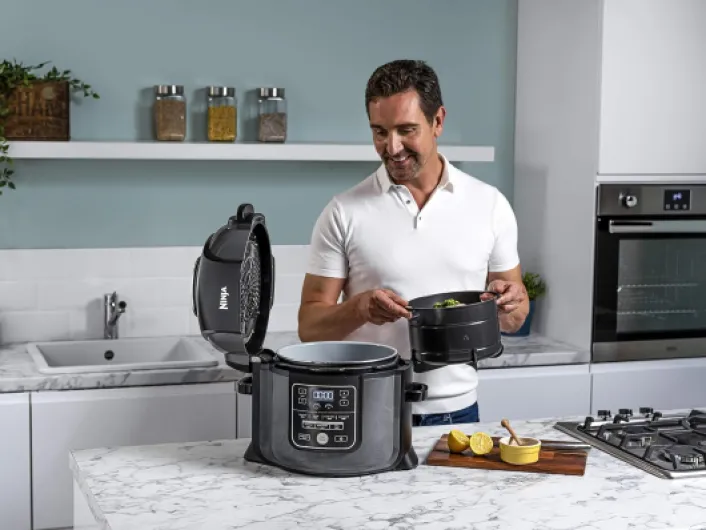
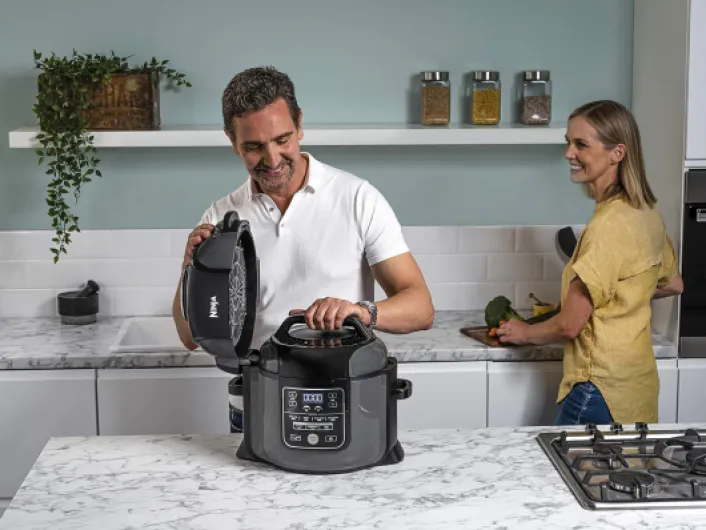
The controls are all on the front with a touch panel and a big dial. The layout is fairly clear: you pick the function (pressure, air fry, slow cook, etc.), set time and temperature, and hit start. There’s a separate pressure lid you use for pressure cooking and slow cooking, and the built‑in lid on a hinge is for air frying, roasting, grilling and so on. The two‑lid situation is a bit annoying at first because you need to find somewhere to put the pressure lid when you’re not using it, but you get used to it.
In terms of noise and heat, it’s reasonable for what it is. The fan is noticeable on air fry/roast modes, but it’s less noisy than my old cheap air fryer. It does throw some heat out the back, so don’t push it right up against a wall or under a low cupboard when using it. The keep warm function is handy; I’ve left food in there for 30–40 minutes and it didn’t dry out too much.
In practice, the "7‑in‑1" label is a bit of a marketing number, but the key modes (pressure cook, air fry, bake/roast, slow cook, sauté) are genuinely useful. I haven’t used steam on its own more than once, and grill is basically a very hot top element that’s nice for browning the top of things. So you do get a lot of flexibility, but don’t expect to use every single mode every week unless you’re really into experimenting.
Does it actually replace other appliances?
In daily life, the big question is: does this thing actually let you ditch other gadgets? In my case, yes, to a point. Since getting it, I’ve stopped using my oven for small meals like two portions of chicken and veg or a tray of chips. It heats up quickly, cooks faster, and is easier to clean. My old air fryer went straight into storage, and I haven’t touched my separate slow cooker once because if I want that kind of result, I just use the pressure cooker and maybe keep warm afterwards.
Where it’s most effective is for full meals in one pot. Example: I’ve done a whole chicken under pressure, then swapped to air crisp to brown it, and while it was resting I threw in potatoes in the basket to crisp up in the leftover heat. Start to finish, I had a roast‑style meal in about an hour, with far less faff than juggling oven shelves. Same with pasta bakes: I sauté onions and meat, add sauce and pasta, pressure cook briefly, then sprinkle cheese on top and switch to bake/roast to finish it off.
On the flip side, it’s not magic. You still need to learn timings, especially with pressure cooking. Overcook something and it’ll turn to mush, undercook and you’ll be putting the lid back on. The interface is clear but you do need to actually read the manual or at least follow a few online recipes to get the hang of it. Also, for very simple things like reheating a single slice of pizza or making one piece of toast, it’s overkill; a microwave or toaster is easier.
Overall, in terms of effectiveness, I’d say it genuinely cuts down on other appliances if you commit to using it. It’s not perfect for every type of cooking, but for stews, roasts, chips, chicken, and general weekday meals, it gets the job done and saves time. If you’re the type who buys gadgets and then never touches them again, you might not get full value. But if you actually cook several times a week, it can take over a big chunk of the workload.
Pros
- Very versatile: pressure cook, air fry, roast, sauté and more in one unit
- Large 7.5L capacity suitable for families and batch cooking
- Cooks fast and evenly, especially in pressure and air fry modes
Cons
- Bulky and heavy, with an awkward hinged lid under wall cupboards
- Not cheap compared to single‑function appliances
- Slow cook mode is only average and there is a learning curve for new users
Conclusion
Editor's rating
The Ninja Foodi MAX OP450UK is a big, versatile cooker that genuinely earns its place if you actually cook several times a week. Pressure cooking is fast and reliable, the air fry mode gives you crispy results without loads of oil, and the large 7.5L pot is great for families or batch cooking. It won’t replace every single thing in your kitchen, but it can easily make your oven, separate air fryer, and slow cooker feel a bit redundant for everyday meals.
It’s not perfect. The unit is heavy and bulky, the hinged lid is awkward under low cupboards, and there’s a learning curve, especially with pressure timings. The slow cook mode is decent but nothing special, and if you only want one function like air frying, you can definitely spend less. Also, the design is more “chunky appliance” than something that blends into a stylish kitchen.
I’d recommend this to families, batch cookers, and people who want to speed up weekday cooking and cut down on oven use. If you’ve got enough counter space and you’re willing to learn how to use it properly, it’s a pretty solid all‑rounder. People in tiny kitchens, those on a tight budget, or folks who only cook once in a while might want to skip it or look at a smaller, cheaper model instead.

![Foodi MAX Multi-Cooker [OP450UK], 7-in-1, 7.5L, Electric Pressure Cooker and Air Fryer, Grey and Black](https://www.electric-pressure-cooker-guru.com/storage/709203/81XVN2GgGaL._AC_SL1500_.jpg)