
Summary
Editor's rating
Value: good bang for your buck if you’ll actually use it
Design: big, simple, and mostly well thought out
Materials and build: solid pot, average plastics
Durability and cleaning: built to survive regular use
Performance in the kitchen: fast, consistent, and mostly hassle-free
What you actually get with the Smart Pot 2 Prime
Effectiveness: does it really replace several appliances?
Pros
- Stainless steel inner pot with anti-spinning design makes sautéing and cleaning easy
- Safe and simple lid with automatic sealing and one-button pressure release
- Covers several useful functions (pressure cook, sauté, slow cook, rice, steam, keep warm) reliably
Cons
- Bulky and fairly heavy, not ideal for very small kitchens
- Silicone ring and lid can retain strong food smells over time

Specifications
View full product page →| Brand | Nutricook |
A multi-cooker I actually kept on the counter
I’ve had the Nutricook Smart Pot 2 Prime (the 6L, 1000W version) on my kitchen counter for a few weeks now, and unlike a lot of gadgets I buy on impulse, this one hasn’t gone back in the cupboard. I mainly wanted it as a pressure cooker and rice cooker, but I’ve ended up using the sauté and slow cook functions more than I expected. I’m not a chef, just someone who wants dinner on the table fast without babysitting pots.
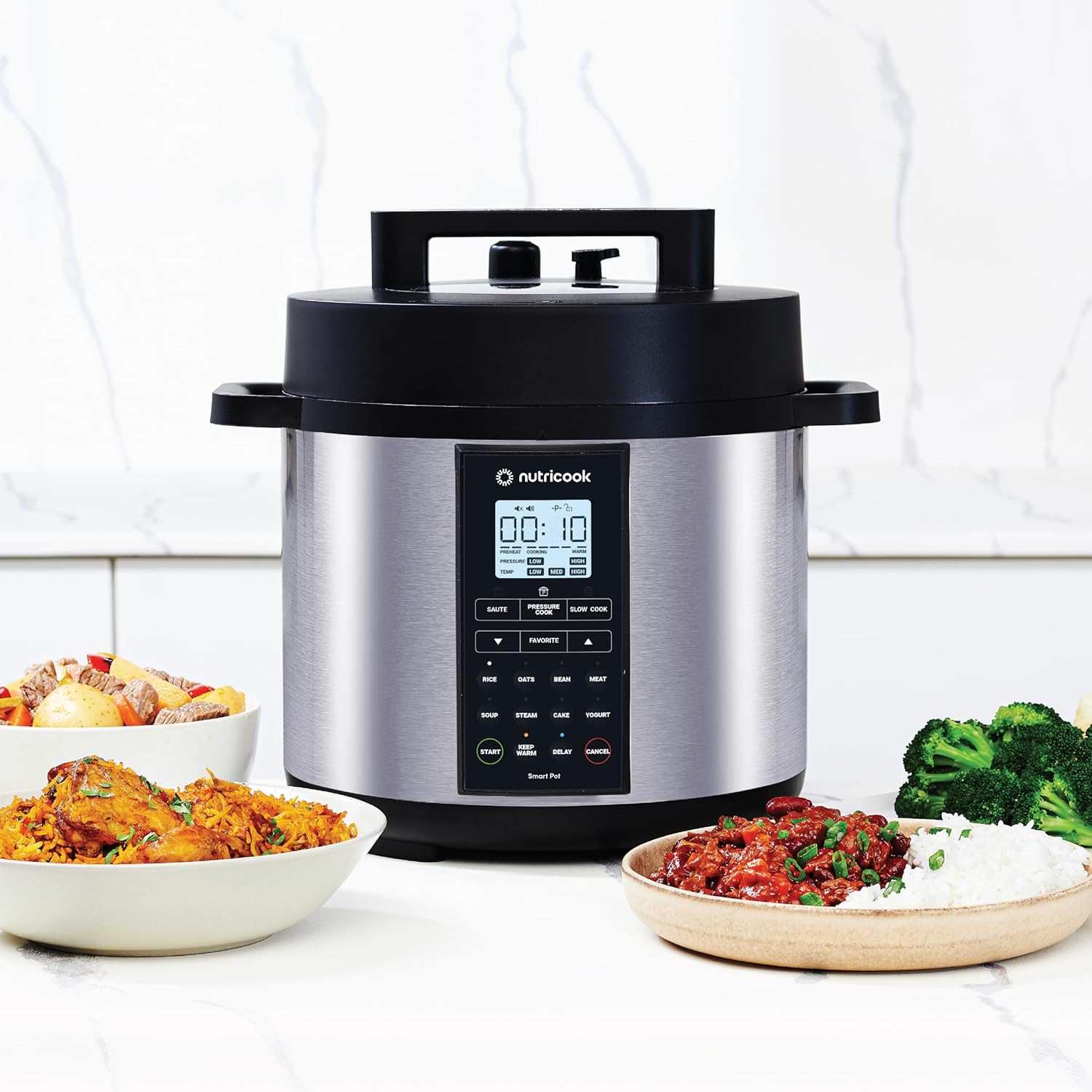
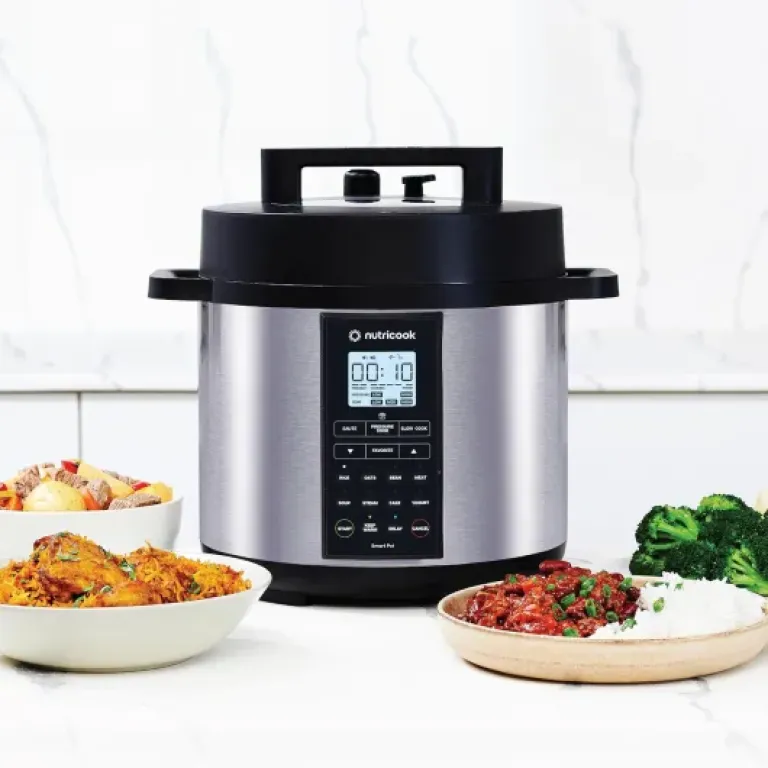
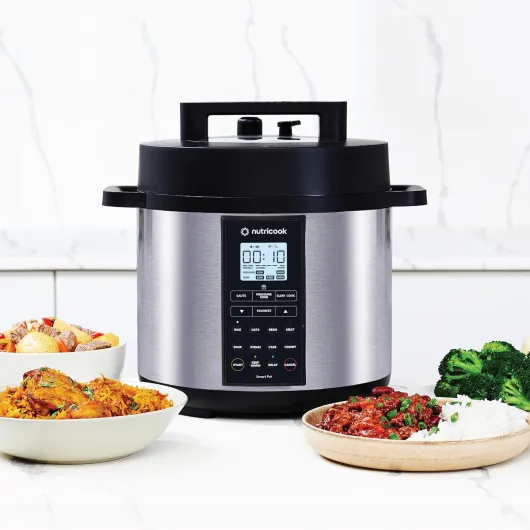
In day-to-day use, the first thing I noticed is that it’s fairly big and heavy, but not ridiculous. It looks like a typical modern multi-cooker: stainless steel outside, black plastic lid, digital screen with buttons. Nothing fancy, but it doesn’t look cheap either. The controls are pretty straightforward once you’ve used it twice. You won’t need to read the manual every time, which is nice.
What pushed me to actually test it properly was the mix of functions: pressure cooker, sauté, slow cooker, rice cooker, steamer, yogurt, cake, and food warmer. On paper that sounds like a lot of marketing, but in practice I’ve used at least five of those regularly. Some modes are more useful than others though, and a couple feel like renamed versions of the same thing with different presets.
Overall, my feeling after several full meals, a few rushed weeknight dinners, and some lazy weekend stews is pretty simple: it’s not perfect, but it does the job well enough that I reach for it instead of pots and pans. There are small annoyances, and if you already have an Instant Pot or similar, it’s not going to change your life. But if you don’t own a multi-cooker yet and you want something that’s easy to live with, this one is pretty solid.
Value: good bang for your buck if you’ll actually use it
Talking value, you have to look at what it replaces. If you were thinking of buying a pressure cooker, a slow cooker, and a rice cooker separately, this one unit will likely be cheaper and take less space. It sits in the mid-range of multi-cookers, not the cheapest on the market but also not at the top like some big brands. For that money, you get a stainless steel pot, decent power (1000W), a safe lid system, and several cooking modes you’ll actually use.
The key question is: will you really use the different functions, or will it become an expensive rice cooker? In my case, I ended up using pressure cook, sauté, rice, and keep warm a lot. Slow cook a bit less, yogurt and cake very occasionally. If you’re the type who likes one-pot meals, batch cooking, and stews, the value is strong. It saves time and gas/electricity compared to long stovetop cooking. If you mostly cook simple pan meals and don’t care about pressure cooking, then it’s probably overkill.
Compared to well-known competitors like Instant Pot, it holds up pretty well. The interface is simple, the pot is good, and the safety features are on par. You might not get the same ecosystem of recipes and accessories, but honestly, most Instant Pot recipes work here with minor adjustments. For the price, you get a pretty solid and versatile tool that doesn’t feel like a toy. There are cheaper no-name multi-cookers, but they often cut corners on the pot quality or lid mechanism.
So in terms of value for money, I’d rate it as good. Not a crazy bargain, not overpriced either. If you’re going to use it several times a week, it will pay for itself in convenience pretty quickly. If you only cook once in a while, you might be better off with a simpler, cheaper appliance.
Design: big, simple, and mostly well thought out
Design-wise, this thing is pretty straightforward: brushed stainless steel body, glossy finish, black plastic lid and base. It’s not a design piece, but it looks decent on a counter and doesn’t scream "cheap gadget". The size is something to keep in mind: 6L capacity means the body is chunky. If you have a tiny kitchen, it will take a noticeable chunk of space. I can still slide it under standard wall cabinets, but opening the lid fully needs a bit of clearance at the back.
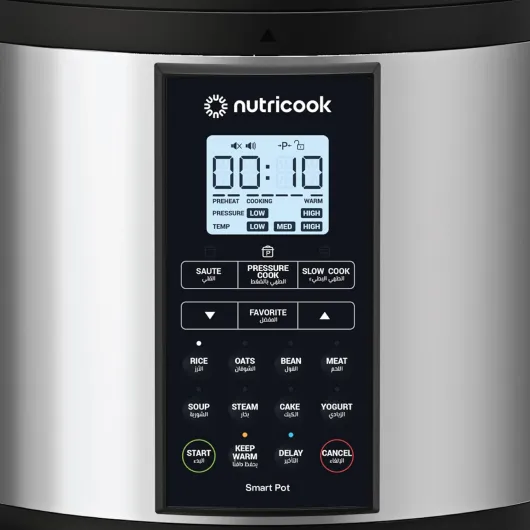
The front panel has physical push buttons with a touch-style layout and an LCD display in the middle. The screen is bright enough and the text is clear. You have dedicated buttons for modes (pressure cook, slow cook, sauté, rice, etc.), plus time adjustment, start/stop, and the Favorite button. The learning curve is short: after two or three uses, I stopped thinking about which button does what. That’s a good sign for design in my book. No need to dig into confusing menus every time.
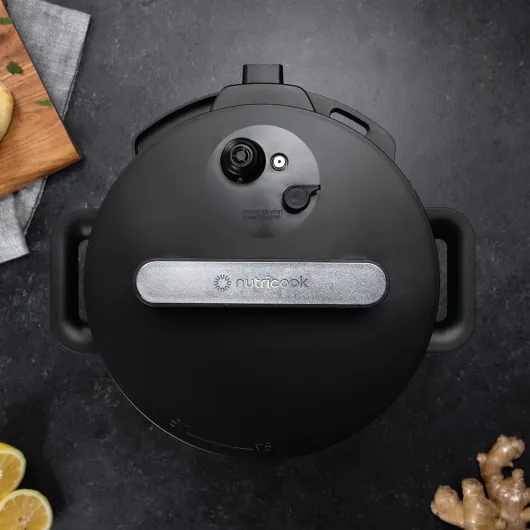
The lid design is one of the better parts. The automatic sealing when you start pressure cooking removes a common mistake (forgetting to close the valve). When you want to release pressure, you press a big button on top. Steam comes out in a controlled jet away from your hand. You still need to keep your face and cabinets out of the way, but it feels safer than manual valves you have to twist. The handle is chunky and the lid locks in place firmly; there’s no wobble.
On the downside, because it’s all one big unit, it’s not super easy to store if you’re tight on space. The power cable is fixed, not detachable, so you can’t just wrap it and stash it separately. Also, the glossy parts pick up fingerprints and smudges fast, so if you care about it looking pristine, be ready to wipe it often. But overall, the design is practical: it’s made to be used, not admired.
Materials and build: solid pot, average plastics
The main cooking pot is stainless steel (SUS 304), which is one of the reasons I was interested in this model. I’m not a fan of non-stick coatings in pressure cookers because they tend to wear out. Here, you get a bare metal inner pot that feels sturdy. It has some weight to it, doesn’t flex, and the inside doesn’t scratch easily with normal use. I’ve used metal tongs and a regular spoon for stirring, and after several weeks, I don’t see any obvious damage or weird discoloration.
The outer shell is brushed stainless steel with plastic top and bottom. The metal part feels decently thick and doesn’t dent easily. The plastics are what you’d expect at this price: not premium, but not flimsy. The lid has a mix of hard plastic and some silicone seals. The sealing ring is removable and feels like standard silicone used in multi-cookers. It doesn’t seem cheap, but like all silicone rings, it will probably absorb some food smells over time, especially from strong spices. That’s normal, not really a fault of this specific product.
One nice detail is the anti-spinning design of the inner pot. The pot has a shape and base that lock into the heating plate so it doesn’t rotate while you stir. That means less friction on the bottom and a better connection for heating. It sounds minor, but compared to some budget cookers where the pot spins annoyingly, this feels more solid. The overall weight of the unit (about 6 kg) also gives a sense of stability on the counter; it doesn’t slide around when you stir.
If I have to nitpick, the finish on the stainless steel marks quite easily with fingerprints and splashes. After cooking something that spits a bit (like browning meat), you get spots on the outside that you need to wipe. Also, the plastic parts around the control panel and lid don’t give a luxury feel, but they’re aligned well and nothing rattles. For the price range, I’d say the materials are pretty solid and practical, not high-end, but good enough that I’m not worried about it falling apart in a year.
Durability and cleaning: built to survive regular use
I obviously haven’t used it for years, but after several weeks of pretty frequent cooking (roughly 4–5 times a week), nothing suggests it’s fragile. The hinges on the lid still feel tight, the locking mechanism hasn’t loosened, and the buttons click the same as on day one. The stainless steel inner pot shows no warping or weird color changes, even after high-heat sautéing and pressure cooking thick sauces. That’s usually where low-quality pots start showing stains or slight deformation.
The silicone sealing ring is still in good shape, no cracks or stretching. It does keep a bit of smell after cooking strong dishes like curry, which is normal. You can remove it and wash it separately. If you’re picky about smells, you might want a second ring for sweet dishes, but that’s true for almost all multi-cookers, not just this one. The exterior metal hasn’t scratched badly, but it does collect fingerprints and dried splashes, so you’ll probably be wiping it down after messy cooking sessions.
Cleaning is straightforward. The inner pot is dishwasher safe, and it really does come out clean with no effort. Even handwashing is easy: food doesn’t cling too hard to the stainless steel as long as you soak it briefly if something stuck a bit. The lid takes a little more attention: you need to remove the sealing ring and wipe around the edges to avoid buildup. It’s not difficult, just an extra step. The steam release area also needs a quick wipe now and then, especially after starchy dishes.
From a durability point of view, I’d say it feels more solid than the very cheap multi-cookers I’ve tried before. Nothing about it feels like it’s about to break, and the weight and materials give some confidence. Of course, real durability will show after a year or two, but based on the build and how it’s holding up so far, I expect it to handle regular family use without major drama.
Performance in the kitchen: fast, consistent, and mostly hassle-free
In terms of raw performance, this 1000W, 6L cooker is more than enough for everyday family meals. I’ve done several pressure-cooked stews, lentils, chickpeas, rice, pasta one-pot dishes, and a couple of slow-cooked recipes. The main thing: it heats up quickly and cooks evenly. For example, a beef stew that would usually take 2+ hours on the stove was done (including browning the meat on sauté) in around 45 minutes total. Browning took about 10–12 minutes on sauté, then 25 minutes under pressure, plus a bit of time to come to pressure and release.
The sauté mode is actually useful, not an afterthought. It gets hot enough to properly brown meat and onions, not just lightly warm them. The pot doesn’t spin, and there are no weird hot spots where food burns while other parts stay pale. Once you switch from sauté to pressure cook, the transition is smooth: you add liquid, close the lid, pick the mode and time, and it does the rest. Preheating to pressure takes a few minutes depending on how full the pot is.
Rice cooking is decent. It’s not the same level as a dedicated high-end Japanese rice cooker, but for everyday white rice, it’s consistent. I did several batches with different water ratios and got fluffy rice once I found the ratio I liked. It doesn’t stick too much to the bottom, and cleaning after rice is easy. For slow cooking, it behaves like a regular slow cooker: low and high settings, long cooking times. I feel the slow cook mode runs slightly hotter than some old-school ceramic slow cookers, so you might need to adjust times a bit if you’re used to those.
Pressure release with the button works as advertised. Quick release takes a few minutes depending on how much liquid you have inside. It’s loud, like any pressure cooker, but controlled. I never felt like it was going to spray food everywhere. The only performance downside: the beeps are a bit weak, and if you’re in another room you might miss the end signal. Also, there’s no smart connectivity or app, but honestly, I didn’t miss that. For everyday use, I’d rate the performance clearly above basic cheap cookers and good enough for most home cooks who just want reliable meals.
What you actually get with the Smart Pot 2 Prime
On paper, the Nutricook Smart Pot 2 Prime is an "8-in-1" device: pressure cooker, sauté pot, slow cooker, rice cooker, cake maker, steamer, yogurt maker and food warmer. In practice, it’s one main cooking base with a stainless steel inner pot and a smart lid that handles pressure. The model I used is the 6L version, 1000W, 240V, with touch controls and an LCD display that shows cooking status. It weighs around 6 kg and is roughly a 40 x 40 x 40 cm cube, so you need a bit of counter or cupboard space.
The inner pot is stainless steel (SUS 304) and has an anti-spinning design. That means when you’re sautéing, the pot doesn’t rotate while you’re stirring, which sounds like a tiny detail but actually matters. With some cheaper multi-cookers, the pot spins when you stir and it’s annoying. Here, it stays put, so browning meat or onions is more like working in a normal pot.
The lid has a pressure release button and automatically seals when you start pressure cooking. When you’re done, you press one button and it releases pressure in a controlled way. No manual valve twisting, which is good if you’re a bit nervous about pressure cookers. The LCD is clear enough: it shows the mode, time, and some icons that tell you if it’s heating, under pressure, or keeping warm. There’s also a "Favorite" button that lets you save a custom program for a dish you make often.
In daily use, I’d say you realistically use it for: fast stews, curries, soups, rice, pasta-type one-pot dishes, steaming veg, and keeping food warm. The yogurt and cake functions are there, they work, but they’re more niche. It’s not magic, it doesn’t cook for you, but it simplifies the steps. You throw stuff in, set time and mode, and walk away. If that’s what you’re looking for, the presentation matches reality pretty well.
Effectiveness: does it really replace several appliances?
Nutricook sells this as 8 appliances in 1, which always sounds a bit inflated. After using it, I’d say it realistically replaces: a pressure cooker, a basic rice cooker, a slow cooker, and a basic steamer. It also covers "keep warm" functions pretty well. The yogurt and cake modes work, but they’re more like bonus features than full replacements for dedicated gear. So yes, it cuts down on the number of separate devices you need, but it doesn’t fully replace a high-end rice cooker or a dedicated oven for baking.
For day-to-day cooking, the effectiveness is in the way it handles one-pot meals. You can sauté onions and meat, add spices and liquid, pressure cook, and then keep it warm until dinner. That alone simplifies a lot of recipes. I’ve made chili, curry, pasta with sauce, and soups like this. The food comes out with good texture; beans get soft without turning into total mush, and meat becomes tender without shredding into nothing (as long as you don’t overdo the time). For slow cook mode, I tried a pulled chicken and a beef stew. Both came out as expected, no surprises there.
The warming function is handy. After cooking, it automatically switches to keep warm, and it actually keeps food at a safe, edible temperature without drying it out too quickly. I left a stew on warm for about 3 hours; it thickened a bit but didn’t burn on the bottom. For yogurt, I tested a small batch as a curiosity. It fermented properly, the texture was fine. Is it better than buying yogurt? Not really, but if you like homemade stuff, it’s usable.
So overall, effectiveness is solid: it really does cover a lot of cooking methods in one machine. There are better single-purpose appliances for specific tasks, but if you want one device that can handle most everyday cooking, this does the job well enough to justify its spot on the counter. It’s not magical, but it’s practical and saves time and dishes.
Pros
- Stainless steel inner pot with anti-spinning design makes sautéing and cleaning easy
- Safe and simple lid with automatic sealing and one-button pressure release
- Covers several useful functions (pressure cook, sauté, slow cook, rice, steam, keep warm) reliably
Cons
- Bulky and fairly heavy, not ideal for very small kitchens
- Silicone ring and lid can retain strong food smells over time
Conclusion
Editor's rating
The Nutricook Smart Pot 2 Prime is a solid, no-nonsense multi-cooker that actually earns its place on the counter. It’s not the flashiest brand and it doesn’t reinvent cooking, but it handles the basics very well: fast pressure cooking, reliable rice, proper sautéing, and simple slow cooking. The stainless steel inner pot, the anti-spinning design, and the safe pressure release button make daily use pretty stress-free. The learning curve is short, and after a couple of dinners you’re basically operating it on autopilot.
It’s best suited for people who like one-pot meals, stews, curries, soups, and batch cooking. If you want to throw ingredients in, press a few buttons, and walk away, it fits that lifestyle. Families or couples who cook at home several times a week will probably get good value out of it. On the other hand, if you already own a decent multi-cooker from a big brand, this won’t bring anything radically new. And if you only cook occasionally or mostly use a frying pan and oven, it might end up gathering dust.
Overall, I’d give it a 4/5. Pretty solid performance, good materials for the price, and a design that focuses on practicality more than looks. It’s not perfect, but it gets the job done without drama, which is honestly what you want from this kind of appliance.