
Summary
Editor's rating
Is it good value for money?
Big, chunky, and fairly simple to live with
Stainless-steel pot: practical and easier to trust than non-stick
Built to last a few years, not a lifetime tank
Speed, noise, and real-world usage
What you actually get with the Nutricook Smart Pot 2
How well it actually cooks day to day
Pros
- Stainless-steel 304 inner pot with no non-stick coating and dishwasher-safe
- Smart lid with automatic sealing and one-button pressure release makes pressure cooking less intimidating
- Cooks stews, rice, beans, and curries quickly and consistently with useful keep-warm function
Cons
- Bulky and fairly heavy, needs permanent counter space
- Presets aren’t perfect for every recipe and require some trial and error
- Brand is less known than big competitors, which may worry some buyers

Specifications
View full product page →| Brand | Nutricook |
A multi-cooker for people who just want dinner fast
I’ve been using the Nutricook Smart Pot 2 (6L) for a few weeks now, basically as my main weeknight tool. Before this, I was juggling a basic stovetop pressure cooker, a separate rice cooker, and a slow cooker that mostly collected dust. I wanted something that could sit on the counter, handle most of the cooking, and not force me to read a 40-page manual every time I changed recipes. This Nutricook is pretty much that: a straightforward multi-cooker that focuses on getting food on the table quickly.
In day-to-day use, the first thing that stands out is the one-touch programs and the automatic lid. You don’t spend ages guessing pressure levels and times. For basic stuff like rice, stews, soups, and curries, I just hit a preset, tweak the time a bit, and let it go. I’m not saying it magically cooks everything perfectly, but it gets very close with minimal effort, which is what I care about on a Tuesday night when I’m tired.
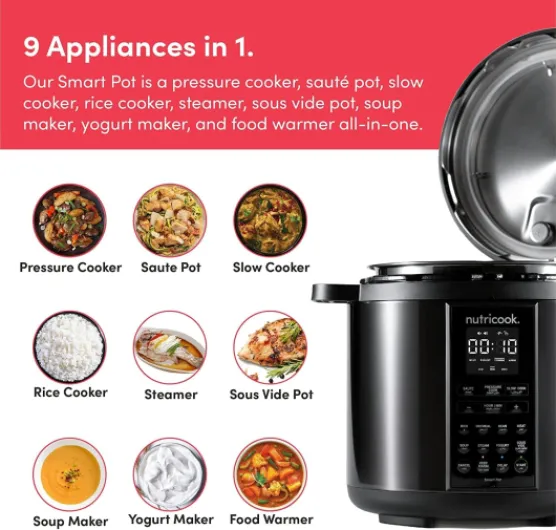
Most of the marketing talk is about it being 9-in-1: pressure cooker, slow cooker, rice cooker, steamer, sauté pot, yogurt maker, sous vide, soup maker, and food warmer. In practice, I’d say I regularly use maybe half of those. Pressure cooking, sauté, rice, soup, and keep-warm get used a lot. Sous vide and yogurt are more occasional, but it’s nice that they’re there, especially if you like trying things without buying extra gadgets.
Overall, my first impression is this: it’s not perfect, but it’s a pretty solid all-rounder. It cooks fast, it’s not overly noisy, and cleaning is easier than I expected thanks to the stainless-steel inner pot and dishwasher-safe parts. There are a few annoyances I’ll get into later (size, learning curve, and the brand being less known), but if you just want something that helps you throw together stews, rice dishes, and curries with little effort, this thing gets the job done.
Is it good value for money?
Looking at the features and what it actually does in the kitchen, I’d say the Nutricook Smart Pot 2 offers good value for money, especially if you take advantage of several of its functions. It replaces a pressure cooker, a rice cooker, a basic slow cooker, and a food warmer at the very least. If you also use sous vide and yogurt, you’re squeezing even more value out of it. Instead of buying three or four separate appliances, this one box handles most of the common tasks.
On Amazon, it sits pretty high in the Electric Multi-Cookers category (top 20) and has an average rating around 4.5/5 from over 1,700 reviews. That doesn’t guarantee perfection, but it does suggest most people are satisfied with what they got for the price. The main positive comments line up with my experience: it’s easy enough to use, cooks quickly, and cleans up without drama. The negative side is more about dents from shipping, a bit of a learning curve, and occasional issues with presets not being ideal for every recipe.
Compared to an Instant Pot of similar size, Nutricook is usually a bit cheaper or in the same ballpark, depending on sales. You don’t get the same brand recognition, but you do get stainless steel, a smart lid, and a full set of programs. For most home cooks, that’s what matters. If you’re the type who wants a known brand name above all else, you might lean to Instant Pot instead. But if you’re more focused on function and price, this is a sensible option.
For me personally, the value comes down to this: I’ve used it several times a week without feeling like I wasted money on a gadget that just sits there. It actually replaced other tools, saves time, and hasn’t given me any serious headaches so far. It’s not dirt cheap, but for what it can do and the time it saves, I’d call it good value, especially if you catch it on discount.
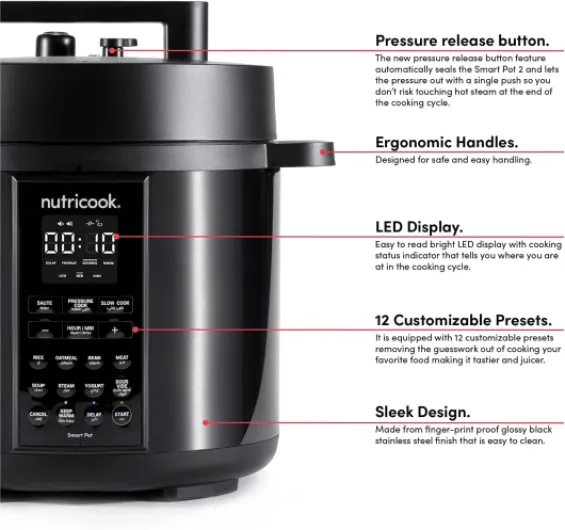
Big, chunky, and fairly simple to live with
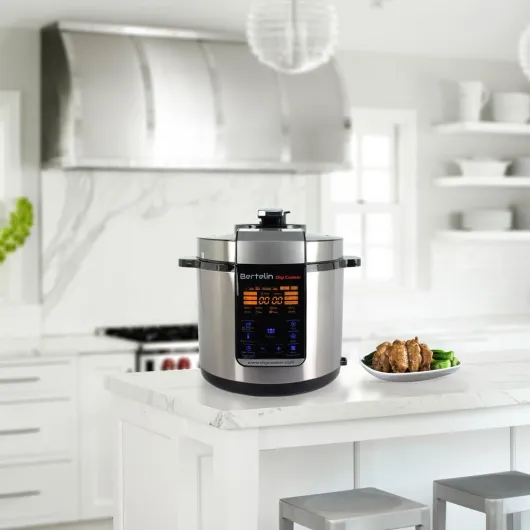
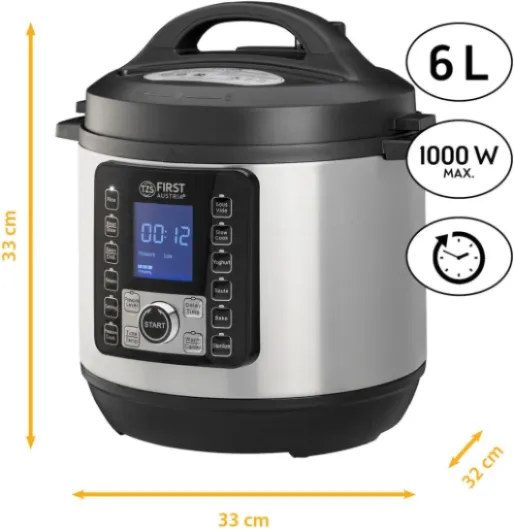
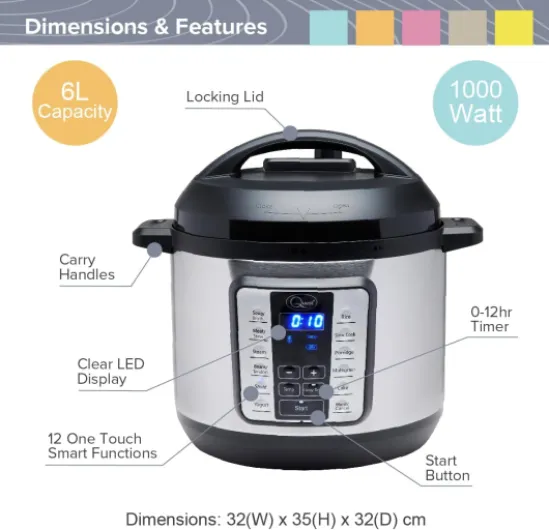
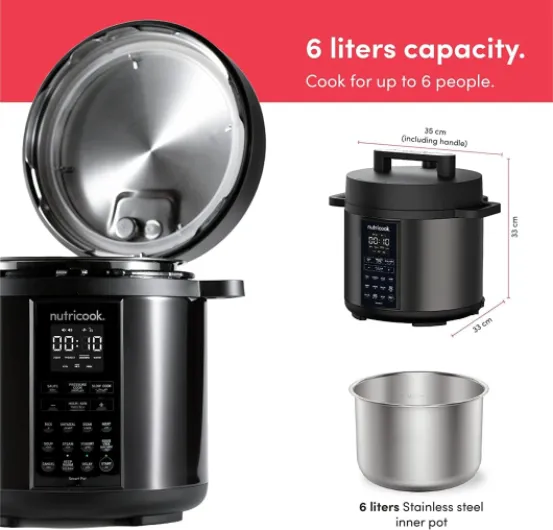
Design-wise, the Nutricook Smart Pot 2 leans more toward practical than pretty. It has a glossy finish, stainless-steel accents, and a fairly standard multi-cooker shape. If you’ve seen an Instant Pot, you’ll get the idea. It’s not going to decorate your kitchen, but it doesn’t look cheap either. The body feels solid, and at around 35D x 32W x 33H cm, it’s a big unit. On a small countertop, you’ll definitely notice it, and storing it away after every use would be annoying.
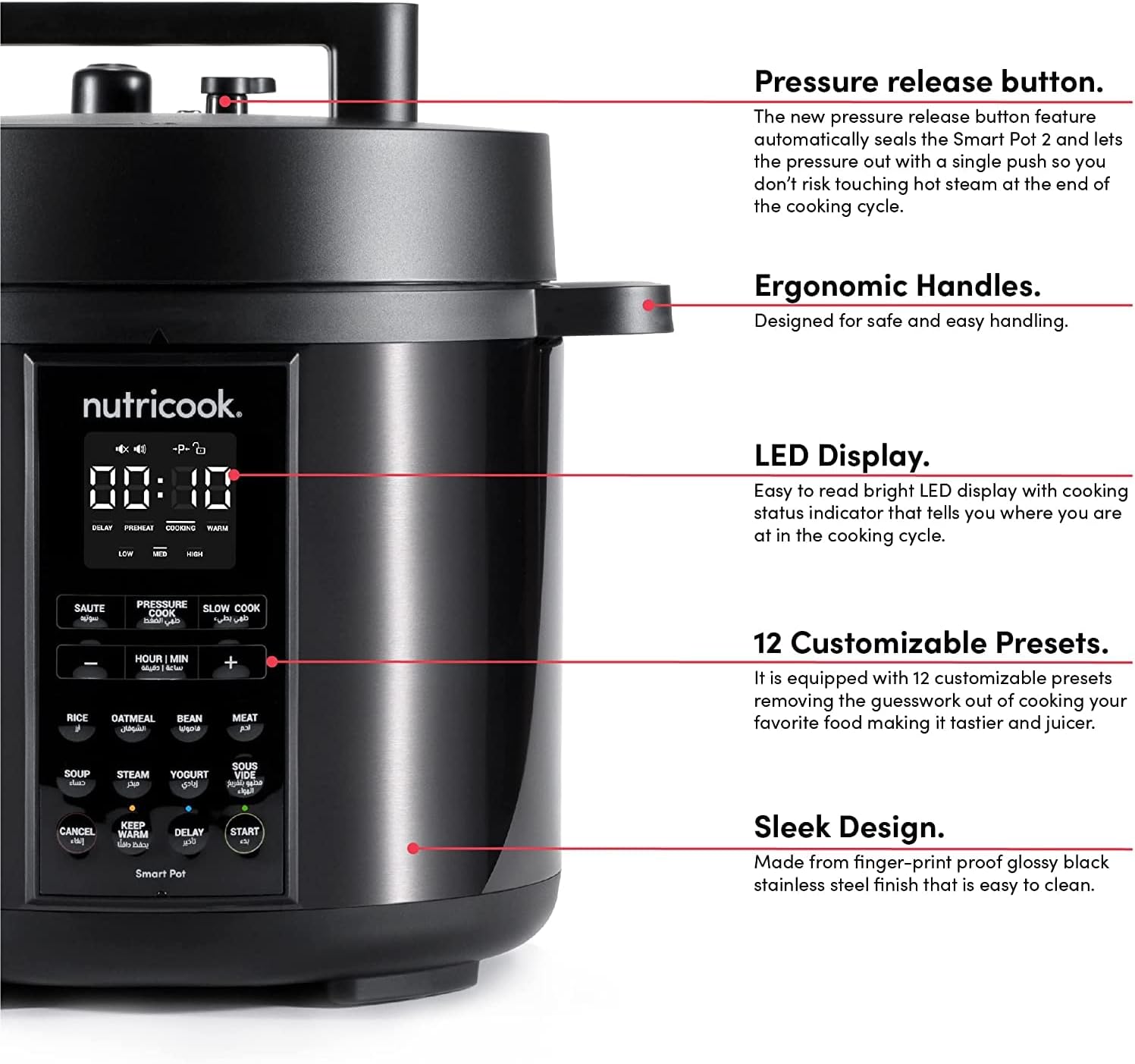
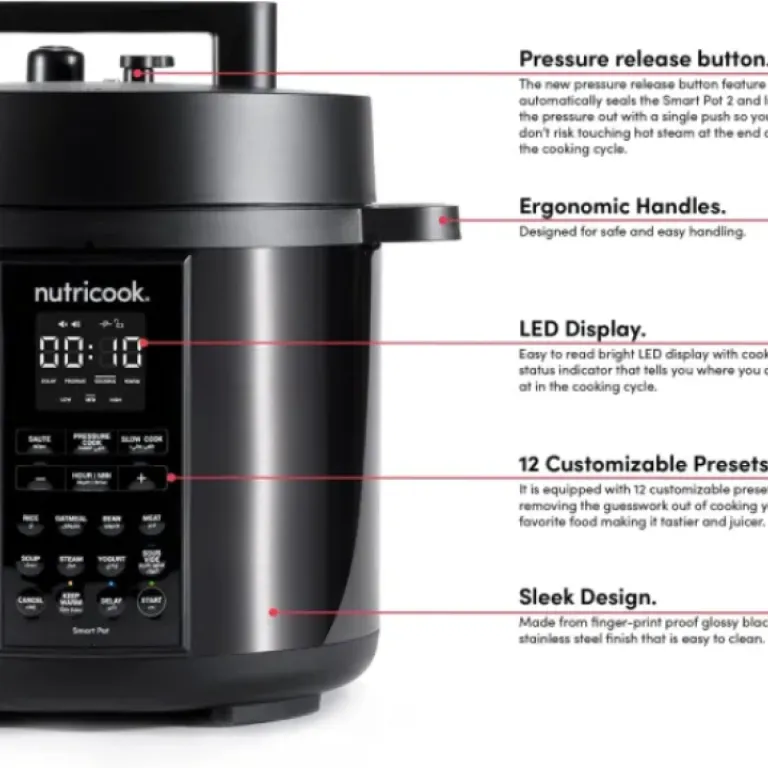
The smart lid is the part I actually appreciate. It seals automatically when you close it, and you release pressure with a button instead of fiddling with a valve that spits steam in random directions. That makes it a bit less intimidating if you’re not used to pressure cookers. The steam release is still hot and you need to be careful, but at least it feels controlled. No weird hissing from a wobbly weight like with old-school stovetop models.
The control panel is laid out in a way that’s easy enough to understand after a couple of runs. The buttons are clearly labeled, and the screen is bright enough. That said, the first few uses do require you to actually read the manual or watch a YouTube video, especially to understand how the presets work versus manual mode. Once you get used to it, you’ll probably stick to the same 3–4 programs for 90% of your cooking.
On the downside, because of the size and weight, it’s not exactly a plug-and-move gadget. If you live in a small apartment, this will basically claim a permanent spot on your counter. Also, the glossy finish shows fingerprints and smudges pretty quickly. If you’re fussy about things looking spotless, you’ll be wiping it down a lot. For me, it’s fine: it looks like a normal, slightly bulky kitchen appliance that’s meant to be used, not admired.
Stainless-steel pot: practical and easier to trust than non-stick
The main selling point for me in terms of materials is the 304 (18/8) stainless-steel inner pot. No non-stick coating, no weird flaking after a few months, and it’s dishwasher-safe. I’ve used non-stick inner pots before, and they always end up scratched or peeling at some point, especially if you sauté a lot. With this one, I can use a normal wooden or silicone spoon, scrub it a bit if something sticks, and not worry about scraping off a coating.
In practice, stainless steel does mean some food sticks when you sauté, especially if you don’t heat the oil properly or you try to brown meat straight from the fridge. But that’s normal for stainless steel. The good part is that those browned bits deglaze easily when you add liquid, and they actually help with flavor. After cooking, I usually soak the pot for 5–10 minutes, then either throw it in the dishwasher or give it a quick scrub. No discoloration so far, and no weird smells.
The outer body is mostly plastic and metal, pretty standard for this type of cooker. It doesn’t feel fragile, and the handles on the sides are sturdy enough to move it around, though I wouldn’t carry it while it’s hot and full. The lid has several seals and plastic pieces for the pressure mechanism. These are the parts you’ll want to clean regularly, because steam and food splatter can build up. The silicone ring in the lid can absorb strong smells (like curry), but that’s normal. A soak with baking soda or vinegar usually helps.
Overall, I’d say materials are decent and practical for the price range. You’re not getting premium metal everywhere, but the important bit—the inner pot that touches your food—is proper stainless steel with no chemical coating. For me, that’s a big plus compared to cheaper cookers with thin non-stick pots that feel like they’ll die in a year. As long as you clean the seals and lid properly, I don’t see any major material red flags here.
Built to last a few years, not a lifetime tank
Durability is always tricky to judge after only a few weeks, but I can at least talk about the build and what I’ve seen so far. The unit feels solid enough for everyday use. The body doesn’t flex when you move it, the handles are sturdy, and the lid mechanism locks and unlocks smoothly. I’ve opened and closed it a lot while testing sauté and pressure cooking, and there’s no sign of the latch getting loose or misaligned.
The stainless-steel inner pot looks like it’ll outlive the rest of the machine. No scratches after multiple uses and cleanings, including some tougher scrubbing after I over-browned onions once. This is the part that usually goes first on cheaper models if they use thin or low-quality non-stick. Here, I don’t see that problem. The only thing you might need to replace over time is the silicone sealing ring in the lid, which is normal maintenance for any pressure cooker.
One Amazon reviewer mentioned getting a unit with dents because it was an Amazon Warehouse deal, but they still said the cooker itself worked very well and cooked fast. That tells me the shell can take a bit of punishment without affecting the internal function. Not that I’d throw it around, but it’s not super fragile. Keep in mind it weighs 5.6 kg, so dropping it wouldn’t be great for your floor either.
With a 2-year warranty, I’d say the brand is reasonably confident it won’t die after six months. It’s not a premium European or Japanese appliance built to last 20 years, but as a mid-range multi-cooker, it feels reliable enough for several years of regular use if you treat it decently: clean the lid, don’t slam it, don’t yank the cord, and don’t ignore warning messages. Compared to cheaper no-name pots I’ve seen fail in under a year, this feels like a safer bet, even if the brand isn’t as famous as Instant Pot.
Speed, noise, and real-world usage
In terms of performance, the Nutricook Smart Pot 2 does what a 1000W multi-cooker should do: it heats up fast, builds pressure in a reasonable time, and doesn’t sound like a train in your kitchen. From my experience, it reaches pressure in roughly 5–15 minutes depending on how full it is and how hot the ingredients are when you start. Frozen stuff or large volumes of liquid obviously take longer. Once it’s at pressure, it keeps a steady cooking cycle without weird temperature swings.
The brand claims up to 70% faster cooking than traditional methods. That’s one of those marketing numbers, but in practice, yeah, it’s definitely faster than simmering on the stove or baking in the oven. Dried chickpeas that usually take more than an hour on the stove were ready in about 30–35 minutes at high pressure (after soaking). Stews that would usually sit on low heat for ages are done in under an hour including preheat and pressure release. For weeknights, that difference is actually useful.
Noise-wise, it’s pretty quiet when running. You’ll hear some soft hissing and clicking when it’s building or releasing pressure, but it’s not the kind of appliance that drowns out conversation. The smart lid’s controlled pressure release is less violent than old-school cookers, but you still get a solid blast of steam, so you want to keep it away from cupboards and walls if possible. No weird rattling or worrying sounds came up during my tests.
In daily use, I like that I can set it and walk away. I’ll throw in ingredients, hit the right program, and go do something else. The automatic keep-warm mode kicks in after cooking, which is handy if you’re not ready to eat right away. The only performance gripe I have is that sometimes the presets feel a bit conservative, so I end up adjusting times manually based on experience. But once you’ve cooked 4–5 common recipes, you get a feel for it, and it becomes a reliable workhorse rather than something you constantly have to babysit.
What you actually get with the Nutricook Smart Pot 2
Out of the box, you get the 6-liter Smart Pot unit, the stainless-steel inner pot, the smart lid attached to the body, and the usual small accessories (measuring cup, rice paddle, maybe a steam rack depending on the bundle). It’s rated at 1000 watts, runs on 220V, and weighs about 5.6 kg, so it’s not some light plastic toy. On the counter, it feels like a proper appliance, closer to an Instant Pot in style than a cheap no-name cooker.
The control panel is a push-button / touch style setup, with clearly labeled programs: pressure cook, rice, slow cook, sauté, yogurt, soup, sous vide, steam, and keep warm. There are also manual options to adjust time and pressure, but honestly, most of the time I just pick a program and adjust the minutes. The display is simple: time, mode, and a few icons. It’s not fancy, but at least it’s not cluttered with useless graphics.
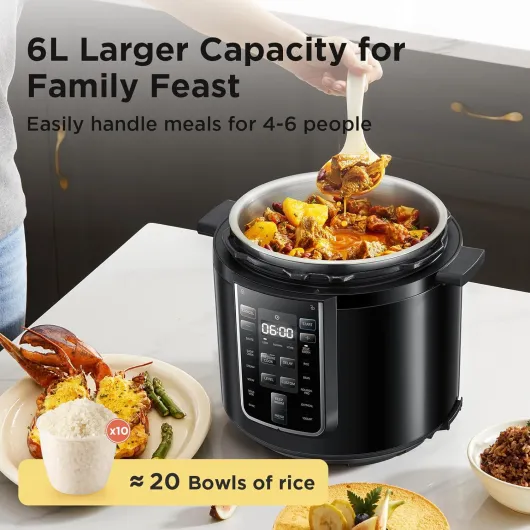
The 6-liter capacity is enough for a family of 3–5 depending on how you eat. I’ve done a big beef stew, around 1.2–1.5 kg of meat plus veg, and it fit fine with some room to spare. For rice, you can easily cook enough for several people and still have leftovers. If you’re single, it’s probably overkill in size, but you can cook once and eat two or three times, which isn’t a bad thing.
One important point: this is made in China, under the Nutricook brand. It’s not as famous as Instant Pot, but it’s not some generic no-label thing either. It comes with a 2-year warranty, which is reassuring, but keep in mind you’re not buying from a top global brand with huge service centers everywhere. Still, judging by the number of reviews and my own use, it feels like a reasonably established product, not a random one-off.
How well it actually cooks day to day
This is where the Nutricook Smart Pot 2 earns its place on the counter: it cooks fast and mostly very reliably. For stuff like beef stew, lentils, chickpeas, and curries, it’s a huge time saver. I did a beef stew with around 1 kg of beef chunks: sautéed the onions and meat directly in the pot, added stock and veg, then pressure cooked for about 25 minutes plus a bit of natural release. The meat came out tender, and the sauce was thick enough after a quick simmer on sauté mode. That’s a lot quicker than simmering on the stove for 1.5–2 hours.
Rice is mostly on point too. The rice program works well once you figure out your own rice-to-water ratio. For standard white rice, I got good results with around 1:1.25 cups rice to water, adjusting slightly depending on the brand. It’s not restaurant-level perfection, but it’s very decent and consistent. The keep-warm function is handy: I sometimes leave rice or stew on warm for an hour or more, and it doesn’t burn, though it can thicken a bit, which is normal.
I also tried the sous vide mode with chicken pieces before finishing them on a pan and once on the grill. It did the job: the meat was cooked evenly and stayed juicy. It’s not as precise as a dedicated high-end sous vide stick, but for home use, it’s fine. Same with yogurt: it works, but you need to be a bit patient and follow a recipe. I wouldn’t buy the device just for those functions, but as extras, they’re nice.
On the downside, the presets aren’t magic. Some recipes still need tweaking. For example, certain beans needed a bit more time than the default, and the slow cooker mode is okay but not mind-blowing—it’s just convenient if you like set-and-forget cooking. Also, if you overload the pot or ignore the minimum liquid rules, you can get a “burn” warning or uneven cooking. But if you follow basic pressure cooker logic, it’s a very effective everyday cooker that covers a lot of ground without much fuss.
Pros
- Stainless-steel 304 inner pot with no non-stick coating and dishwasher-safe
- Smart lid with automatic sealing and one-button pressure release makes pressure cooking less intimidating
- Cooks stews, rice, beans, and curries quickly and consistently with useful keep-warm function
Cons
- Bulky and fairly heavy, needs permanent counter space
- Presets aren’t perfect for every recipe and require some trial and error
- Brand is less known than big competitors, which may worry some buyers
Conclusion
Editor's rating
The Nutricook Smart Pot 2 is a practical, no-nonsense multi-cooker that fits well into everyday cooking. It doesn’t try to be fancy; it just handles rice, stews, curries, soups, and basic one-pot meals with very little effort once you get used to the controls. The stainless-steel inner pot, automatic smart lid, and one-touch programs all help make it feel like a reliable kitchen workhorse rather than a gimmick. It cooks fast, it’s reasonably quiet, and cleaning is straightforward, which is basically what most people want.
It’s not flawless. The unit is big and takes up a lot of counter space, the presets sometimes need tweaking, and the brand isn’t as well-known as some competitors. If you’re very picky about brand reputation or you have a tiny kitchen, you might want to think twice. Also, if you only cook simple stuff a couple of times a week, a basic pot and pan might still do the job without adding another appliance to your life.
But if you’re cooking for a small family, like the idea of set-and-forget meals, and want to replace several gadgets with one solid machine, this Nutricook is a pretty solid choice. It’s especially good for people who want pressure cooking without the fear factor of old stovetop models. Overall, I’d give it a 4 out of 5: strong performance and good value, with a few minor drawbacks that are easy to live with.