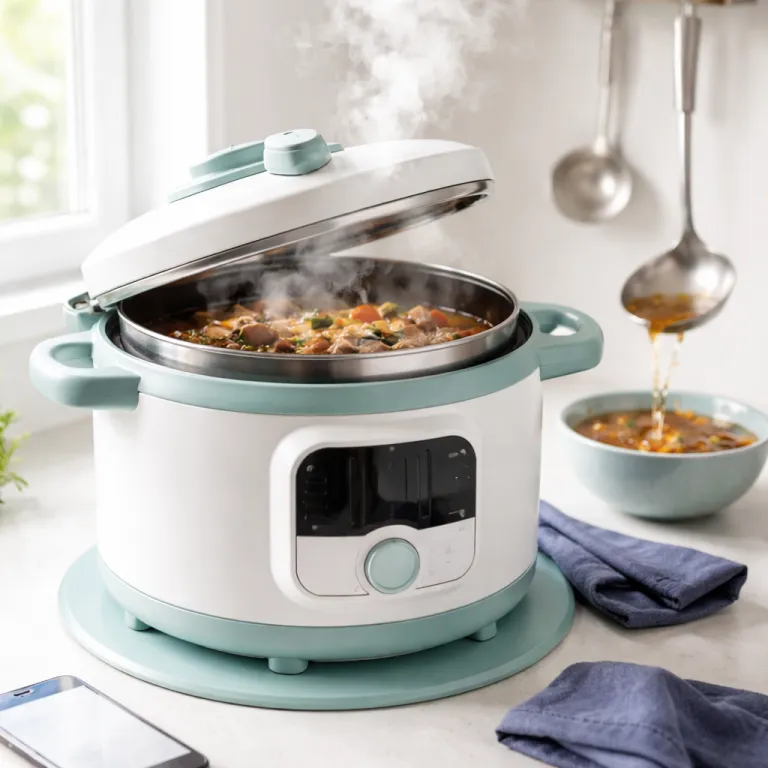
What “smart” really means in a WiFi pressure cooker
A smart pressure cooker with a WiFi app promises to simplify cooking. In practice, the question every buyer asks is whether a smart pressure cooker WiFi app is worth it for daily meals. The honest answer depends on how you cook, how you use recipes, and how much you value step-by-step guidance.
When brands say a cooker is smart, they usually mean three things. First, the cooker connects to your home Wi‑Fi and pairs with an app that sends guided recipes, controls pressure settings, and tracks cooking time in real time. Second, the companion app often offers step-by-step cooking programs that automatically adjust pressure, temperature, and cycle length based on ingredients and pot size.
Third, a smart Wi‑Fi cooker can send notifications to your phone, such as when it reaches pressure or when natural release is complete. That means you can start pressure cooking a pot of rice or beans, walk to another room, and let the app work as your remote monitor. For some cooks, that remote control feels like magic; for others, it is just another notification to ignore.
Take the Instant Pot Pro Plus, one of the latest connected models from the Instant Pot line. It pairs with the Instant Brands app control system, which lets you start, stop, and adjust a pressure cook program from your phone while the cooker sits quietly on the counter. You can see the cooking time countdown, the preheat stage, and the keep-warm phase on both the cooker display and the app interface.
The Chef iQ Smart Pressure Cooker pushes the concept further with a built‑in scale and a more complete app. You drop ingredients directly into the pot, and the software calculates the correct pressure cooking time and liquid ratio for that specific recipe. For beginners who fear getting the water level wrong in a pot of rice or soup, that kind of hand‑holding can feel like a safety net.
Smart features also change how you think about recipes and performance. Instead of reading a recipe card and manually setting a cooking cycle, you tap a guided program and let the cooker choose high pressure, low pressure, quick release, or natural release automatically. The trade‑off is that you must trust the model and its software more than your own instincts as a cook.
From a buying‑guide perspective, the essential feature is not just whether the cooker has Wi‑Fi, but whether the app is stable, intuitive, and updated regularly. A smart pressure cooker WiFi app worth it will offer clear progress bars, reliable notifications, and offline access to saved recipes when your home internet connection drops. If the app crashes or the privacy policy feels opaque, the smart label quickly loses its shine.
Safety still matters more than connectivity when you choose any pressure cooker. Before paying extra for smart Wi‑Fi, make sure your chosen model includes robust safety locks, lid sensors, and pressure release systems that meet the five safety features experts consider non‑negotiable, as explained in this pressure cooker safety guide. Smart features are nice; safe pressure control is essential for every family kitchen.
Chef iQ vs Instant Pot Pro Plus: which smart app actually helps you cook
Two models dominate the current conversation about whether a smart pressure cooker WiFi app is worth it. The Instant Pot Pro Plus and the Chef iQ Smart Pressure Cooker both promise guided cooking, but they approach the problem differently. Your choice between them should depend on how much structure you want while you cook.
To keep comparisons fair, the observations below draw on manufacturer specifications, independent lab tests from major appliance reviewers, and long‑term owner reports from consumer forums. That mix gives a realistic picture of how each connected cooker behaves in everyday use rather than just in marketing photos.
The Instant Pot Pro Plus feels familiar if you have used any Instant Pot before. You still get the stainless steel inner pot, the classic pressure cook and sauté buttons, and a reliable quick‑release switch on the lid. What changes is that the app mirrors the cooker controls on your phone and adds a library of recipes with automatic cooking time presets.
In testing, the Instant Brands app works best for straightforward pressure cooking tasks like rice, beans, and soups. You can select a recipe, confirm ingredients, and let the software program set the pressure level and cooking cycle for you. When the cooker reaches pressure, your phone buzzes; when the quick release or natural release phase starts, you get another alert.
The Chef iQ Smart Pressure Cooker leans harder into the idea of a complete app‑driven kitchen tool. Its built‑in scale weighs ingredients directly in the pot, then the app calculates water ratios and cooking time for that exact scenario. For a busy family that wants to dump ingredients, tap start, and walk away, this model can feel like a sous‑chef in a compact cooker.
Where Chef iQ pulls ahead is in its guided recipes, which break every step into short, clear prompts. The app explains when to add each ingredient, when to stir with your soup spoon, and when to close the lid for pressure cooking. It also tracks performance over time, so you can see how often you cook certain dishes and adjust your weekly meal planning.
However, the Instant Pot Pro Plus still wins on ecosystem and familiarity. Many home cooks already own an Instant Pot, know how the quick‑release valve sounds, and trust the stainless steel pot to handle everything from rice to yogurt. For them, adding smart Wi‑Fi control feels like a gentle upgrade rather than a complete shift in how they cook.
Price complicates the decision, because smart features usually add 50 to 100 euros compared with similar non‑connected models, based on typical retail listings from major appliance retailers. If you mostly cook a few favorite recipes and already know the right cooking time for each, the extra cost for a smart pressure cooker WiFi app may not be worth it. A basic timer on your phone and a well‑tested recipe card can replicate most of what the app offers.
Think of smart features as you would think of specialty bakeware. You can bake an excellent cake in a standard pan, but a carefully chosen pan can elevate the result, as explained in this guide on selecting cake pans that improve homemade cakes. In the same way, a smart Wi‑Fi cooker can refine your workflow, yet it will not replace basic cooking skills or good ingredients.
When WiFi pressure cookers genuinely help — and when they do not
For some households, a smart pressure cooker WiFi app is worth it because it removes friction. Beginners who feel anxious about pressure levels, quick‑release timing, or whether the pot has enough liquid gain confidence from guided prompts. The app becomes a quiet coach that turns pressure cooking from a mystery into a repeatable routine.
If you are new to electric pressure cookers, the biggest hurdle is often psychological. Locking a lid, watching steam build, and waiting for natural release can feel intimidating when you have never used a cooker before. A clear app that explains each stage, from preheat to keep warm, can make the first ten recipes feel safe instead of stressful.
Parents juggling work, school runs, and late meetings may also find that smart Wi‑Fi control fits their lives. You can start a pot of rice or lentil soup, then monitor the cooking time from your desk while the cooker sits safely on the kitchen counter. When the app sends a notification that pressure cooking is complete and the keep‑warm mode has started, you know dinner will be ready when the family walks in.
Remote monitoring also helps if your kitchen is in another part of the home. Instead of hovering near the cooker to hear the beep for quick release, you can rely on your phone to tell you when to flip the valve. That small change can make pressure‑cooked meals feel less like a chore and more like background cooking.
However, experienced cooks often find that the novelty fades quickly. Once you know that your favorite chili needs 20 minutes at high pressure plus natural release, you may stop opening the app and simply press the pressure cook button on the cooker itself. In that scenario, the smart pressure cooker WiFi app is not worth it, because it adds complexity without improving performance.
There is also the question of resilience when technology fails. If your Wi‑Fi drops, your phone battery dies, or the app crashes mid‑cook, you still need to know how to operate the cooker manually. A good model will let you finish the cooking cycle from the control panel, but some features of the complete app, such as saved recipes or progress graphs, will be temporarily unavailable.
For people who enjoy tinkering, logging meals, and optimizing routines, the data from a smart Wi‑Fi cooker can be satisfying. You can see how often you cook rice, how long you keep warm after each meal, and which recipes your family actually eats. That kind of feedback loop can help you plan shopping lists and reduce food waste over time.
If your interests extend beyond everyday dinners into preserving and canning, you may care more about precision and safety than about connectivity. In that case, a detailed guide such as this resource on mastering a Presto pressure canner will do more for your skills than any app. Smart features are helpful tools, but they are not a substitute for understanding how pressure, temperature, and time interact in a sealed pot.
Privacy, data, and the quiet cost of connected cooking
The least glamorous part of deciding whether a smart pressure cooker WiFi app is worth it is reading the privacy policy. Every connected cooker, from the Instant Pot Pro Plus to the Chef iQ model, collects some data about how you cook. That data can include which recipes you open, how often you use keep warm, and how long your cooker stays connected to Wi‑Fi.
Manufacturers argue that these data points help them improve performance and personalize recommendations. In practice, the app works by sending anonymized usage patterns back to company servers, where product teams analyze cooking time trends and recipe popularity. Before you tap accept, you should understand whether the privacy policy allows sharing that data with third parties for marketing.
Some users are comfortable trading data for convenience, especially when the complete app experience feels polished. If the Wi‑Fi review sections in app stores show consistent praise for stability, clear recipes, and responsive support, that can build trust. On the other hand, repeated complaints about crashes, lost connections, or confusing permissions are red flags for any smart kitchen appliance.
There is also a security angle that rarely appears in glossy marketing. A cooker connected through your home router is another device on your network, with its own firmware and potential vulnerabilities. While the risk is usually low, you still want a brand that issues regular updates and explains its security practices clearly.
From a pure utility standpoint, a simple phone timer and a printed recipe can replace most app functions. You can still pressure cook a pot of rice, manage quick release or natural release, and keep warm dinner for the family without ever connecting a cooker to Wi‑Fi. The uncomfortable truth is that a smart pressure cooker WiFi app is worth it only if you actively use its unique features, not just because it exists.
When you compare models, focus on core cooking features first. Look at how evenly the pot heats, how intuitive the pressure release controls feel, and whether the cooker handles both small and large batches without scorching ingredients. Only after that should you weigh whether the smart Wi‑Fi extras justify the higher price.
For many buyers, the best compromise is a high‑quality non‑connected cooker paired with a thoughtful set of recipes and a reliable soup spoon and ladle. That combination delivers consistent performance, low maintenance, and no data trail about your Tuesday night chili. In the end, the value of any pressure cooker, smart or not, lies less in its feature list and more in how often it helps you cook real food for real people.
Key figures on smart pressure cookers and connected cooking
- Market analysts report that Wi‑Fi and app control features add roughly 50 to 100 euros to the price of a pressure cooker compared with similar non‑connected models, based on average street prices published in annual small‑appliance market reports.
- Independent lab tests of the Instant Pot Pro Plus and Chef iQ Smart Pressure Cooker show that both models typically hold pressure within a narrow temperature band of a few degrees Celsius, indicating that smart connectivity does not inherently improve core cooking performance compared with well‑designed non‑connected cookers.
- Consumer surveys on connected appliances, summarized in recent smart‑home adoption studies, indicate that a significant share of owners stop using companion apps regularly after the first few months, suggesting that the long‑term value of a smart pressure cooker WiFi app depends heavily on whether the app remains genuinely useful beyond the initial learning phase.