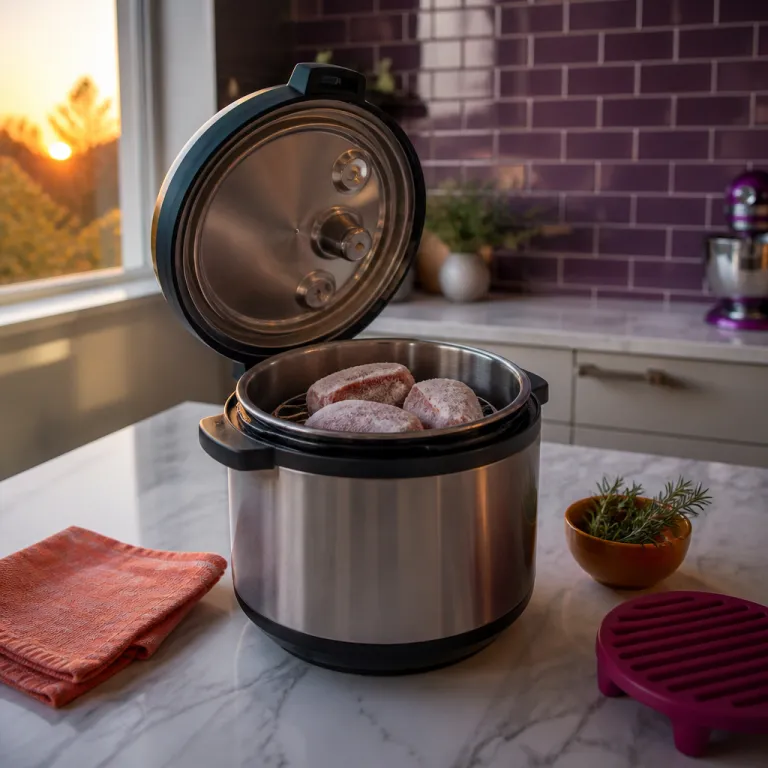

Can you safely cook frozen meat in an Instant Pot ?
Yes, you can safely cook frozen meat in an Instant Pot when you respect basic pressure cooking rules. The electric pressure cooker reaches a high enough pressure and temperature to cook frozen meats thoroughly, but you must adjust cook time and use enough cooking liquid for steam. Safety depends on starting with solid frozen pieces of meat, avoiding huge blocks, and checking the internal temperature after the programmed cook time has finished.
Food safety agencies such as the United States Department of Agriculture (USDA) explain that cooking meat from frozen is acceptable as long as it reaches a safe internal temperature quickly and evenly. For poultry, that minimum is 74 degrees Celsius (165 degrees Fahrenheit); for ground beef and other ground meats, at least 71 degrees Celsius (160 degrees Fahrenheit); and for whole cuts of pork or beef, at least 63 degrees Celsius (145 degrees Fahrenheit) followed by a brief rest. When readers ask can you put frozen meat in Instant Pot models without thawing, the most accurate reply is yes, if you plan for more time, follow tested recipe guidelines, and verify those temperatures with a food thermometer.
Think about how the pot behaves when you add very cold ingredients. The cooking liquid must be hot enough and abundant enough to generate steam and build pressure, so always add at least 250 millilitres (about 1 cup) of water, broth, or thin sauce under the meat. If the frozen block of meat is very thick, cut it into smaller pieces before freezing, because that simple step improves texture, reduces total cook time, and helps the centre reach a safe temperature more reliably.
Key safety rules for frozen meats under pressure
Always place frozen meat on a trivet above the liquid so that steam can circulate. This position helps the Instant Pot or any other pressure cooker avoid scorching while the frozen temperature shock happens at the bottom of the pot. Never stack several kilograms of frozen meat in one dense mass, because the centre may stay undercooked even after a long cook time.
For chicken breasts cooked from frozen, aim for at least 74 degrees Celsius (165 degrees Fahrenheit) at the thickest point, as recommended by the USDA for poultry. Use a digital thermometer immediately after the natural release or quick release, and if the reading is low, simply cook a few minutes longer under pressure. When you cook frozen ground beef, always break the frozen block into chunks after the first cycle, then pressure cook again for a few extra minutes until the crumbles reach at least 71 degrees Celsius (160 degrees Fahrenheit) throughout.
Liquid choice also matters for safety and flavour when you cook frozen meat. Thin broth, water with salt and pepper, or tomato-based sauces stay fluid enough to create reliable pressure, while very thick sauces can trigger a burn warning on the pot. Respect the minimum liquid line in your pressure cooker manual, because that rule protects both your appliance and your dinner.
Best pressure settings and times for frozen meat and vegetables
When people ask can you put frozen meat in Instant Pot appliances, they usually also want precise pressure settings. Most frozen meats, including chicken breasts and beef roast, cook best on high pressure, while delicate vegetables often prefer low pressure to preserve texture. Understanding when to use each level helps you match cook time to the ingredient instead of guessing blindly.
High pressure shortens the time needed to tenderise tough cuts of beef or lamb. For example, a 1 kilogram (about 2.2 pound) beef roast that normally needs about 60 minutes from fresh may require 80 to 90 minutes when cooked from frozen solid, plus extra time for natural release. In contrast, frozen green beans or broccoli florets usually need only 0 to 1 minute at low pressure, followed by an immediate release to avoid mushy results.
Dual pressure models give you more control over cooking meat and vegetables together. You can cook frozen meat on high pressure first, then use a second low pressure cycle after you add vegetables and extra cooking liquid. For a detailed explanation of how high versus low pressure changes results, see the guide on dual pressure settings and when each level matters in your cooker manual.
Practical timing examples for common frozen meats
Boneless chicken breasts frozen in a single layer usually need about 10 to 12 minutes at high pressure. If the chicken breasts are very thick or stuck together, increase cook time to about 15 minutes and allow at least 5 to 10 minutes of natural release before opening the pot. Always check that the juices run clear and that the centre of each piece reaches a safe temperature.
A small beef roast of around 1 kilogram, cooked from frozen, often needs about 80 minutes on high pressure with a full natural release. This longer pressure cooking phase lets the connective tissue break down, turning a tough cut into tender slices without drying the meat. When you cook frozen ground beef in a block, start with 5 minutes at high pressure, break the block apart, then cook several minutes more until the crumbles are fully browned and safe.
Vegetables added to frozen meats require shorter times and careful staging. Root vegetables like carrots and potatoes can handle the full high pressure cook time if cut into large chunks, while delicate peas or green beans should be added after the initial pressure release. By matching each ingredient to its ideal pressure and time, you avoid the common problem of overcooked vegetables sitting under a perfectly cooked roast.
How liquid, layering, and sautéing affect frozen meat results
Liquid management is the hidden key when you cook frozen meat in any Instant Pot model. Frozen meats release extra water as they thaw, which dilutes sauces unless you start with a concentrated broth or reduce the cooking liquid after pressure release. Aim for the minimum liquid required by your pressure cooker, then adjust thickness later with a quick simmer.
Layering ingredients in the pot also shapes texture and flavour. Place aromatics like onions and garlic in a thin layer at the bottom, pour in broth or another cooking liquid, then set a trivet and arrange the frozen pieces of meat above it. This structure prevents scorching, keeps the sauce from becoming greasy, and lets steam circulate evenly around the meat.
Whenever possible, use the sauté function before pressure cooking frozen meat recipes. Browning ground beef or searing a beef roast in the pot builds flavourful fond on the base, which later dissolves into the broth during pressure cooking. For a deeper explanation of why this step matters, read the section on sautéing and browning in your pressure cooker manual or trusted recipe guides.
Balancing liquid and seasoning for frozen meats
Because frozen meats shed extra moisture, seasoning needs a small adjustment. Use slightly more salt and pepper than you would for the same recipe with thawed meat, and consider adding concentrated stock cubes or reduced broth to keep flavours vivid. If you prefer mild seasoning, you can always finish with a final sprinkle of salt and pepper after tasting the sauce.
When you cook frozen chicken breasts, avoid drowning them in too much liquid, or they may taste bland and watery. A good starting point is 250 to 300 millilitres (about 1 to 1 1/4 cups) of broth for up to 1 kilogram of chicken, which is enough to reach pressure without turning the dish into soup. After the natural release, you can switch back to sauté mode and reduce the cooking liquid until it coats the meat.
Ground beef behaves differently from whole cuts because the increased surface area releases more fat and juices. Drain excess fat after browning, then add a measured amount of broth or tomato sauce before locking the lid for pressure cooking. This approach keeps chilli, pasta sauce, or pot-style stews rich but not greasy, even when you start with frozen ground meat.
Best settings for cooking frozen chicken in an Instant Pot
Many home cooks first ask can you put frozen meat in Instant Pot appliances when they forget to thaw chicken for dinner. Boneless skinless chicken breasts are particularly forgiving under pressure, as long as you respect thickness and weight. For pieces around 2 to 3 centimetres (about 3/4 to 1 1/4 inches) thick, 10 to 12 minutes at high pressure with a short natural release usually yields juicy results.
For thicker chicken breasts or a tightly packed block of frozen chicken, increase cook time to about 15 minutes and allow at least 10 minutes of natural release. This combination lets the centre reach a safe temperature while the outer layers stay tender instead of stringy. If the pieces are still slightly undercooked after you open the pot, simply close the lid again and cook a few minutes more on high pressure.
Bone-in chicken, such as thighs or drumsticks, needs a different approach. Because bones slow heat transfer, plan for 15 to 20 minutes at high pressure from frozen, followed by a natural release to keep juices inside the meat. You can finish the pieces under a hot grill or in a pan to crisp the skin while the cooking liquid in the pot reduces into a quick sauce.
Liquid, seasoning, and shredding tips for frozen chicken
When cooking frozen chicken breasts, use flavourful broth instead of plain water whenever possible. Add garlic, herbs, and a measured amount of salt and pepper directly to the cooking liquid, because pressure cooking pushes those flavours into the meat fibres. After the natural release, shred the chicken in the pot so that the strands soak up the remaining juices.
For shredded chicken tacos or salads, a simple ratio works well. Combine 1 kilogram (about 2.2 pounds) of chicken breasts with 300 millilitres (about 1 1/4 cups) of broth, 1 teaspoon of salt, and your preferred spices, then cook at high pressure for 12 minutes from frozen with a 10 minute natural release. The result is tender meat that shreds easily and stays moist even after cooling.
If you prefer sliced chicken instead of shredded, reduce the cook time slightly. Try 8 to 10 minutes at high pressure for smaller frozen breasts, followed by a short natural release and a quick release of remaining steam. Slice across the grain and spoon some of the reduced cooking liquid over the top to keep every portion juicy.
Working with frozen ground beef and large beef roasts
Ground beef and whole roasts behave very differently under pressure, yet both can be cooked safely from frozen in an Instant Pot. When you cook frozen ground beef, the main challenge is breaking up the dense block so that heat reaches every part. A two-stage method, using a short initial pressure cooking cycle followed by crumbling and a second cook, solves this problem reliably.
Start by placing the frozen ground beef on a trivet above 250 millilitres (about 1 cup) of water or broth. Cook at high pressure for 5 minutes, then perform a quick release and use a spatula to break the partially cooked block into smaller pieces. Return the crumbled meat to the pot with seasoning and sauce, then cook several minutes more under pressure or simmer on sauté until fully browned and safe.
For a beef roast cooked from frozen, weight and thickness determine the ideal cook time. A 1 kilogram (about 2.2 pound) chuck roast usually needs 80 to 90 minutes at high pressure with a full natural release, while a 1.5 kilogram (about 3.3 pound) piece may require up to 100 minutes. Always let large roasts rest in the hot cooking liquid for several minutes after opening the pot, because this pause allows juices to redistribute.
Building flavour and texture in frozen beef dishes
Whenever possible, brown beef before freezing so that you can skip searing on a busy night. If that is not an option, you can still boost flavour by reducing the cooking liquid after pressure release until it thickens into a glossy sauce. Deglaze the pot with a splash of broth or wine after sautéing ground beef, scraping up browned bits that carry intense savoury notes.
Seasoning matters more when you cook frozen meat because the extra moisture can dilute flavours. Use a generous but balanced amount of salt and pepper, herbs, and spices, then taste the sauce after cooking and adjust as needed. For pot roast, add root vegetables halfway through the cook time or after the first natural release, so they stay intact instead of collapsing.
Readers often worry that frozen roasts will turn dry, yet the opposite usually happens in a well managed pressure cooker. The sealed environment traps steam, and the long natural release lets fibres relax while reabsorbing cooking liquid. Slice against the grain and spoon over the reduced broth for tender, flavourful servings that rival slow cooking methods.
Hidden minutes, releases, and planning real world cook times
When planning dinner, the question can you put frozen meat in Instant Pot appliances is only half the story. The other half is understanding that the labelled cook time does not include the minutes the pot needs to reach pressure or to complete a natural release. These hidden minutes matter even more when you start with frozen meats, because the cold mass slows heating.
From a practical perspective, you should always add at least 10 to 20 minutes to any stated cook time for frozen meat recipes. This buffer covers the pressure build phase and a partial natural release, which are essential for both safety and tenderness. A detailed breakdown of these phases is available in the analysis of why stated pressure cooker cook time can be a half truth in many manuals and testing guides.
Release method also changes texture and juiciness. A full natural release, where you let the pressure drop on its own, suits large cuts like beef roast or whole chicken because it keeps fibres relaxed and moist. A quick release works better for delicate vegetables or thin chicken breasts when you want to stop cooking immediately and avoid overdone meat.
Planning weeknight meals with frozen meat and vegetables
For busy evenings, think in terms of total elapsed time rather than just pressure cooking minutes. If a recipe lists 12 minutes of cook time for frozen chicken breasts, expect around 30 minutes from pressing start to serving, once you include pressure build and natural release. This realistic planning prevents frustration and helps you choose the right recipe for your schedule.
Batch cooking frozen meats in an Instant Pot can simplify future meals. Prepare a large quantity of shredded chicken or ground beef on the weekend, using broth and careful seasoning, then portion and freeze for rapid reheating. On weeknights, you only need a short simmer with fresh vegetables or grains, instead of a full pressure cycle from meat frozen solid.
When you understand how pressure, time, liquid, and release interact, the electric pressure cooker becomes a flexible tool rather than a mystery. You can confidently cook frozen meat, adjust cook time on the fly, and pair meats with vegetables without sacrificing texture. That confidence turns the Instant Pot from an occasional gadget into a reliable partner for everyday cooking with frozen ingredients.
Key statistics about pressure cooking frozen meat
- Food safety guidelines from the United States Department of Agriculture state that poultry must reach an internal temperature of at least 74 degrees Celsius (165 degrees Fahrenheit), ground beef and other ground meats at least 71 degrees Celsius (160 degrees Fahrenheit), and whole cuts of pork or beef at least 63 degrees Celsius (145 degrees Fahrenheit) with a short rest, which is why thermometer checks after natural release are essential when cooking frozen meat.
- Tests reported by manufacturers of electric pressure cookers such as Instant Brands and independent kitchen labs show that an electric pressure cooker can take 10 to 20 minutes longer to reach pressure when filled with frozen meats compared with room temperature ingredients, which directly affects total meal duration.
- Consumer surveys from kitchen appliance research groups report that more than half of Instant Pot owners regularly cook frozen meat without thawing, highlighting the importance of clear guidance on cook time, liquid amounts, and release methods.
- Laboratory measurements of pressure cooking show that typical high pressure settings in many electric models operate around 10 to 12 psi above atmospheric pressure, corresponding to roughly 115 to 118 degrees Celsius (about 239 to 244 degrees Fahrenheit) inside the pot, while traditional stovetop cookers at 15 psi reach about 121 degrees Celsius (250 degrees Fahrenheit). This higher-than-boiling environment explains the faster tenderising of tough cuts.
FAQ about cooking frozen meat in an Instant Pot
How much extra time should I add for frozen meat ?
As a general rule, add about 50 percent more cook time when you cook frozen meat compared with the same cut thawed. For example, if thawed chicken breasts need 8 minutes at high pressure, plan for about 12 minutes from frozen plus a natural release. Always confirm doneness with a thermometer rather than relying only on time.
Should I use natural release or quick release for frozen meats ?
Large cuts like beef roast or whole chicken benefit from a full natural release, which can take 10 to 20 minutes and keeps the meat tender. Thinner pieces such as small chicken breasts or strips of pork can handle a short natural release followed by a quick release. Vegetables added to frozen meats usually require quick release to avoid overcooking.
Can I cook frozen ground beef without a trivet ?
You can cook frozen ground beef directly in the pot, but using a trivet above a small amount of liquid reduces the risk of scorching. Many cooks prefer a two-step method, starting with the meat on a trivet, then crumbling and finishing it in the cooking liquid. Either way, ensure the centre reaches a safe temperature and that no pink remains.
What is the minimum liquid for pressure cooking frozen meat ?
Most electric pressure cookers require at least 250 millilitres (about 1 cup) of thin liquid, such as water or broth, to reach pressure safely. When cooking frozen meats, this minimum becomes even more important because the cold mass slows steam production. Avoid very thick sauces alone, and if needed, thin them with broth before starting the pressure cycle.
Is it safe to cook different frozen meats and vegetables together ?
It is safe to cook mixed frozen meats and vegetables if you match the cook time to the ingredient that needs the longest pressure exposure. A common strategy is to cook frozen meat first, then use a quick release, add vegetables, and run a short second cycle. This staged approach keeps vegetables from turning mushy while ensuring that every piece of meat is fully cooked.