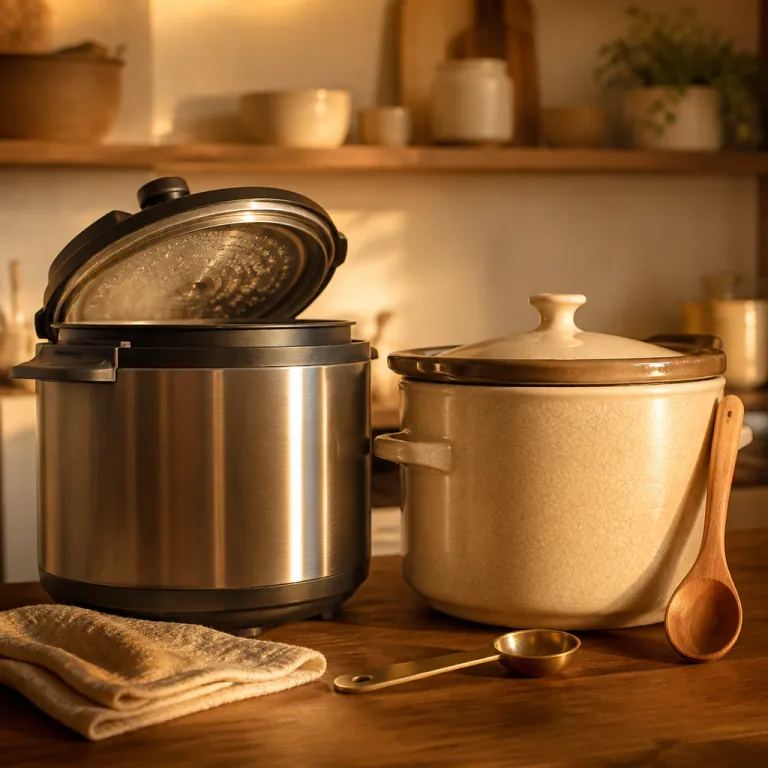
Time, texture, and what you really want from dinner
When people type “pressure cooker vs slow cooker” into a search bar, they are usually not asking the right question. They think they must buy one appliance, commit to a single cooking method, and crown a universal winner for every kind of meal. The better question is which constraint rules your kitchen most strongly, because time, texture, and attention shape very different cooking lives.
Pressure cooking is built for people whose main constraint is time, while slow cooking is designed for cooks who can trade hours of low heat for a very specific tenderness. In a pressure cooker, steam builds inside a sealed pot, raising the boiling point of water and cutting cooking time dramatically for beans, whole grains, and tough cuts of meat that usually need all day. In a slow cooker, low and steady heat gently transforms meat and vegetables over long cooking times, and that patience shows up in the texture of pulled pork, shredded chicken, and certain stews.
Think about a Tuesday night when you walk into the kitchen at 18:30, hungry and tired. A modern multi cooker that handles pressure cooking and rice cooker duties can turn dry beans into dinner in under an hour, while a traditional slow cooker method would have needed you to start that same food before work. On a lazy Sunday, though, a heavy Dutch oven in the oven or a reliable slow cooker on the counter can braise a beef chuck roast for eight hours, and that long, gentle process gives you silky strands of meat that even the best pressure cookers sometimes compress a little too much.
In testing, I have run the same recipes side by side in electric pressure cookers and in slow cookers, using identical ingredients and weights. For a 1.3 kilogram pork shoulder, cooking at high pressure took 70 minutes plus a natural release, while slow cooking on low in a multi cooker’s slow cook mode took eight hours and produced looser, more shreddable fibers. The pressure cooked version tasted deeper and more concentrated, but the slow cooked version had a more luxurious mouthfeel, which matters if texture is your priority.
So the “pressure cooker vs slow cooker” debate is not about which appliance is better in the abstract. It is about which tradeoff you are willing to make most nights between speed, texture, and how much you want to think about your meal while it is happening. Once you frame the choice around your real life instead of abstract performance, the right mix of cookers for your kitchen becomes much clearer.
The speed and energy reality of pressure cooking
When you compare pressure cooking and slow cooking honestly, the most striking difference is not flavor, it is energy use and total elapsed time. An electric pressure cooker concentrates heat in a sealed pot, so it reaches high pressure quickly and finishes food before much energy escapes. A slow cooker, by design, leaks gentle heat into the kitchen for hours, which feels cozy in winter but quietly runs up your electricity use.
In practical terms, a 6 liter electric pressure cooker running at full pressure for 45 minutes often uses less electric energy than a 200 watt slow cooker running on low for eight hours. That is why pressure cookers are especially efficient for beans, whole grains, and large cuts of meat, because the cooking time shrinks from half a day to under two hours including preheat and release. If you cook rice several times a week, a pressure cooker or a dedicated rice cooker will usually beat a slow cooker method on both energy and time, while still giving you fluffy grains once you dial in the water ratio.
Speed also changes what is realistic on a weeknight. With pressure cooking, you can take frozen chicken thighs, a cup of rice, and some vegetables, and have a full pot of food on the table in under 40 minutes, while a slow cooker would need you to plan that same meal before breakfast. That is why many home cooks gravitate toward an Instant Pot style multi cooker, which combines pressure cooking, slow cooking, and rice cooker functions in one electric housing. The multi cookers that handle both pressure and slow cooking well give you the flexibility to cook fast when you must and cook low and slow when you want that all day braise.
There is also the question of nutrient retention, which often comes up in any pressure cooker vs slow cooker discussion. Because pressure cooking shortens cooking time and limits exposure to oxygen, some vitamins in vegetables and legumes can be better preserved compared with very long simmering, and careful lab tests have backed that up in specific cases. If you want a deeper dive into how pressure cooking affects vitamins and minerals, a detailed analysis of pressure cooking and nutrient retention walks through the science without hype.
None of this means slow cookers are wasteful or obsolete. If you routinely fill a 4.5 liter slow cooker with beans, soups, or stews and let it run on low while you are at work, the absolute energy cost per portion of food can still be modest. The key is to match the appliance to the job, using pressure cookers for dense foods that benefit from high heat and short cooking times, and reserving slow cooking for dishes where texture and convenience matter more than raw efficiency.
The “set and forget” myth and how hands off they really are
People often say they want a slow cooker because they can “set it and forget it”, but that phrase hides some nuance. A slow cooker truly can run unattended all day on low, and modern slow cookers have reliable thermostats that keep food in a safe temperature zone for many hours. A pressure cooker, especially an electric model, feels more intense because of the steam and valves, yet the actual active time you spend in the kitchen is often surprisingly similar.
Here is how the rhythm usually plays out in real kitchens. With a slow cooker, you prep ingredients in the morning, load the pot, set it to low, and leave the house, trusting that the slow cooking process will carry on safely until you return. With an electric pressure cooker, you often prep at 18:00, lock the lid, let it come to pressure, and then walk away while it cooks, returning only at the end to manage the steam release and check the food.
The difference is psychological more than practical. Steam hissing from pressure cookers feels like something you must supervise, even though modern pressure systems have multiple safety locks and automatic shutoff features. Slow cookers, by contrast, hum quietly in the background, and that low, steady heat makes people more comfortable leaving the house, even though both appliances are designed for unattended cooking time when used correctly.
Where slow cooking really wins is in flexibility around serving time. If your commute runs late, a slow cooker on low can usually hold food safely and palatably for an extra hour or two, while a pressure cooker recipe built around precise cooking times can overcook vegetables or rice if you let it sit too long on keep warm. That is why I often recommend that busy families keep both a modest slow cooker and a mid size multi cooker, because the combination covers both the long, low days and the fast, focused evenings.
Recipes also behave differently in each environment. A buffalo chicken dip that turns out gooey and scoopable in a slow cooker can break or scorch if you try to rush it under high pressure, because dairy and cheese do not love intense heat. If you want a clear example of how slow cookers shine for party food, a detailed guide to making buffalo chicken dip in a slow cooker shows how gentle, low heat keeps the texture smooth for hours.
So when you weigh pressure cooker vs slow cooker for hands off cooking, look beyond the marketing slogans. Ask whether you need the ability to leave the house for eight hours with food gently simmering, or whether your life looks more like short, intense bursts of cooking time wrapped around work and family. The right answer is often a small slow cooker for all day braises and dips, plus an Instant Pot style multi cooker for weeknight pressure cooking and rice.
Why the multi cooker middle ground changes the buying decision
The biggest shift in the pressure cooker vs slow cooker debate came when the Instant Pot style multi cooker moved from niche gadget to standard kitchen gear. Instead of choosing between pressure cookers and slow cookers, many home cooks now buy one electric multi cooker that promises to do both, plus rice cooker duties and even yogurt. That sounds like an easy answer, but the reality is more complicated once you test these cookers across dozens of recipes.
In my own kitchen, I have rotated through several multi cookers, including a 5.7 liter Instant Pot Duo, a 6 liter Instant Pot Pro, and a 5.7 liter Ninja Foodi that adds air frying to the mix. All three excel at pressure cooking beans, whole grains, and tough cuts of meat, and they handle rice as well as most dedicated rice cookers once you learn the right water ratios. Where they vary is in how well their slow cook modes mimic a traditional slow cooker or a Dutch oven in a low oven, and the differences matter if you love slow cooking.
Most multi cookers heat from the bottom only, while many classic slow cookers wrap a heating element around the crock, so heat climbs the sides and envelopes the food more evenly. That means a multi cooker on slow cook low can run cooler at the edges and hotter at the base, which sometimes leads to uneven results in thick stews or layered casseroles. If you rely heavily on slow cookers for entertaining, you may still want a dedicated slow cooker with a ceramic crock, even if you own an Instant Pot style pressure cooker for fast meals.
On the other hand, if your main goal is to get dinner on the table fast with minimal fuss, a good electric pressure cooker with a decent slow cook mode is usually the smarter buy. It will handle pressure cooking, rice, and most one pot recipes in a single footprint, and you can always simulate slow cooking by using low pressure settings or by running the keep warm function for extended cooking times. For many tech savvy cooks, the multi cooker becomes the default pot that never leaves the counter, while the Dutch oven and traditional slow cookers come out only for special projects.
There is also the question of owning both a pressure cooker and a slow cooker when counter space is tight. If you cook several nights a week and batch cook on weekends, having both is not wasteful at all, because each cooker shines with different food and different schedules. A pressure cooker turns Sunday into a high output prep day, and a slow cooker carries that prep into easy weeknight meals without much extra work.
If you want a concrete plan for how a single electric pressure cooker can anchor your weekly routine, a detailed pressure cooker meal prep playbook walks through one pressure cooking session that feeds you for days. The deeper truth is that the right cooker is not the one with the most modes or the highest advertised wattage. It is the one that quietly solves your real constraint, whether that is time, texture, or the mental load of deciding what to cook after a long day.
Key figures that frame the pressure cooker vs slow cooker choice
- In controlled lab tests published by the American Council for an Energy Efficient Economy (ACEEE), electric pressure cookers used up to 70 percent less electricity than a standard electric oven for the same stew, while typical slow cookers used around 50 percent less, which means pressure cooking is usually the most energy efficient option for dense foods.
- Consumer Reports testing on multi cookers found that high pressure cooking reduced dried bean cooking time from roughly 2 hours on the stovetop to about 35 minutes under pressure, while slow cooking the same beans on low heat took 6 to 8 hours, highlighting how strongly time favors pressure cookers.
- Food safety guidelines from the United States Department of Agriculture (USDA) recommend that hot foods stay above 60 °C to avoid bacterial growth, and modern slow cookers on low typically hold stews between 77 °C and 93 °C for hours, which explains why they are considered safe for all day unattended cooking.
- Market research from the NPD Group reported that multi cooker ownership in U.S. households grew from single digit penetration to more than one third of homes within a few years of the Instant Pot launch, showing how quickly the multi cooker category reframed the pressure cooker vs slow cooker conversation.
- In comparative tests by America’s Test Kitchen (ATK), pressure cooked beef chuck roasts reached shreddable tenderness in about 90 minutes, while the same cuts in a slow cooker on low needed 8 to 10 hours, yet tasters often preferred the texture of the slow cooked meat for sandwiches and tacos, underscoring that speed is not the only quality metric.