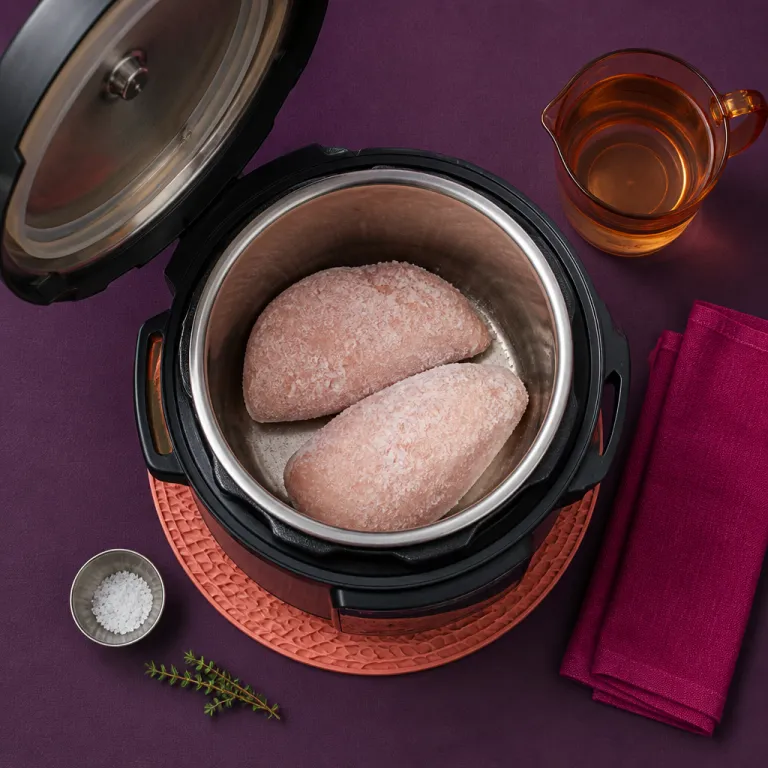

Understanding how long to cook frozen chicken in a pressure cooker safely
When you ask how long to cook frozen chicken in a pressure cooker, you are really asking about food safety and texture together. The goal is to reach a core temperature of 74 °C (165 °F) while keeping chicken breast or chicken thighs moist and suitable for quick shredded chicken or sliced servings. For most electric models, the standard cook time for frozen chicken breasts at high pressure is 10 to 12 minutes, followed by a short natural release.
Home cooks often worry that frozen chicken will stay undercooked in the middle, yet an electric pressure cooker surrounds the meat with superheated steam that penetrates quickly and evenly. A typical 1.5 to 2 centimetre thick boneless skinless chicken breast needs about 8 minutes at high pressure when thawed, so adding 3 to 4 extra minutes usually compensates for starting from frozen. Always check the thickest part of the cooked chicken with an instant read thermometer inserted into the centre of the largest piece, because visual cues alone are unreliable under pressure cooking conditions and can mislead you about doneness.
Size and shape matter as much as total minutes, so treat a pile of stuck together frozen chicken differently from neatly separated pieces. If your frozen chicken is clumped, expect the cook time to stretch to 13 to 15 minutes at high pressure, since the steam must thaw and cook several layers at once. For small frozen chicken thighs with bones, 12 to 14 minutes under pressure with a 5 minute natural release usually produces tender, fully cooked meat ready for meal prep or same day serving.
Best electric pressure cooker settings for frozen chicken breasts and thighs
Most modern electric models, including any Instant Pot style cooker, rely on a simple rule for poultry under pressure. Use the manual or pressure cook button, select high pressure, then set the cook time based on thickness rather than total weight, because the steam transfers heat from the outside in. For average boneless skinless chicken breasts cooked from frozen, 10 minutes at high pressure with a 5 minute natural release balances safety and juiciness.
When you cook chicken thighs from frozen, the extra connective tissue and bone require a slightly longer time in the pot. Aim for 12 minutes at high pressure for small to medium chicken thighs, or 14 minutes for very meaty pieces, then allow a natural release of 5 to 10 minutes before opening the cooker. This gentle pressure release keeps the broth and juices inside the meat, which makes the resulting cooked chicken ideal for recipes that call for tender chunks or easy shredded chicken.
Before you set the timer, always add enough water or broth to the pot to reach the minimum liquid requirement listed in your cooker manual, because the pressure cooker needs liquid to generate steam. Many cooks sauté aromatics first, then deglaze with water or stock, following what some call the sauté first rule, which you can explore in more depth through this guide on why browning before pressure cooking changes everything. Once the base is ready, you can place frozen chicken pieces on a trivet above the liquid, season with salt and pepper, and let the Instant Pot or similar cooker handle the rest of the cooking process.
Liquid, layering, and timing for reliable frozen chicken recipes
Getting the liquid right in the pot is just as important as choosing the correct cooking time for frozen chicken. Too little water or broth prevents the pressure cooker from sealing, while too much dilutes flavours and can overcook the outer layers of chicken breast or chicken thighs. A good baseline is 250 to 300 millilitres of water or stock for 500 to 750 grams of frozen chicken breasts, which supports both safe pressure and a rich cooking liquid.
Layering also affects how long to cook frozen chicken in a pressure cooker, because steam must reach every surface. Arrange the frozen chicken in a single layer when possible, or stand chicken breasts on their sides like files in a drawer, which lets hot broth circulate between pieces and shortens the cook time. If you must stack pot chicken in two layers, increase the cooking time by 2 to 3 minutes and rely on a brief natural release to finish the cooking gently.
Once the cook time ends, you can choose between quick release and natural release depending on the recipe. A partial natural release of 5 to 10 minutes lets the pressure drop slowly, which keeps cooked chicken juicier and reduces splattering when you open the cooker. For busy evenings or holiday shortcuts, you can adapt these principles to other meats and vegetables, as shown in this guide to pressure cooker shortcuts for complete meals in record time, then apply the same logic back to your everyday frozen chicken recipes.
From frozen chicken to table ready meals: practical recipe frameworks
Once you understand the basic cook time for frozen chicken, you can build flexible recipes that suit many weeknight needs. A simple framework for chicken instant dinners starts with seasoning frozen chicken breasts or chicken thighs with salt and pepper, adding them to the pot with broth or water, then choosing a pressure setting and release method that match your texture goals. For sliced or diced cooked chicken that holds its shape, use 10 to 11 minutes at high pressure with a 5 minute natural release, while for shredded chicken you can extend the cooking time to 12 or 13 minutes.
One reliable recipe pattern uses 600 grams of boneless skinless chicken breast, 300 millilitres of chicken broth, garlic, and herbs. Place everything in the Instant Pot or similar pressure cooker, cook frozen chicken for 11 minutes at high pressure, then allow a natural release for 7 minutes before venting the remaining pressure. The result is tender pot chicken that you can serve with vegetables, fold into pasta, or chill for meal prep salads and sandwiches.
Another pattern focuses on chicken thighs, which stay forgiving even if the cook time runs slightly long. Combine 700 grams of frozen chicken thighs with 250 millilitres of water, smoked paprika, and a spoon of tomato paste, then cook at high pressure for 13 minutes with a full natural release. This method yields richly flavoured cooked chicken that shreds easily for tacos, rice bowls, or freezer friendly recipes, and it shows how a single timing rule can support many different meals.
Adapting cook time for different cuts, sizes, and meal prep goals
Not every piece of frozen chicken behaves the same way under pressure, so you need to adjust the cook time thoughtfully. Thin chicken breast cutlets or small chicken breasts instant portions cook faster than thick, restaurant style fillets, even when the total weight in the pot is similar. For very thin frozen chicken breast pieces, 7 to 8 minutes at high pressure with a quick release often suffices, while thick cuts may need 12 minutes and a short natural release.
When you plan meal prep, it helps to decide whether you want firm slices or soft shredded chicken before you set the timer. For salads and grain bowls, aim for slightly shorter cooking times so the cooked chicken stays bouncy and easy to cube, usually around 9 to 10 minutes for boneless skinless breasts. For pulled style recipes, increase the cook time by 2 to 3 minutes and allow a longer natural release, which breaks down connective tissue and makes it effortless to pull the meat apart with forks.
Bone in chicken thighs and drumsticks need extra attention because the bone slows heat transfer. A good rule is to add 2 minutes of cook time compared with boneless pieces of similar thickness, then always verify doneness near the bone with a thermometer. If you find slightly undercooked spots, simply return the chicken to the pot with the hot broth, bring the cooker back to high pressure, and cook for an additional 2 to 3 minutes, which usually finishes the job without drying the outer layers.
Safety checks, seasoning strategies, and common pressure cooking mistakes
Food safety must guide every decision about how long to cook frozen chicken in a pressure cooker, because undercooked poultry can carry harmful bacteria. The USDA Food Safety and Inspection Service recommends cooking all chicken, including frozen chicken breasts and chicken thighs, to an internal temperature of at least 74 °C (165 °F) to reduce the risk of Salmonella and Campylobacter (see USDA FSIS Chicken and Food Safety guidance). If you are unsure, err on the side of 1 or 2 extra minutes at high pressure, since the moist environment of the pot protects against rapid drying.
Seasoning matters as much as timing, especially when you cook frozen chicken without prior marinating. Salt and pepper should go directly on the meat whenever possible, even if the chicken is partially frozen, because surface seasoning still enhances flavour during cooking. Aromatics like garlic, onion, and herbs belong in the broth or water at the bottom of the cooker, where they infuse both the cooking liquid and the final cooked chicken with depth.
Several common mistakes lead to disappointing results, even when the cook time seems correct. Overcrowding the pot with too many frozen chicken pieces prevents even circulation of hot broth and steam, which can leave some portions undercooked while others overcook. Another frequent error is skipping the natural release entirely for delicate recipes, because an abrupt quick release can cause rapid moisture loss and toughen the outer layers of the meat, so reserve full quick release for very thin cuts or when you plan to simmer the chicken further in a sauce.
Key statistics on pressure cooking frozen chicken
- Food safety agencies such as the USDA Food Safety and Inspection Service recommend cooking all chicken, including frozen chicken breasts and chicken thighs, to an internal temperature of at least 74 °C (165 °F) to reduce the risk of Salmonella and Campylobacter (USDA FSIS, Chicken from Farm to Table).
- Laboratory style tests on pressure cooking and moist heat show that high pressure steam can reduce common poultry bacteria by more than 99.999 % when the core temperature of the cooked chicken is maintained at 74 °C for several minutes, a level often described as a 5 log reduction (see USDA FSIS Appendix A and related thermal inactivation studies).
- Consumer cooking time surveys report that using an Instant Pot or similar pressure cooker can reduce total hands on cooking time for weeknight chicken recipes by around 30 to 40 % compared with traditional oven roasting, mainly because preheating and monitoring demands are lower (based on aggregated home use surveys and manufacturer case studies).
- Independent energy use measurements indicate that electric pressure cooking of 1 kilogram of chicken can consume roughly 50 % less electricity than baking the same amount in a conventional oven, depending on the model, insulation, and preheat time of the appliance (see comparative tests published by energy efficiency programs and appliance testing labs).
- Home cooks often report that meal prep with pressure cooked frozen chicken reduces food waste, with some household level surveys suggesting a drop of up to one third in discarded leftovers when people batch cook and portion shredded chicken for later use (self reported data from meal planning and food waste tracking projects).
FAQ about cooking frozen chicken in an electric pressure cooker
How long should I cook frozen chicken breasts in an electric pressure cooker
For average boneless skinless frozen chicken breasts about 1.5 to 2 centimetres thick, set your Instant Pot or similar pressure cooker to high pressure for 10 to 12 minutes. Allow a natural release of 5 minutes before venting the remaining pressure, then check that the internal temperature has reached at least 74 °C. If the thickest part is slightly under, return the chicken to the pot and cook for an additional 2 to 3 minutes.
Can I cook frozen chicken thighs directly from the freezer
Yes, you can cook frozen chicken thighs straight from the freezer in an electric pressure cooker as long as you adjust the cook time. Use 12 to 14 minutes at high pressure for bone in thighs, followed by a 5 to 10 minute natural release to keep the meat tender. Always verify doneness near the bone with a thermometer before serving.
Should I use quick release or natural release for frozen chicken
A short natural release usually gives better texture for both chicken breast and chicken thighs. Let the pressure drop naturally for 5 to 10 minutes, then switch to quick release to open the pot safely. Full quick release works best for very thin pieces or when you plan to simmer the cooked chicken longer in a sauce.
How much liquid do I need when pressure cooking frozen chicken
Most electric pressure cookers need at least 250 millilitres of water or broth to reach and maintain pressure. For 500 to 750 grams of frozen chicken, 250 to 300 millilitres of liquid usually provides enough steam while still producing a flavourful broth. Always check your cooker manual for the specific minimum liquid requirement for your model, since manufacturers such as Instant Brands emphasise this in their safety and usage instructions.
Is it safe to stack frozen chicken pieces in the pot
Stacking frozen chicken is safe if you increase the cook time and check doneness carefully. When pieces are stuck together, add 2 to 3 extra minutes at high pressure and rely on a short natural release to finish the cooking evenly. After opening the cooker, test several pieces in the centre of the stack with a thermometer and return them to the pot if any remain below 74 °C.