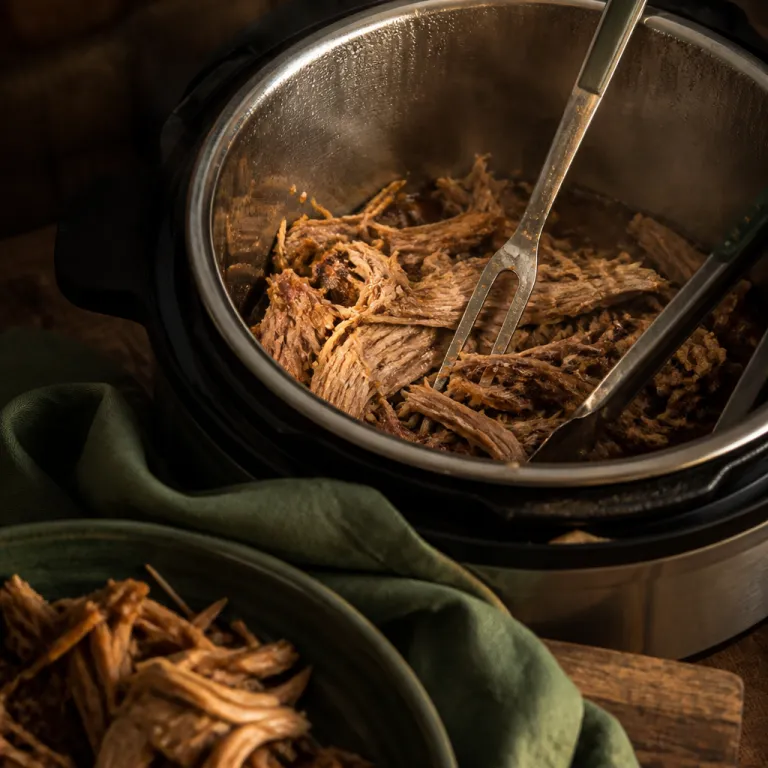
Why this pressure cooker pulled pork recipe is fast but still tastes slow cooked
This pressure cooker pulled pork method aims for smoker level flavor in a fraction of the time. By using high pressure to break down collagen in pork shoulder, you get tender shredded meat in about 90 minutes instead of an overnight barbecue session. The result is pulled pork that feels like it came off a backyard smoker, yet it emerges from an electric pressure cooker on a busy weeknight.
The first time I tested this Instant Pot pulled pork for friends who love their offset smoker, I served it without saying how it was cooked. They assumed it had been on low heat all day, then were genuinely surprised to learn it came from a countertop cooker in under two hours. That is the promise of this approach: real barbecue style texture and flavor, without planning your whole day around a pork roast.
Traditional pulled pork relies on low temperature and long time to transform a tough pork roast into silky strands. Under pressure, many electric models cook at roughly 115–125 °C (240–257 °F), which helps collagen convert to gelatin much faster, so the meat shreds easily without drying out. Exact temperatures and pressure levels vary by brand, but the effect is the same: a well designed pork recipe for an Instant Pot or similar cooker can rival a classic butt roast from a smoker, especially once you finish it with a quick blast under the grill for crispy edges.
For a 6 litre pressure cooker, the sweet spot is a 1.4–1.8 kilogram pork shoulder, sometimes labelled Boston butt roast. A smaller piece of pork will cook faster but risks overcooking at the edges, while a larger roast crowds the pot and slows the pressure release and overall cooking time. Sticking to this range keeps the meat evenly cooked, the cooking liquid balanced, and the pot of pulled pork easy to manage when you shred it for pork sandwiches or tacos.
Choosing the right cut, rub, and liquid for pulled pork that actually shreds
For this pressure cooked pulled pork method, always choose pork shoulder rather than lean loin. Shoulder has enough fat and connective tissue to stay juicy under pressure cooking, while loin dries out and gives stringy meat that never feels like proper pulled pork. If your butcher offers both bone in and boneless pork roast, pick boneless for easier trimming and faster, more even cooking in the Instant Pot or any electric cooker.
Start with a simple dry rub that will not burn during the sauté step in the pot. Mix salt, black pepper, smoked paprika, garlic powder, onion powder, cumin, and a small spoon of brown sugar, then coat the pork shoulder pieces thoroughly before you cook. Keeping the brown sugar modest prevents scorching on the bottom of the cooker while still helping the meat caramelise and supporting the later barbecue sauce or bbq sauce glaze.
For the cooking liquid, resist the urge to drown the meat in sauce. Use exactly one cup total liquid for a 6 litre pressure cooker, combining 120 millilitres (1/2 cup) of apple cider vinegar with 120 millilitres (1/2 cup) of chicken broth, then add a spoon of liquid smoke if you like a deeper barbecue profile. This limited liquid means the pressure environment stays intense, the flavours stay concentrated, and you are not left with a thin, bland sauce after the pressure release and shredding.
If you like to prep ahead, you can rub the pork roast the night before and refrigerate it in a covered pot. That extra time lets the salt penetrate the meat, which improves seasoning and helps the pork cook more evenly under pressure. For ultra busy nights, consider pairing this recipe with a batch cooking plan such as freezer to pressure cooker dump meals, so you always have seasoned pork ready to go from freezer to cooker.
Step by step: from sauté to pressure release in your instant pot
Cut the pork shoulder into large chunks about the size of your fist before you cook. This increases the surface area for the rub, helps the meat brown better in the pot, and lets pressure reach the centre of each piece more quickly. Pat the pork dry, apply the rub generously, then let it sit on the counter while you prepare the pressure cooker for sautéing.
Set your Instant Pot or other electric pressure cooker to sauté mode and let it heat until the hot icon appears on the display. Add a spoon of neutral oil, then sear the pork chunks in batches for about three minutes per side, turning to build a dark crust that will translate into deeper flavour in the final pulled pork. Do not rush this step, because the browned bits on the bottom of the pot will later enrich the sauce once you deglaze with the vinegar and chicken broth mixture.
When all the meat is browned, pour in the cup of combined apple cider vinegar and broth to deglaze, scraping up every browned fragment with a wooden spoon. Return all the pork to the pot, add a half cup (120 millilitres) of barbecue sauce or bbq sauce if you want a stronger barbecue note, then lock the lid and set the cooker to pressure cook on high for 60 minutes. Once the cooking time ends, let the pressure release naturally for 15 minutes before you switch the valve to quick release, which helps the meat fibres relax and keeps the pork moist.
To make the process easy to follow, think of the active steps like this:
- 10–15 minutes: trim, cut, and season the pork shoulder
- 10–15 minutes: brown the meat in batches on sauté
- 60 minutes: high pressure cooking time
- 15 minutes: natural pressure release before quick release
- 10–15 minutes: shred, reduce the sauce, and finish under the grill
If you want to cook side dishes at the same time, you can use a rack and a secondary bowl for pot in pot cooking above the pork. This pot in pot technique turns your pressure cooker into a two level appliance, letting you steam vegetables or rice while the meat cooks below. For more detail on this approach, see this guide to pot in pot cooking, which explains how to balance timing and liquid for stacked meals.
Shredding, saucing, and finishing under the grill for crispy edges
Once the pressure release is complete, transfer the pork chunks to a large tray and let them rest for five minutes. Use two forks to pull the meat into strands, discarding large pieces of fat but keeping some for flavour and moisture in the final pulled pork. You will notice that the pork shoulder fibres separate easily, a sign that the pressure cooking has converted collagen to gelatin and given you the texture you want for pork sandwiches or rice bowls.
As a doneness cue, the internal temperature of the largest piece should be at least 90–96 °C (195–205 °F), and a fork should twist and pull the meat apart with almost no resistance. While you shred, set the pressure cooker to sauté again and let the cooking liquid simmer until it reduces by about half. This reduction concentrates the vinegar, chicken broth, and meat juices into a rich sauce that will cling to the pulled meat instead of pooling at the bottom of the pot. Taste the liquid, then stir in more barbecue sauce, a spoon of brown sugar, or a dash of liquid smoke if you want a sweeter or smokier profile for your pork recipe.
Return the shredded pork to the pot and toss it thoroughly in the reduced sauce so every strand is coated. For a final texture upgrade, spread the sauced meat on a baking tray and grill it for about five minutes, turning once, until the edges crisp and caramelise like proper barbecue. This quick high heat finish mimics the bark you would get from a smoker, giving your pressure cooked pulled pork the same satisfying contrast of juicy interior and crunchy exterior.
Serve the meat piled high on soft buns for pork sandwiches, over mashed potatoes, or with rice and beans for a puerto rican inspired plate. Leftover pulled pork keeps well in the fridge for several days and reheats beautifully with a splash of extra sauce or broth to loosen it. You can also freeze portions flat in bags, then reheat them directly in a pot of simmering water or in your Instant Pot using a gentle pressure cook setting for a few minutes.
Why pressure cooking works for pulled pork: the science in plain language
What makes this pressure cooker pulled pork so fast yet still tender is simple physics. Inside a sealed cooker, steam builds pressure, which raises the boiling point of water and lets the cooking liquid reach temperatures above 100 °C (212 °F). At these higher temperatures, the collagen in pork shoulder breaks down into gelatin much faster than it would in a low temperature barbecue smoker.
Collagen is the tough connective tissue that makes cuts like butt roast or pork shoulder feel chewy when undercooked. During long time low heat barbecue, that collagen slowly unwinds and dissolves, which is why traditional pulled pork can take 10 to 14 hours. Under high pressure, the same transformation happens in about 60 minutes of active pressure cook time, followed by a controlled pressure release that helps prevent the meat fibres from seizing.
Because the cooker is sealed, very little moisture escapes, so the meat stays juicy even though the internal temperature climbs well above what you would aim for with a lean pork roast. The limited cup of liquid in the pot helps flavours stay concentrated rather than washed out, and the surrounding steam transfers heat efficiently to every surface of the meat. This is also why an electric pressure cooker generally uses less energy than an oven for similar braised dishes, especially when you cook large roasts regularly.
Compared with slow cookers, pressure cookers reach higher temperatures and maintain them consistently, which is ideal for collagen heavy cuts like pork shoulder. Slow cookers can leave you with meat that is tender at the edges but still tight in the centre if the roast is large or the time is misjudged. With pressure cooking, once you dial in the minutes for your preferred texture, you can repeat the same pork recipe reliably, whether you are making a single batch of pulled meat or doubling it for a party.
Serving ideas, make ahead tips, and how this recipe fits real weeknights
For busy home cooks, the real test of any pressure cooker pulled pork method is how it fits into a weeknight schedule. From start to finish, including searing, pressure cook time, and natural pressure release, you are looking at roughly 90 minutes, most of it hands off. That means you can start the pork when you get home, help with homework or emails during the cook, then shred and serve without hovering over a barbecue grill.
Once you have a batch of pulled pork ready, it becomes a flexible base for several meals. One night it can be classic pork sandwiches with soft rolls, crunchy slaw, and extra barbecue sauce, while the next night you might serve it over rice with beans and coriander for a puerto rican style bowl. You can even fold the meat into quesadillas, stuff it into baked potatoes, or layer it over nachos, stretching one pork shoulder into multiple low effort dinners.
For make ahead planning, portion the cooled meat and sauce into containers sized for one meal, then freeze them flat for faster thawing. On a rushed evening, you can reheat a frozen block directly in a covered pot with a splash of chicken broth, or use your Instant Pot on low pressure for a few minutes followed by a quick release. This approach turns one weekend pressure cooked session into several fast weeknight meals, which is exactly how an electric pressure cooker earns its counter space.
If you cook for a smaller household, consider halving the pork roast and reducing the rub and liquid accordingly, but keep the pressure cook time the same. The cooker still needs enough time at full pressure to fully break down the collagen, even if the total mass of meat is smaller. Leftovers are rarely a problem with pulled pork, though, because the flavour often improves after a night in the fridge as the sauce soaks deeper into the meat.
Adapting the method: from barbecue sauce to puerto rican flavours
Once you are comfortable with this pressure cooker pulled pork base, you can start playing with regional flavours. The core technique of searing, adding a measured cup of liquid, then pressure cooking for 60 minutes with a natural pressure release stays the same. What changes is the rub, the sauce, and sometimes the finishing step after you pull the meat.
For a classic American barbecue profile, keep the paprika and cumin in the rub, then finish the shredded pork with a mix of barbecue sauce, brown sugar, and a few drops of liquid smoke. This gives you a pressure cooked batch that feels like it spent hours over wood, especially if you grill the sauced meat briefly for extra char. Serve this style of pulled pork on buns with pickles, or pile it onto fries with extra bbq sauce for a hearty plate.
To lean toward puerto rican inspired flavours, swap part of the rub for oregano, garlic, and a touch of coriander, then use orange juice and chicken broth as your cooking liquid instead of vinegar. After the pressure cook and release, toss the pulled meat with a lighter sauce based on the reduced liquid, olive oil, and fresh herbs rather than heavy barbecue sauce. This variation works beautifully with rice, beans, and plantains, showing how one pork pressure technique can support very different meals without changing the underlying cook.
You can also adapt the method for other meats, though results vary. Beef chuck roast responds well to the same pressure cooking approach, giving you shredded beef for tacos or sandwiches, while chicken thighs need less time and a gentler hand to avoid overcooking. Whatever variation you try, keep the core principles in mind, because it is not the feature count on your cooker that matters, but how reliably it turns a simple pot of meat and sauce into a Tuesday night dinner you actually look forward to.
Key figures for pressure cooker pulled pork and energy efficient cooking
- Traditional smoked pulled pork often takes between 10 and 14 hours of low temperature cooking, while a pressure cooker version reaches similar tenderness in about 60 minutes at high pressure, plus 15 minutes of natural release.
- Electric pressure cookers typically operate at around 115–125 °C (240–257 °F) under high pressure, compared with roughly 90–110 °C (194–230 °F) in many slow cookers, which accelerates collagen breakdown in cuts like pork shoulder.
- Household energy comparisons suggest that an electric pressure cooker can use significantly less energy than a conventional oven for comparable braised dishes, especially when you cook large roasts regularly.
- A standard 6 litre Instant Pot or similar cooker comfortably handles a 1.4–1.8 kilogram (3–4 pound) pork shoulder, which yields enough pulled pork for roughly 8 to 10 generous sandwiches.
- Food safety guidelines recommend that cooked pork be reheated to at least 74 °C (165 °F), and pressure cookers make this easy by allowing quick, even reheating of refrigerated or frozen pulled meat portions.
FAQ about pressure cooker pulled pork in 90 minutes
Can I use pork loin instead of pork shoulder for pulled pork
You can use pork loin, but it will not give the same result as pork shoulder. Loin is much leaner, so it tends to dry out and shred into short, dry fibres rather than juicy strands. For true pulled pork texture, a marbled shoulder or butt roast is the better choice for pressure cooking.
How much liquid should I add to the pressure cooker
For a 6 litre electric pressure cooker, one cup of total liquid is usually enough for this recipe. The combination of apple cider vinegar and chicken broth provides both flavour and steam for pressure, without diluting the sauce. Adding more liquid will not make the meat more tender, but it will give you a thinner, less intense sauce.
Can I skip the searing step and just pressure cook the pork
You can skip searing, but you will lose depth of flavour and colour in the final pulled pork. Browning the meat for about three minutes per side builds a crust and creates browned bits on the bottom of the pot that enrich the sauce when deglazed. If you are short on time, at least sear one side of each piece to capture some of that benefit.
How long does leftover pulled pork keep, and how should I reheat it
Leftover pulled pork keeps for about three to four days in the refrigerator when stored in an airtight container with some sauce. For longer storage, freeze it in flat portions for up to three months, then reheat gently with a splash of broth or sauce in a covered pot or on low pressure in your Instant Pot. Avoid high heat frying, which can dry the meat before it warms through.
Can I double the recipe in my instant pot or electric pressure cooker
You can double the amount of pork as long as you do not exceed the maximum fill line of your cooker. Keep the liquid proportional and maintain the same pressure cook time, because the thickness of each piece, not the total weight, determines how long collagen takes to break down. Expect the cooker to take a few extra minutes to reach pressure and to release it, but the meat texture should remain consistent.