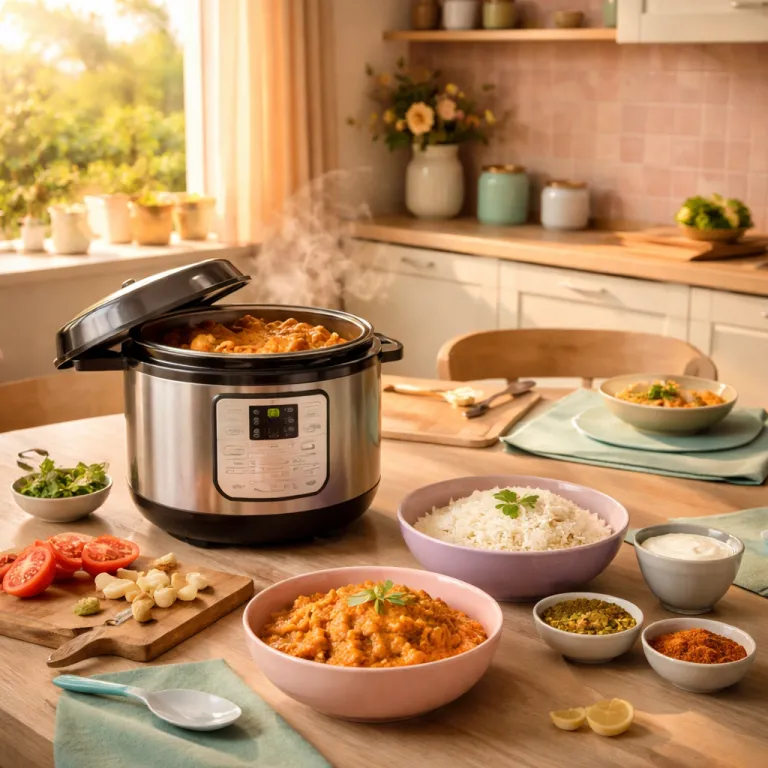
Why pressure cooker chicken tikka masala works for busy home cooks
Pressure cooker chicken tikka masala earns its place on a crowded countertop. The sealed environment in an electric pressure cooker concentrates heat and traps steam, so the masala sauce reduces, the spices bloom, and the chicken stays tender in far less time than a stovetop curry. What usually needs long simmering in a heavy pot becomes a roughly 45 minute door to table recipe that still tastes slow cooked.
In a traditional Indian kitchen, chicken tikka masala often starts with marinated chicken tikka cooked over high dry heat, then finished in a tomato sauce enriched with cream or yogurt. With pressure cooking, you skip the tandoor but keep the same flavor logic by browning chicken pieces on sauté mode, layering garam masala, chili powder, and aromatics, then letting the pressure cooker do the melding work. The result is not restaurant perfect, yet it is close enough on a weeknight that your Instant Pot or similar multicooker earns its keep.
For a busy home cook, the key advantage is predictable time and largely hands off cooking. Once you add the chicken breasts or thighs, tomato sauce, coconut milk or Greek yogurt, and spices to the pot, the machine manages both pressure and time while you prep rice or a salad. That reliability makes pressure cooker chicken tikka masala a smarter choice than a slow cooker version when you walk in the door at nineteen hundred with hungry people waiting.
Choosing the right electric pressure cooker for tikka masala nights
Not every pressure cooker handles thick curry sauces equally well. In informal kitchen testing, a 5.7 litre Instant Pot Duo and a 7.6 litre Ninja Foodi both built pressure quickly with tomato heavy tikka masala sauce, while a cheaper no name cooker scorched the bottom because its sauté element ran too hot. For most families, a six litre electric pressure cooker balances capacity for one pot chicken recipes with manageable storage space.
Look for a stainless steel inner pot rather than a thin nonstick insert, because stainless tolerates repeated sauté mode use for onions, garlic, and spices without warping. A clear sauté mode indicator, an easy to read pressure status display, and a reliable sealing ring matter more for pressure cooking than extra presets like butter chicken or brown rice buttons. When a cooker reaches pressure consistently in under ten minutes and releases it predictably, your time estimates for chicken tikka become trustworthy instead of guesswork.
If you batch cook, prioritize models that handle pot in pot rice alongside curry without tripping a burn warning. A slightly wider pot gives more surface area for browning chicken breasts and reducing tomato sauce, which deepens masala flavor in less total cooking time. For readers planning a weekly prep session, pairing a solid Instant Pot style cooker with a structured plan such as a Sunday meal prep marathon with your pressure cooker turns pressure cooker chicken tikka masala into one of several reliable make ahead dinners.
Step by step: building flavor in pressure cooker chicken tikka masala
Good pressure cooker chicken tikka masala starts before you ever lock the lid. Begin by patting the chicken dry, then season it generously with kosher salt, a teaspoon ground cumin, and a light dusting of chili powder to build flavor into the meat itself. Those few minutes of prep mean the chicken tikka pieces taste seasoned through, not just coated in sauce.
Set your Instant Pot or similar cooker to sauté mode and let the pot preheat until a drop of water sizzles, then add a tablespoon of neutral oil and a small knob of butter for richness. Brown the chicken breasts or thighs in batches so they form a light crust without steaming, then remove them to a plate while you sauté finely chopped onions until golden and sweet. This browning step mimics the smoky edges of traditional tandoor chicken tikka and lays a deep base for the curry.
Next, add minced garlic, grated ginger, and your spice blend directly to the hot pot. Stir in garam masala, turmeric, coriander, and paprika, letting the spices toast for thirty to sixty seconds until fragrant but not scorched, then deglaze with tomato sauce or crushed tomato and scrape up any browned bits. Return the chicken to the sauce, add a splash of water or coconut milk to reach a pourable consistency, lock the pressure cooker lid, and set it for eight to ten minutes of high pressure, a timing similar to many fast chicken pressure cooker recipes.
The spice blend, dairy choices, and sauce texture that make it tikka masala
The heart of tikka masala is the balance between warm spices, tangy tomato, and creamy dairy. A reliable base ratio for four servings is one heaped teaspoon ground garam masala, one teaspoon ground cumin, half a teaspoon ground coriander, half a teaspoon chili powder, and a pinch of turmeric, adjusted to taste. That mix gives pressure cooker chicken tikka masala its familiar warmth without overwhelming the chicken or turning the sauce muddy.
After the pressure cooking phase and a brief natural release of about five minutes, switch the cooker back to sauté mode to tighten the sauce. Stir in plain yogurt or Greek yogurt off the heat to prevent curdling, or use coconut milk if you need a dairy free version that still feels luxurious. For a richer, almost butter chicken style texture, you can add a small spoon of butter and a splash of cream along with the yogurt, then simmer until the tomato sauce clings to the chicken tikka pieces.
Tomato choice matters more than most recipes admit. Using a smooth passata or well strained tomato sauce gives a silkier curry than watery chopped tomatoes, especially when pressure cooking concentrates flavors quickly. If the masala tastes sharp, add a pinch of sugar and another sprinkle of garam masala, then let the pot simmer for a few extra minutes until the sauce tastes rounded and the chicken is coated in a glossy tikka masala gravy.
Timing, rice options, and safe shortcuts for weeknight cooking
From a timing standpoint, pressure cooker chicken tikka masala fits comfortably into a forty five minute window. You spend about ten minutes on prep and sauté steps, another ten minutes for the cooker to reach pressure, eight to ten minutes at pressure, then a few minutes of natural release and final simmering. That structure leaves enough time to cook rice, set the table, and maybe even sit down before the pressure drops.
For rice, you can cook basmati separately on the stovetop, or use a pot in pot method inside the Instant Pot so curry and rice finish together. Place a trivet over the tikka masala sauce, set a smaller pot with rinsed rice and water on top, then pressure cook as usual, adjusting time if you prefer brown rice instead of white. The rice absorbs steam while the chicken and masala sauce cook below, turning the pressure cooker into a compact two tier system that rivals a slow cooker for efficiency but beats it on speed.
If you are starting from frozen chicken, resist the urge to guess your way through defrosting. Use a proven method such as a safe fast chicken defrosting guide from a trusted food safety source, then proceed with the recipe once the meat is pliable and evenly thawed. Safe handling matters as much as spice balance, because no amount of garam masala or tomato sauce can fix chicken that was rushed from rock hard to undercooked in the pressure cooker.
Adaptations, leftovers, and making your pressure cooker earn its space
Once you have a reliable base for pressure cooker chicken tikka masala, it becomes a template rather than a single fixed recipe. Swap the chicken breasts for boneless thighs if you prefer more forgiving meat, or replace the chicken entirely with chickpeas and diced vegetables for a vegetarian curry that still loves the same masala spice blend. The pressure cooking method stays identical, though you can shave a few minutes off the time when you are not waiting for dense meat to cook through.
Dairy choices are flexible too, which helps when you are cooking for mixed dietary needs. Greek yogurt gives a tangier, thicker sauce, while coconut milk softens the spices and leans the dish toward a butter chicken style richness without actual cream. If you are feeding spice sensitive kids, hold back some chili powder, then add it later to adult portions along with extra garam masala and a squeeze of lemon to brighten the curry.
Leftovers are where this dish quietly shines. Pressure cooker chicken tikka masala thickens overnight in the fridge, making it ideal for stuffing into wraps, spooning over leftover brown rice, or stretching with extra tomato sauce and a splash of water for another dinner. The sauce freezes well for up to three months, and a quick reheat under gentle pressure or on sauté mode turns a weekend batch into multiple low effort weeknight meals that justify the space your cooker occupies.
Beginner friendly pressure cooker chicken tikka masala: a practical walkthrough
Recipe card: pressure cooker chicken tikka masala
Yield: 4 servings | Total time: about 45 minutes (10 minutes prep, 10 minutes to pressure, 8 to 10 minutes at pressure, plus release and simmering)
Ingredients
- 700 g boneless skinless chicken breasts or thighs, cut into even bite sized pieces
- 1 1/2 teaspoons kosher salt, divided, plus more to taste
- 2 teaspoons ground cumin, divided
- 1 teaspoon chili powder, plus extra to taste
- 1 tablespoon neutral oil (such as canola or sunflower)
- 1 small knob butter (about 15 g)
- 1 large onion, finely chopped
- 3 cloves garlic, minced
- 2 teaspoons grated fresh ginger
- 1 heaped teaspoon garam masala
- 1/2 teaspoon ground coriander
- 1/4 teaspoon turmeric
- 1 teaspoon sweet paprika
- 400 g smooth tomato sauce or passata
- 120 ml water or coconut milk, plus more as needed for consistency
- 120 ml plain yogurt or Greek yogurt, or full fat coconut milk for dairy free
- 1 teaspoon sugar, optional, to balance acidity
- Fresh coriander leaves and lemon wedges, for serving
Method
- Season the chicken (5 minutes). Pat the chicken dry with paper towels. Toss with 1 teaspoon kosher salt, 1 teaspoon ground cumin, and a light dusting of chili powder so the pieces are evenly coated.
- Brown in batches (8 minutes). Set your Instant Pot or similar cooker to sauté mode and let the pot preheat until a drop of water sizzles. Add the oil and butter, then brown the chicken in two batches, turning once, until lightly golden. Transfer the browned chicken to a plate.
- Cook the aromatics (5 minutes). Add the chopped onion to the pot and sauté, stirring, until golden and sweet. Stir in the garlic and ginger and cook for about one minute until fragrant.
- Toast the spices (1 minute). Sprinkle in the remaining 1 teaspoon cumin, the garam masala, coriander, turmeric, paprika, and remaining 1/2 teaspoon salt. Stir constantly for 30 to 60 seconds so the spices bloom without scorching.
- Deglaze and build the sauce (2 minutes). Pour in the tomato sauce and water or coconut milk, scraping up any browned bits from the bottom of the pot. Return the browned chicken and any juices to the sauce, stirring to coat. The mixture should be thick but pourable; add a splash more liquid if it seems very dense.
- Pressure cook (8 to 10 minutes plus 5 minute natural release). Lock the lid, set the cooker to high pressure for 8 minutes for breasts or 10 minutes for thighs, and allow a natural release of 5 minutes before venting the remaining steam.
- Finish the curry (5 to 7 minutes). Switch back to sauté mode and let the sauce simmer until slightly thickened. Turn off the heat, then stir in the yogurt or coconut milk until smooth. Add sugar if the tomato tastes sharp, adjust salt and chili powder, and simmer briefly until the sauce clings to the chicken.
- Serve. Spoon the chicken tikka masala over hot rice, garnish with chopped coriander, and finish with a squeeze of lemon.
If you enjoy this style of efficient weeknight cooking, similar pressure based chicken recipes such as fast tacos or simplified butter chicken follow the same pattern, proving that the value of an electric pressure cooker is not the feature count but the reliable Tuesday night dinner.
Key figures and practical statistics for pressure cooker chicken tikka masala
- Chicken tikka masala consistently ranks among the most searched pressure cooker recipes worldwide, reflecting strong interest in Indian inspired weeknight meals that can be prepared in under one hour according to recipe search trend analyses from tools such as Google Trends and major recipe platforms.
- Electric pressure cooking typically reduces active cooking time for stewed chicken dishes by around 50 to 70 percent compared with traditional stovetop simmering, which means a curry that might take two hours can often be completed in about forty five minutes including pressure build and release, as reported in manufacturer cooking charts and independent kitchen tests.
- Standard six litre electric pressure cookers comfortably handle about one kilogram of chicken plus sauce, which translates to four to six servings of tikka masala, making them well suited to small families or meal prep for several lunches, in line with capacity guidelines published in many user manuals.
- Food safety guidelines from public health agencies recommend cooking chicken to an internal temperature of at least 74 degrees Celsius (165 degrees Fahrenheit), and properly calibrated pressure cookers routinely exceed this threshold during the high pressure phase, provided the recipe specifies adequate time at pressure and the cook checks doneness in the thickest pieces.
- Well cooled and refrigerated chicken curries such as tikka masala generally keep safely for three to four days, while frozen portions maintain quality for up to three months, which aligns with common meal prep cycles for busy households and storage advice from food safety organizations.
FAQ about pressure cooker chicken tikka masala
How long should I cook chicken tikka masala in an electric pressure cooker?
For bite sized chicken pieces, eight to ten minutes at high pressure followed by a five minute natural release usually yields tender meat. You should allow extra time for the cooker to come to pressure and to reduce the sauce on sauté mode afterward. In total, expect about thirty five to forty five minutes from starting the recipe to serving.
Can I use frozen chicken for pressure cooker chicken tikka masala?
You can use frozen chicken, but it is safer and more consistent to thaw it first using a controlled method. Starting from frozen increases the time needed for the cooker to reach pressure and can lead to unevenly cooked pieces if the chunks are very large. Thawing before cooking also lets you season and brown the chicken properly, which improves flavor.
What cut of chicken works best for tikka masala in a pressure cooker?
Boneless skinless thighs are the most forgiving cut because they stay juicy under pressure and tolerate slight overcooking. Boneless skinless chicken breasts also work well if you cut them into even pieces and avoid very long pressure times. If you prefer bone in pieces, you should increase the pressure time slightly and check that the meat pulls easily from the bone.
How do I stop my tikka masala from burning in the pressure cooker?
To prevent burning, always deglaze the pot thoroughly after browning by adding liquid and scraping up browned bits before sealing the cooker. Make sure the sauce has enough water content by balancing thick tomato products with some stock, water, yogurt, or coconut milk. Avoid stirring heavy cream or large amounts of dairy into the pot before pressure cooking, and instead add them after releasing pressure.
Can I cook rice together with chicken tikka masala in the same pressure cooker?
Yes, you can use a pot in pot method to cook rice above the curry at the same time. Place a trivet over the sauce, set a smaller heat safe pot with rinsed rice and water on top, then seal and cook under pressure as usual. This approach saves time and dishes, though you may need to adjust water ratios slightly based on your cooker and rice variety.