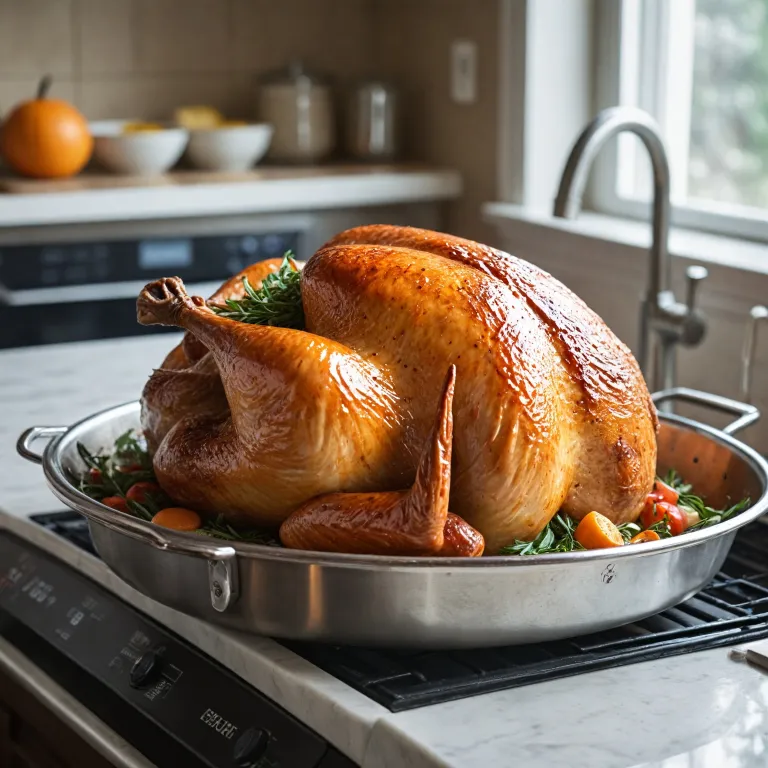

Understanding where to insert a meat thermometer on a turkey
When people ask where do you insert meat thermometer on a turkey, they are really asking how to make sure the bird is safe and juicy. A whole turkey is large, dense meat, so the internal heat rises unevenly and the thickest parts can lag far behind the surface temperature that looks browned and cooked. To protect food safety and flavour, you must check the internal temperature in more than one place, using a reliable food thermometer and a calm, methodical approach.
The primary target for a thermometer turkey reading is the thickest part of the thigh, because dark meat there cooks more slowly than the breast. Slide the thermometer probe into the inner thigh from the side, aiming toward the body, and avoid touching bone so the reading reflects meat temperature only. If the probe hits bone, gently pull back a little until you feel only soft resistance from the meat and then wait for the instant read display to stabilise.
Once the thigh looks safely cooked, you should also check the thickest breast on each side to confirm the turkey will be evenly done. Insert the meat thermometer horizontally into the turkey breast, again targeting the turkey thickest area and stopping before you reach the rib bones. This careful insert probe technique lets you compare readings between thigh and breast, which is essential for cooking turkey that is both safe and tender.
Many cooks worry about losing juices when they leave thermometer probes in place during cook time. An oven safe food thermometer can stay in the oven, but you still need to position it correctly in the thigh or thickest breast to avoid misleading numbers. Whether you use an instant read thermometer or an oven safe model, the goal is the same, to check internal temperature in the right spot and at the right time.
Key temperatures and food safety when cooking turkey
Food safety experts emphasise that colour is not a reliable guide for when meat is safely cooked. A turkey breast can remain slightly pink even when the internal temperature has reached a safe level, while juices can run clear before the deepest thigh meat is fully done. That is why understanding where do you insert meat thermometer on a turkey matters as much as knowing the correct target temperature.
For whole birds, the recommended safe internal temperature for turkey is the same in the thigh and the thickest breast. Insert the thermometer probe into the turkey thickest thigh area and wait until the read thermometer display stops rising, then repeat in the thickest breast to confirm. If either reading falls below the safe threshold, continue to cook turkey and check again after a short additional cook time.
When you cook turkey in a conventional oven, heat moves slowly from the outside in, so the breast can dry out while the thigh meat finishes. To manage this, some cooks tent the breast with foil or adjust oven temperature during turkey cooking to balance browning and moisture. No matter the technique, you still rely on a food thermometer to check that every part of the bird has reached a safe internal temperature without overcooking.
Those using an electric pressure cooker or multi cooker face a different challenge, because steam and pressure speed up cooking turkey dramatically. In this environment, you cannot leave thermometer probes inside during the pressure phase, so you must check temperature quickly after depressurising. Guides such as the Nuwave pressure cooker manual show how to adapt cook time while still relying on an instant read meat thermometer for final safety checks.
Placing the thermometer in thigh, breast and other turkey cuts
To master where do you insert meat thermometer on a turkey, visualising the bird’s anatomy helps. The thigh is the top priority because dark meat there sits deep near the body cavity and takes the longest time to reach safe temperature. Slide the thermometer turkey probe into the inner thigh from the drumstick side, keeping it parallel to the roasting pan so it stays in the centre of the meat.
Once the thigh reading shows safely cooked meat, move to the breast without rushing, because the breast is more delicate and can dry out. Insert probe horizontally into the thickest breast, starting at the side of the turkey breast and aiming toward the centre, stopping just before you expect to hit bone. This method ensures the thermometer probe tip rests in the turkey thickest part of the breast, which gives the most accurate internal temperature for that lean meat.
If you are roasting a turkey breast alone rather than a whole bird, the same principles apply but the geometry changes slightly. Place the food thermometer into the centre of the thickest breast section, entering from the top or side depending on the shape, and avoid the pan surface beneath. For stuffed birds, never rely on stuffing temperature alone, because the cavity can heat differently from the surrounding meat and compromise food safety.
Some cooks like to leave thermometer devices in place during the final minutes to track how quickly the temperature rises. With an oven safe meat thermometer, you can leave thermometer stems in the thigh while you monitor from outside the oven door. However, always double check with an instant read food thermometer in both thigh and breast before you decide the turkey will rest outside the oven.
Using instant read and oven safe thermometers effectively
Different tools change how you approach where do you insert meat thermometer on a turkey, but the underlying safety rules stay constant. An instant read thermometer is ideal for quick checks near the end of cook time, because you can insert probe into multiple spots without leaving it in the oven. This flexibility lets you compare thigh, breast and even joint areas to ensure the turkey will be evenly cooked.
With an oven safe meat thermometer, you position the thermometer probe before cooking and leave thermometer stems in place throughout roasting. Place the tip in the turkey thickest thigh area, making sure it does not touch bone or the roasting pan, then close the oven door gently. As the cook time progresses, you can read thermometer values through the glass, adjusting oven temperature or tenting the breast if the numbers climb too fast.
Digital probe systems with cables and external displays combine the strengths of both instant read and traditional oven safe models. They allow you to track internal temperature continuously while still moving the probe to the thickest breast or thigh as needed for accuracy. Whether you choose basic or advanced tools, the essential habit is to check more than once and in more than one place for reliable food safety.
For cooks who also use pressure or multi cookers, a separate instant read food thermometer becomes indispensable. After releasing pressure, quickly insert the meat thermometer into the thigh and breast, then return the turkey to gentle heat if the readings are low. Detailed appliance reviews, such as this test of a twin pressure multi cooker, highlight how precise temperature control and smart use of a thermometer can work together.
Managing cook time, resting and carryover heat
Understanding where do you insert meat thermometer on a turkey is only half the story, because timing and resting influence final results. When you cook turkey, heat continues to move inward after you remove the bird from the oven, a phenomenon known as carryover cooking. If you wait too long to check internal temperature in the thigh and thickest breast, you may overshoot your target and dry out the meat.
A practical strategy is to begin checking with a food thermometer when you estimate there are twenty to thirty minutes of cook time remaining. Insert probe into the turkey thickest thigh and note how quickly the temperature rises over ten minutes, then repeat in the thickest breast. This pattern helps you predict when the turkey will reach a safely cooked internal temperature without constant opening of the oven door.
Once the thermometer turkey readings show safe levels in both thigh and breast, remove the bird to a carving board and leave thermometer checks for at least ten minutes. During this rest, juices redistribute and the internal temperature may climb slightly, so avoid tenting too tightly, which can soften the crisp top skin. After resting, a final instant read check in the thigh and thickest breast confirms both food safety and ideal texture before carving.
For smaller turkey breast roasts or boneless meat, carryover heat is milder but still relevant. You can safely pull a turkey breast from the oven when the food thermometer shows just below your target, knowing the internal temperature will rise a few degrees while resting. This careful balance between oven temperature, cook time and resting ensures the turkey will remain moist yet safely cooked for serving.
Special considerations for stuffed birds and different ovens
Stuffed birds complicate the question of where do you insert meat thermometer on a turkey, because you must think about both filling and meat. Food safety guidelines advise placing a food thermometer in the centre of the stuffing and also in the turkey thickest thigh to confirm safe internal temperature. If the stuffing lags behind, you may need extra cook time even when the thigh and thickest breast already seem cooked.
To reduce risk, many experts recommend cooking stuffing separately in a dish while you cook turkey unstuffed. This approach lets you focus thermometer turkey checks on the thigh and breast, simplifying decisions about when the meat is safely cooked. It also shortens overall cook time and reduces the chance that the breast will dry out while you wait for dense stuffing to heat through.
Different ovens add further variables, because fan assisted models circulate hot air more evenly than traditional static ovens. In a convection oven, you may lower the set temperature slightly and still reach safe internal temperature faster, so begin to check earlier with an instant read thermometer. Always insert probe into the same reference points, the inner thigh and thickest breast, so you can compare results between cooking methods.
Older ovens with uneven heat may brown the top skin quickly while leaving deep meat undercooked. In such cases, rely on your meat thermometer rather than visual cues, and rotate the roasting pan if one side cooks faster. Multiple checks with a food thermometer in both thighs and both sides of the turkey breast help ensure the turkey will be safely cooked despite equipment quirks.
Carving, leftovers and ongoing food safety
Even after you have mastered where do you insert meat thermometer on a turkey, your responsibility for food safety continues at the table. Carving technique affects how evenly the remaining meat cools, which in turn influences bacterial growth and the safety of leftovers. Slice the turkey breast across the grain into moderate thickness pieces and remove dark meat from the thigh and drumstick promptly rather than leaving it on the bone.
Once the meal is over, do not leave meat at room temperature for more than two hours before refrigeration. Spread sliced turkey in shallow containers so the internal temperature of the food drops quickly through the danger zone, limiting bacterial growth. If you are unsure whether leftovers cooled fast enough, you can briefly check with a clean instant read food thermometer in the centre of the thickest pile.
When reheating, aim to bring the internal temperature of turkey pieces back to a safe level without drying them out. Cover the dish, add a little stock or water and use gentle oven temperature or microwave power, then check with a thermometer probe in the thickest portion. This habit mirrors the same discipline you used during the original turkey cooking, where you relied on a meat thermometer to balance safety and quality.
Over time, consistent use of a reliable food thermometer builds confidence in your ability to cook turkey safely. You learn how your oven behaves, how long different turkey breast sizes take and how quickly the thigh reaches target temperature. With each meal, the routine of where to insert probe, when to check and how to interpret readings becomes second nature, supporting both food safety and perfectly cooked results.
Key statistics about turkey cooking and food safety
- Up to 1 in 4 poultry products may carry harmful bacteria before cooking, which makes correct internal temperature checks essential for safety.
- Using a food thermometer correctly can reduce the risk of foodborne illness from undercooked poultry by more than half.
- Studies show that many home cooks under estimate cook time and remove turkey from the oven before the thigh reaches a safe internal temperature.
- Households that routinely use an instant read meat thermometer report higher satisfaction with turkey juiciness and texture compared with those that rely on colour alone.
Common questions about using a meat thermometer on turkey
Where exactly should I place the thermometer in a whole turkey ?
Place the thermometer probe in the inner thigh, entering from the drumstick side and keeping the tip in the centre of the meat without touching bone. Then check the thickest part of the breast in the same way, inserting the probe horizontally from the side. Both areas should reach a safe internal temperature before you remove the turkey from the oven.
Can I leave a thermometer in the turkey while it cooks ?
You can leave an oven safe meat thermometer or a wired probe in the turkey during roasting, as long as the manufacturer states it is safe for that temperature range. Position the tip in the thickest part of the thigh or breast, avoiding bone and the pan surface. Still, it is wise to double check with an instant read thermometer in several spots near the end of cook time.
How often should I check the temperature of my turkey ?
Begin checking with a food thermometer when you estimate twenty to thirty minutes remain in the planned cook time. Insert the probe into the thigh and thickest breast every ten to fifteen minutes, watching how quickly the internal temperature rises. Avoid opening the oven too frequently, because heat loss can extend cook time and affect browning.
Do I need to check the temperature of stuffing inside the turkey ?
If you choose to cook stuffing inside the bird, you must check both the centre of the stuffing and the thigh meat with a thermometer. The stuffing should reach the same safe internal temperature as the turkey to minimise food safety risks. Many experts still recommend cooking stuffing separately to simplify temperature control and reduce the chance of overcooking the breast.
Is a digital instant read thermometer better than an analogue one ?
Digital instant read thermometers usually provide faster and more precise readings than analogue dial models, which helps when you need to check multiple spots quickly. They are especially useful for confirming the temperature of the thigh, thickest breast and any stuffing without leaving the oven door open for long. However, any accurate, well maintained food thermometer is better than guessing based on colour or cook time alone.